Lecture 1. What Is Arbitrage? Basic Principles and Types
An easy introduction to the basic principle and types of arbitrage, and why the Law of One Price breaks down in the crypto market.

Hello everyone — this is the very first installment of DataMaxi+'s arbitrage education series.
This time, we'll learn what arbitrage is and the principle behind it.
But before we begin, let me ask you one question.
If the same item is priced differently in different places,
what is the first thing you would do?

Imagine a PlayStation 5 selling for 700,000 KRW on Danggeun Market while it goes for 900,000 KRW on Joonggonara and Bunjang.
In a situation like this, what would cross your mind?
Probably something like:
"If I buy as many PS5s as I can on Danggeun Market and resell them on Joonggonara and Bunjang, that would be a tidy profit, wouldn't it?"
Exactly that.
That's right!
This is the most basic principle behind "arbitrage," which we'll explore today.
In the crypto market especially, strategies that exploit these price differences to generate profit are extremely active.
Today, for those just getting started with crypto investing or curious about arbitrage,
I'll explain arbitrage clearly and simply, from the concept all the way to how it works.
1. What Is Arbitrage?
Arbitrage is a financial term that refers to the act of profiting from a price difference
by buying an identical product cheaply in one market and selling it at a higher price in another,
when the same product trades at different prices across different markets.
The core principle is extremely simple.
"Buy low, sell high."
Pure arbitrage must satisfy three conditions:
Identical product: it must be the exact same asset (e.g., the same cryptocurrency)
Price difference: it trades at different prices in different markets
Simultaneity: the buy and sell must happen at the same time with as little delay as possible (usually achieved through hedging)

We can easily find examples of arbitrage in everyday life, too:
Overseas direct purchase: reselling Nike sneakers that cost $120 in the U.S. for 250,000 KRW in Korea
Regional cost-of-living differences: taking on development work domestically and outsourcing it to lower-wage developers abroad
Seasonal price differences: buying cheap camping gear in winter and selling it at a premium in summer
Information asymmetry: knowing an item's exact market price, finding undervalued listings, and reselling at a fair price
In a broad sense, all of these activities fall under the category of arbitrage.
Arbitrage in the crypto market follows these same basic principles,
but thanks to the nature of digital assets and a global, 24-hour market, there are far more varied and frequent opportunities.
2. Concrete Examples of Arbitrage in Action
Let's analyze in concrete terms how the concepts we just covered actually work,
and what real-world constraints they face.
Example 1: Secondhand-Marketplace Arbitrage

For instance, suppose you buy a Nintendo Switch for 200,000 KRW on Joonggonara or Bunjang,
and the going market price for that device is around 260,000 KRW — you can immediately resell it and pocket a 60,000 KRW profit.
In particular, on location-based platforms like Danggeun Market,
people who need to offload an item quickly will sometimes
list products well below market price,
and quickly catching and reselling these listings is also a form of arbitrage.
In a case like this, we can break down the profit, the execution process, the returns, and the risks as follows.
Theoretical profit:
260,000 KRW − 200,000 KRW = 60,000 KRW
Actual execution process and costs:
Purchase on Danggeun Market (transport cost: 5,000 KRW)
Inspect the item's condition and take photos
List and sell on Joonggonara (shipping cost: 3,000 KRW)
Time cost (about 3–4 hours)
Actual net profit:
60,000 KRW − 8,000 KRW (direct costs) − time cost = about 30,000–40,000 KRW
Key risks:
The purchased item turns out to differ from its description
Reselling takes longer than expected
The resale price drops due to market price fluctuations
Example 2: The Reality of Arbitrage Between Crypto Exchanges
Crypto arbitrage works much like the example above.
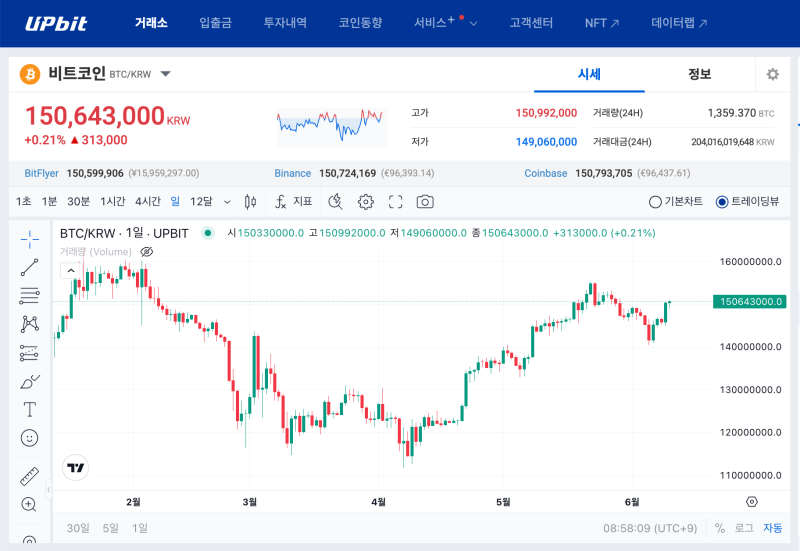
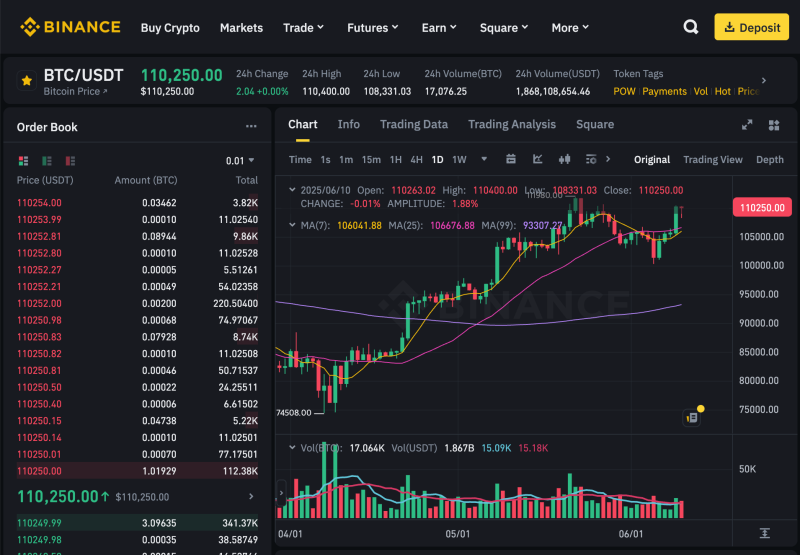
For example, let's assume the price of one Bitcoin differs by 2,000,000 KRW
between Binance, an overseas crypto exchange,
and Upbit, a domestic Korean exchange.
In this case, you could buy one Bitcoin on Binance,
transfer it to Upbit, and sell it to capture a 2,000,000 KRW profit.
Situation:
Binance 68,000,000 KRW vs. Upbit 70,000,000 KRW (per Bitcoin)
Theoretical profit:
70,000,000 KRW − 68,000,000 KRW = 2,000,000 KRW
Actual execution process and costs:
- Buy on Binance: 68,000,000 KRW
- Trading fee: 68,000 KRW (0.1%)
- Network transfer fee: 10,000 KRW
- Transfer time: 30 minutes–1 hour
- Upbit sell fee: 35,000 KRW (0.05%)
Total direct costs:
113,000 KRW
Key risks:
Price movement during the transfer window
(Risk example)
If Upbit's price drops to 69,000,000 KRW during the transfer → actual profit of 887,000 KRW
If Upbit's price drops to 67,000,000 KRW during the transfer → a loss occurs
As you can see, arbitrage trading carries real risks.
We'll cover how to mitigate these risks in more detail in a later installment.
3. The Law of One Price and Arbitrage
To understand arbitrage more deeply,
we need to look at an important economic principle: the "Law of One Price."
This law states:
An identical product should trade at the same price in all markets.
Thinking about the Law of One Price in everyday terms,
Samsung Electronics stock, for example,
should trade at the same price at the same moment no matter which brokerage you use.
If Samsung Electronics stock is 50,000 KRW at brokerage A,
it should be 50,000 KRW at brokerage B as well.
If it were 51,000 KRW at brokerage B,
many investors would immediately buy at A and sell at B to capture the 1,000 KRW difference.
What happens if this process repeats?
At brokerage A, buy orders increase and the price rises,
while at brokerage B, sell orders increase and the price falls.
Eventually, the prices at the two brokerages converge to an equilibrium and become equal.
This is exactly how the Law of One Price works.
The crypto market, however, is a peculiar environment where the Law of One Price doesn't hold perfectly.
The same cryptocurrency continuously trades at different prices across different exchanges.
Why is that?
3-1. Why the Law of One Price Breaks Down in the Crypto Market
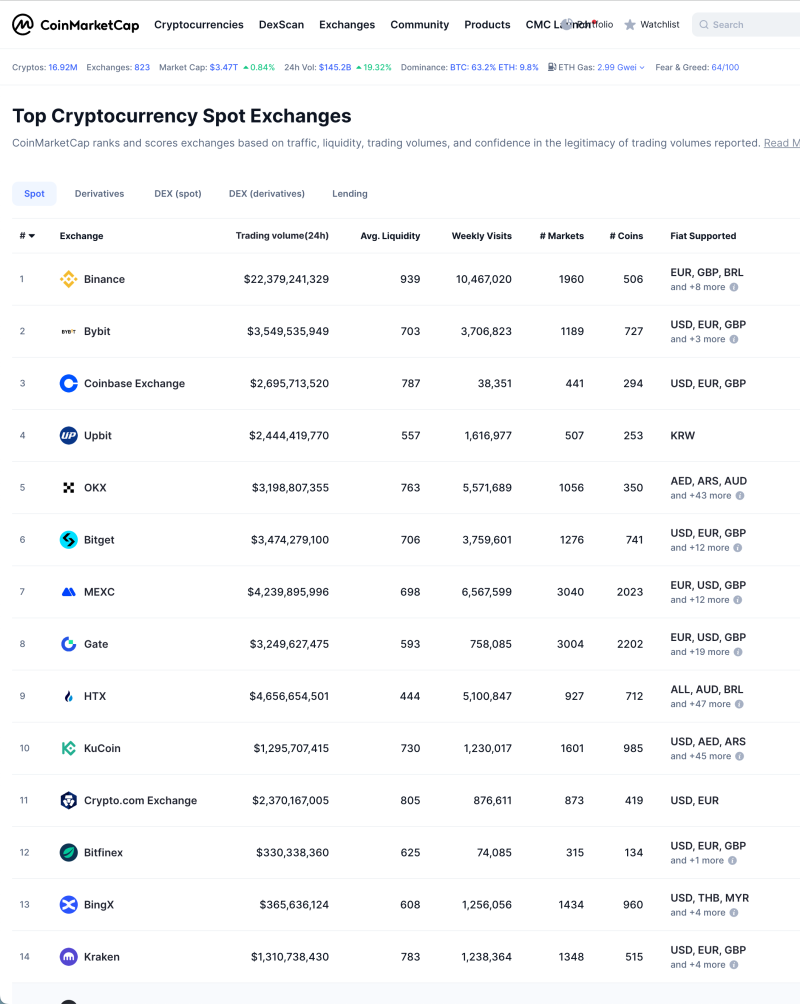
1) Identical product, many exchanges
The crypto market has hundreds of centralized exchanges (CEXs)
and decentralized exchanges (DEXs).
Each exchange has its own independent order book
and liquidity, which creates price differences.
This is much like the same product trading at different prices
across multiple secondhand marketplaces.
2) Regional regulation and restrictions on capital flow
Each country has a different regulatory environment for crypto,
and there are also constraints on converting between fiat currency and crypto.
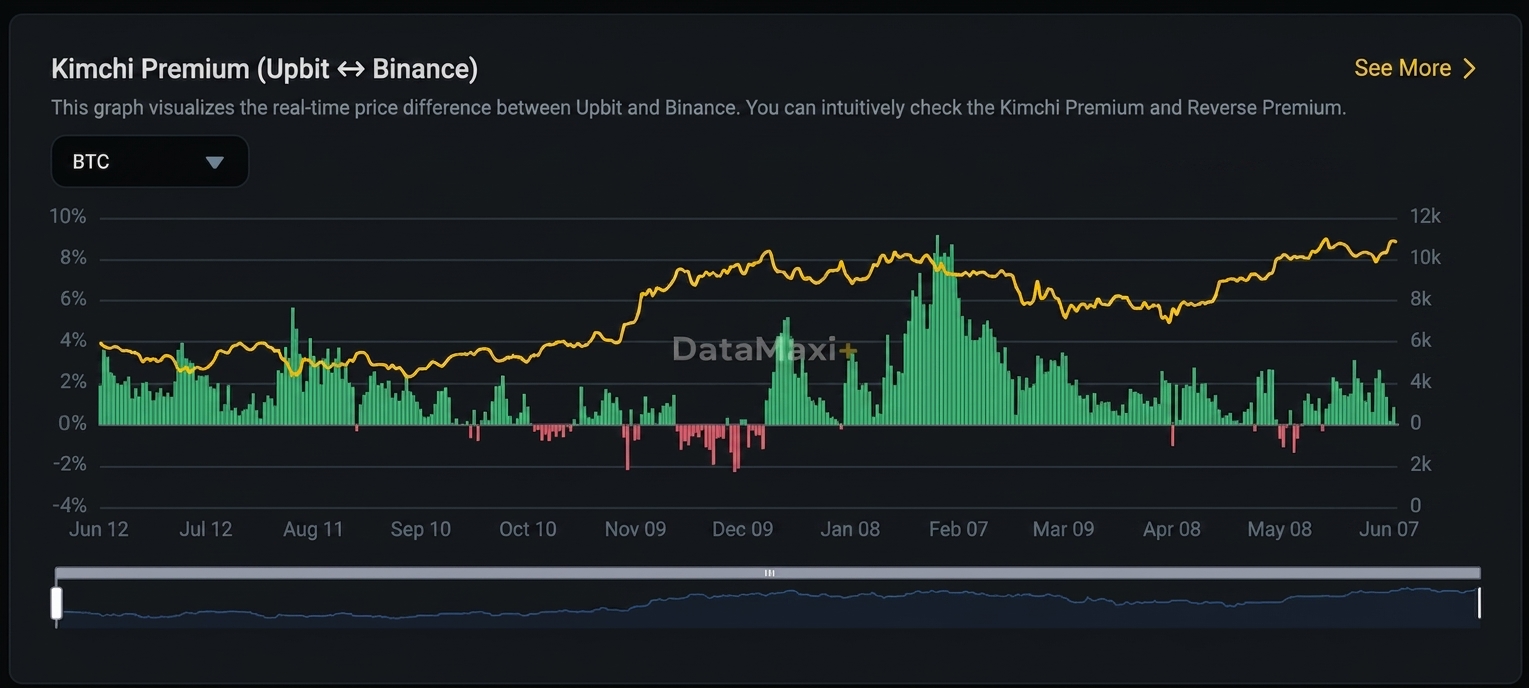
Korea in particular, due to unusually strong buying pressure compared with other countries,
experiences the "Kimchi premium" phenomenon.
Even though this premium arises,
it isn't easily eliminated because of factors such as:
Korean exchanges being usable only by Koreans,
remittance-amount limits under foreign-exchange law,
and the fact that most citizens use only domestic exchanges due to language barriers.
3) Information asymmetry and propagation speed
In the crypto market, information doesn't reach all participants simultaneously.
When important news or an event occurs,
some exchanges or regions may reflect it in their prices faster than others.
This lag in information propagation creates temporary price differences.
4) Technical constraints and transfer time
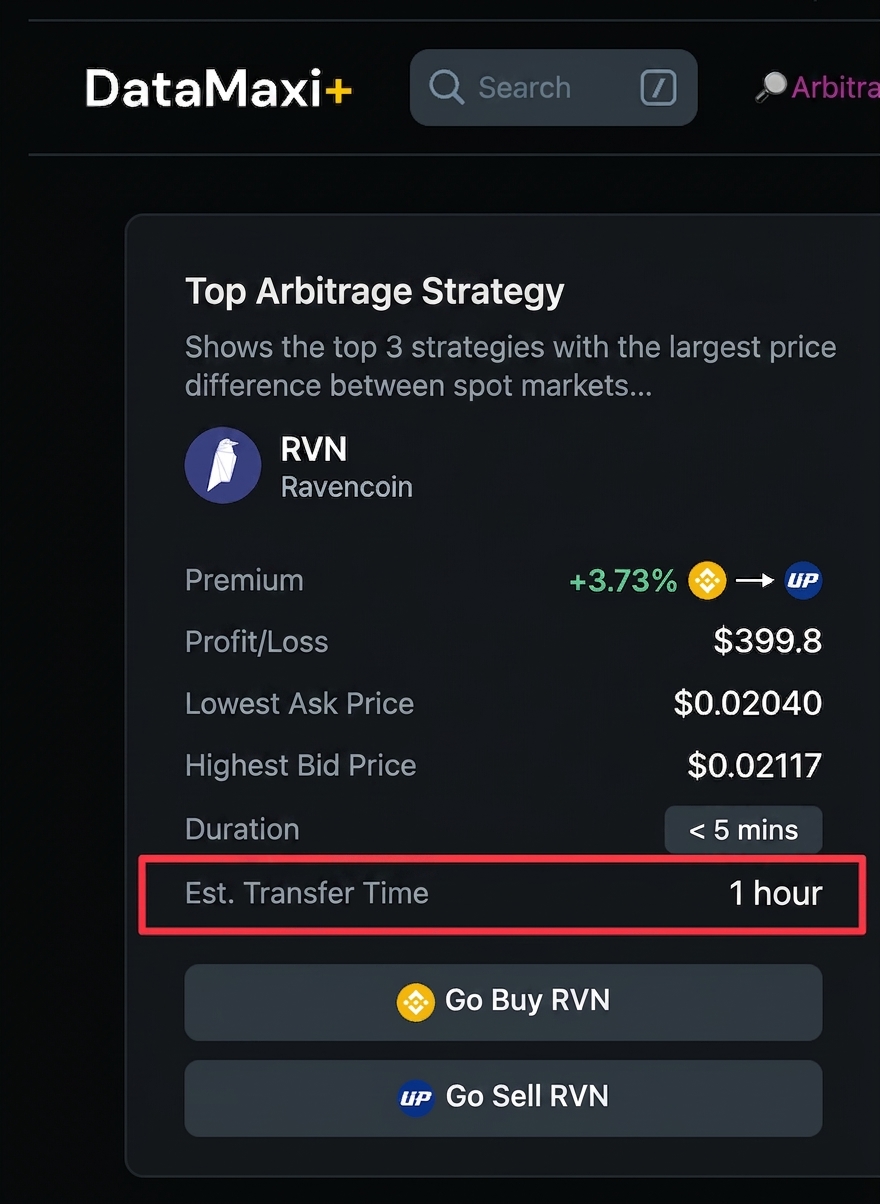
Moving crypto from one exchange to another takes time.
Depending on network congestion, Bitcoin can take 10 minutes to 1 hour,
and Ethereum anywhere from a few minutes to tens of minutes.
When you have to cross two blockchain networks via a bridge,
this time can stretch out much longer.
Prices can move during this window, which makes perfect arbitrage difficult.
5) Transaction costs and fees
Each exchange has a different fee schedule,
and costs such as withdrawal fees and network fees (gas) also arise.
These costs reduce the profitability of arbitrage that relies on small price differences.
6) Market immaturity and inefficiency
The crypto market has a shorter history than traditional financial markets
and is less developed institutionally.
As a result, the price-discovery mechanism works less efficiently,
and irrational behavior by market participants can appear more often.
Because of these factors, in the crypto market
the Law of One Price doesn't hold completely,
and as a result, continuous arbitrage opportunities keep arising.
Of course, as time passes the market will mature and become more efficient, but
given the decentralized nature of crypto,
these opportunities are expected to persist for a considerable time to come.
These real-world barriers are the fundamental reason why
perfect price equilibrium is disrupted and continuous arbitrage opportunities are created.
In the crypto market especially, this inefficiency
tends to be far larger than in traditional financial markets.
4. Is Arbitrage the Market's "Invisible Hand"?
Much like the concept of the "invisible hand" described by economist Adam Smith,
arbitrage plays a role in resolving market imbalances.
The pursuit of individual gain ends up
improving the efficiency of the market as a whole.
The process by which arbitrage traders pursue profit by exploiting price differences
has the following positive effects on the market:
1) Price discovery and improved efficiency
When traders exploit price differences between markets,
this causes price information to propagate across markets more quickly.
As a result, the market reaches a consensus on an asset's "true value" faster.
2) Providing liquidity
Arbitrage traders provide liquidity
by actively participating even in thinly traded markets.
This allows all market participants to trade at fairer prices.
3) Resolving market imbalances
By resolving imbalances between exchanges, or between different markets,
arbitrage contributes to the stability of the entire crypto ecosystem.
For example, suppose Bitcoin trades at 150,000,000 KRW on exchange A
and 160,000,000 KRW on exchange B.
Arbitrage traders will try to buy Bitcoin on A
and sell it on B to capture a 10,000,000 KRW profit.
As this continues, buying demand increases on exchange A and its price rises,
while selling supply increases on exchange B and its price falls.
Eventually the price difference between the two exchanges narrows,
and the market moves toward a more efficient state.
From this perspective, arbitrage
is more than just an individual act of pursuing profit —
it can be seen as a healthy economic activity that balances the market.
Our act of profiting from price differences
simultaneously contributes to improving the efficiency of the entire market.
Wrapping Up: Arbitrage, Where Opportunity and Market Efficiency Meet
So far, in this first installment of DataMaxi+'s arbitrage education series,
we've looked at the basic principle of arbitrage and what it means in the crypto market.
Whether it's ordinary trading, long-term investing, or arbitrage trading,
in the end the principle:
Buy low, sell high
is the same.
The difference is that ordinary trading is:
buying when it's cheap and selling when it's expensive
whereas
arbitrage is:
buying where it's cheap and selling where it's expensive.
I hope today's content
has cleared up your basic questions
about arbitrage.
Building on the fundamental principle we learned today,
I'll go on to introduce what you'll need
to actually generate profit through arbitrage trading
in the real crypto market.
In the next installment,
Why there are so many arbitrage opportunities in the crypto market
What the differences are between traditional markets and the crypto market
are the topics I'll be back with.
Thank you.
- arbitrage
- crypto
- education
- basics