Lecture 3. The Importance of Hedging and the Arbitrageur's Mindset (How to Lock In Profit)
How hedging locks in profit, plus the mindset and risk-management principles every arbitrageur needs.

Hello everyone!
The Conquer Arbitrage series with DataMaxi+
has already reached its third installment.
In Part 1, we
covered the basic principle of arbitrage
and posed the question, "Is risk-free profit really possible?",
and in Part 2, we took a close look at
how arbitrage differs between traditional financial markets and the crypto market,
and especially at the opportunities and risks in the crypto market.
At the end of Part 1, I said:
"As you can see, arbitrage trading carries real risks.
We'll cover how to mitigate these risks in more detail in a later installment."
Do you remember that?
Many people think of arbitrage
as "an easy and safe way to make money,"
but in reality, all sorts of risks lurk beneath the surface —
price volatility, transfer delays, exchange problems, and more.
So today, in Part 3, we'll take a focused look at
the most important key for effectively controlling these very risks
and "locking in" the hard-won profit from arbitrage
as your own:
"Hedging."
And going a step further,
we'll talk together about what kind of "mindset" and "principles" you need
to become an arbitrageur who consistently produces results
even in highly volatile market conditions.
How can you steadily protect your own profit
in an unpredictable market?
And what do the so-called "arbitrage masters"
think about as they approach their trades?
Let's dig into those secrets right now!
1. What Is Hedging?
The shield and the locking-in tool for arbitrage profit
What is hedging?
"Put up a fence to protect what's yours!"
The word "Hedging" originally comes
from the English word "hedge," meaning to put up a fence.
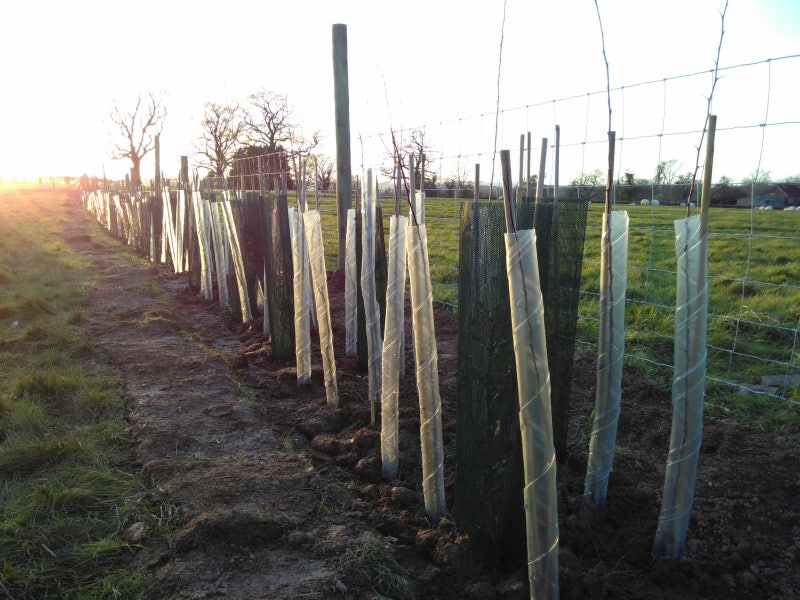
Just as a farmer puts up a fence
to protect their crops from outside dangers,
in financial markets, every action taken
to reduce or eliminate the risk of price movement
in assets you currently hold or will come to hold
is called hedging.
As an aside, in the crypto community it's also written as "hedgie" as a meme.
The most common hedging method is to simultaneously take a position
opposite to your current position in another market or another product.
So why is this hedging so important and essential in arbitrage?
Let's recall once more the example of arbitrage between crypto exchanges from Part 1.
Situation: Binance 68,000,000 KRW vs. Upbit 70,000,000 KRW (per Bitcoin)
Theoretical profit: 2,000,000 KRW
Risk: If Upbit's price falls to 67,000,000 KRW during the 30 minutes to 1 hour it takes to transfer the Bitcoin you bought on Binance to Upbit, you actually incur a loss!
Hedging is needed precisely to effectively eliminate this "risk of price movement during the transfer window,"
so that the 2,000,000 KRW price difference you first spotted
becomes entirely your own profit.
In Part 1, I mentioned "simultaneity"
as one of the conditions for pure arbitrage, remember?
Hedging is like magic that takes two trades
that are physically difficult to execute at the same time
(buying where it's cheap, selling where it's expensive)
and makes them "economically behave as if they happened simultaneously."
Without hedging,
arbitrage becomes little more than a directional bet —
"moving coins to where the price seems likely to rise" —
in other words, not much different from ordinary trading.
1-1. Hedging Using Futures
So how is hedging
actually done in crypto arbitrage?
The most representative and common method
is to use "Futures contracts."
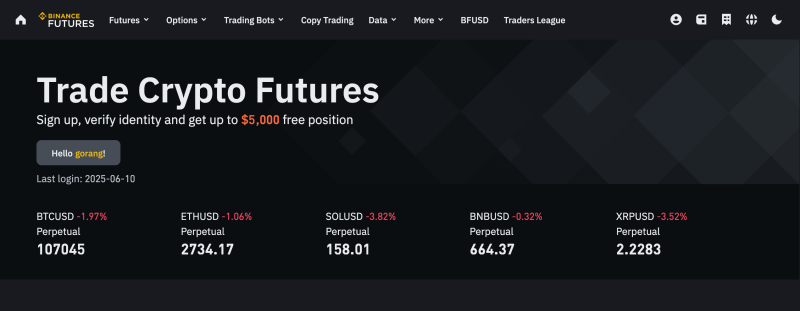
Let me explain by working through an example together.
Situation:
Exchange A: Bitcoin spot price 68,000,000 KRW
Exchange B: Bitcoin spot price 70,000,000 KRW
Exchange B: Bitcoin futures price 70,000,000 KRW
In this case, if you buy Bitcoin on Exchange A,
send it to Exchange B, and sell it,
you can earn a 2,000,000 KRW profit per Bitcoin.
But as mentioned above,
if the spot price on B falls below 68,000,000 KRW
while you're buying spot on A and sending it to B,
it's a loss.
Therefore, to earn a sure profit without risk,
you need to carry out the work in the following order.
Order of execution for arbitrage with futures hedging:
1. (Buy spot) Buy 1 Bitcoin spot on Exchange A. (68,000,000 KRW)
- (Enter hedge position) At the same time as step 1, "Sell (Short)" Bitcoin futures on Exchange B's futures market. The sell quantity should be equal to the spot quantity you bought on Exchange A.
3. (Transfer) Transfer the Bitcoin you bought on Exchange A to Exchange B. (Transfer takes 30 minutes to 1 hour)
4. (Sell spot) When the Bitcoin arrives at Exchange B, sell the spot at market price.
- (Close hedge position) At the same time as the spot sale, "Buy (close)" the Bitcoin futures short position you entered on Exchange B.
Through this process, your expected profit stays the same
whether Bitcoin's price rises or falls during step 3.
Let's calculate the effect of hedging together below.
Hedging effect analysis:
Case 1) What if the Bitcoin spot/futures price on Exchange B fell to 69,000,000 KRW during the transfer?
Spot trade: 69,000,000 KRW (sell) − 68,000,000 KRW (buy) = 1,000,000 KRW profit
Futures trade: 70,000,000 KRW (assumed short entry price) − 69,000,000 KRW (buy-to-close price) = 1,000,000 KRW profit
Total profit/loss (excluding fees): 1,000,000 KRW spot profit + 1,000,000 KRW futures profit = 2,000,000 KRW
Case 2) What if the Bitcoin spot/futures price on Exchange B rose to 71,000,000 KRW during the transfer?
Spot trade: 71,000,000 KRW (sell) − 68,000,000 KRW (buy)
Futures trade: 70,000,000 KRW (assumed short entry price) − 71,000,000 KRW (buy-to-close price) = −1,000,000 KRW loss
Total profit/loss (excluding fees): 3,000,000 KRW spot profit + 1,000,000 KRW futures loss = 2,000,000 KRW
As you can see, with hedging, in both cases
you end up with a profit equal to the original price difference.
In this way, through futures hedging,
no matter how the price in the target market changes during the transfer window,
you can lock in the price difference you first spotted
(excluding the various fees)
almost entirely as profit.
Things to watch out for when executing a futures hedging strategy
It's easy in theory,
but when you actually execute a futures hedging strategy
there are things you need to watch out for.
The most notable are
slippage losses due to insufficient liquidity and order book depth,
and funding-rate risk,
among others.
1. Insufficient liquidity
If trading volume in the futures market isn't high enough,
your order may not fill immediately at the price you want.
When building a position with a market order,
it may fill at a price less favorable than you expected.
2. Funding Rate
The funding rate, also briefly mentioned in Part 2,
is a fee exchanged every few hours
between holders of long and short positions on each exchange
by the mechanism that keeps the futures price in line.
If you're in a situation where you have to pay the funding rate during the hedging period,
your returns can be reduced.
The funding rate is also something you absolutely need to know for arbitrage trading,
so I'll cover it in detail in a separate post later.
Now, following on from futures hedging,
let's look at another useful hedging method:
hedging using "lending."
Not every coin is listed on the futures market,
and sometimes the futures market lacks liquidity,
or under certain conditions it can be hard to use futures trading.
In such cases, a good alternative to consider is precisely this hedging using "lending."
1-2. Hedging Using Lending
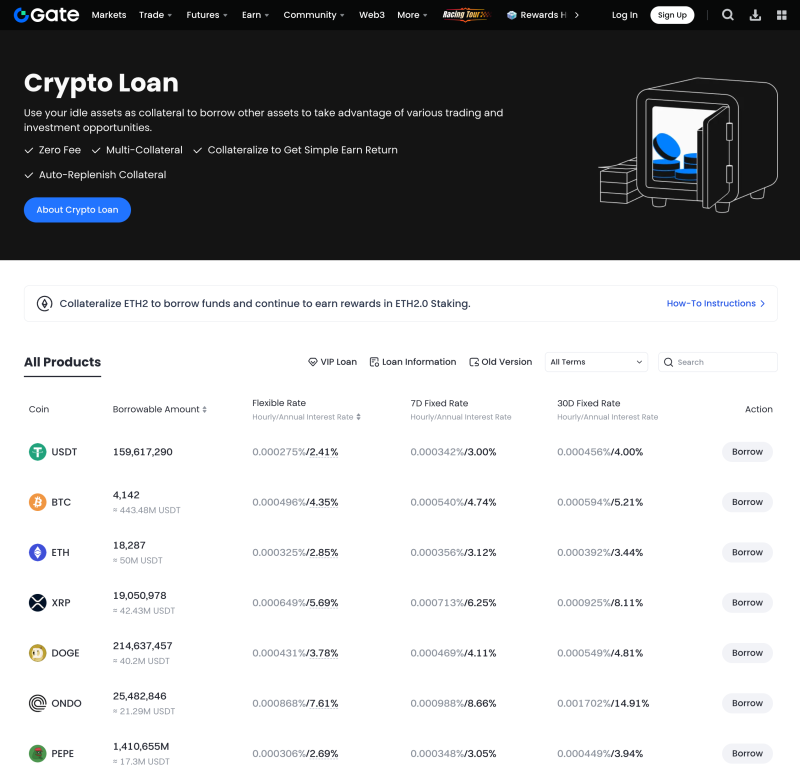
In the crypto market, "lending"
literally means the act of borrowing or lending out a particular coin.
This lending
can be done through a lending service inside an individual exchange,
or through a DeFi (decentralized finance) lending protocol that runs on a blockchain.
By using this method,
you borrow a particular coin and sell it in advance,
creating an effect similar to a futures short position,
and thereby hedge the risk of price movement.
It tends to involve much lower transaction costs than futures,
so it's a preferred method.
However, when an arbitrage opportunity arises,
people tend to borrow first,
so the available lending supply often runs out in an instant.
Let me explain this one too by working through an example together.
Situation:
Exchange A: XYZ coin spot price 9,500 KRW
Exchange B: XYZ coin spot price 10,000 KRW
Exchange B or a specific DeFi lending protocol: XYZ coin available to borrow
In this case,
if you buy XYZ coin on Exchange A,
send it to Exchange B, and sell it,
you can earn a 500 KRW profit per coin.
But
if the spot price on B falls below 9,500 KRW
while you're buying spot on A and sending it to B,
a loss occurs.
Therefore, just like with futures hedging,
to earn a sure profit without risk
you need to carry out the work in the following order.
Order of execution for arbitrage using lending:
1. Borrow the amount for the hedge position
Borrow (Lend) 1 XYZ coin from Exchange B (or a DeFi protocol).
2. Sell the borrowed amount
Immediately sell the 1 borrowed XYZ coin on Exchange B's spot market.
(Sell at 10,000 KRW)
This effectively produces the same effect as a futures short.
That is, it becomes a structure that profits if the XYZ coin price falls later.
(Because at repayment you buy the coin back more cheaply, or you've already sold it at a higher price)
3. Buy spot
Almost simultaneously, buy 1 XYZ coin spot on Exchange A.
(Buy at 9,500 KRW)
4. Transfer
Transfer the XYZ coin you bought on Exchange A to Exchange B (or the wallet you borrowed the coin from).
(Assume the transfer takes 10 to 30 minutes)
5. Close the hedge position — repay the coin
Use the 1 transferred XYZ coin
to repay the 1 XYZ coin you previously borrowed from Exchange B (or the DeFi protocol).
At this point, the fixed lending interest for those 10 to 30 minutes is paid along with it.
Through this process, no matter whether the XYZ coin price on Exchange B rises or falls
during the transfer in step 4,
you can expect a profit equal to the difference between the sell price and the buy price you initially secured
minus the lending interest and fees.
Let's calculate the effect of hedging together below.
(To make this easier to follow, we'll set aside trading fees and lending interest for now.)
Hedging effect analysis:
Case 1) What if the XYZ coin spot price on Exchange B fell to 9,700 KRW during the transfer?
- Initial position building:
Sell XYZ coin at 10,000 KRW on Exchange B (the borrowed amount),
buy XYZ coin at 9,500 KRW on Exchange A.
- Realized profit (in cash terms):
10,000 KRW (sale proceeds) − 9,500 KRW (purchase cost) = 500 KRW.
- Hedging effect:
Even though the price on Exchange B fell to 9,700 KRW,
you've already sold at 10,000 KRW.
Since repayment is made in the "quantity" of XYZ coin,
you just repay the 1 borrowed XYZ coin with the 1 XYZ coin you received via transfer.
The initial profit is preserved regardless of price movement.
- Total profit/loss (excluding fees/interest):
500 KRW.
Case 2) What if the XYZ coin spot price on Exchange B rose to 10,300 KRW during the transfer?
- Initial position building:
Sell XYZ coin at 10,000 KRW on Exchange B (the borrowed amount),
buy XYZ coin at 9,500 KRW on Exchange A.
- Realized profit (in cash terms):
10,000 KRW (sale proceeds) − 9,500 KRW (purchase cost) = 500 KRW.
- Hedging effect:
Even though the price on Exchange B rose to 10,300 KRW,
this too is already sold at 10,000 KRW,
so there's neither additional profit nor loss.
If you had bought on A without hedging and sold after it arrived on B,
you might have earned a larger profit of 10,300 KRW − 9,500 KRW = 800 KRW,
but that's the result of betting on a price rise,
not pure arbitrage.
Lending hedging fixes your profit at the price difference you first spotted.
- Total profit/loss (excluding fees/interest):
500 KRW.
In this way, through hedging that uses lending as well,
no matter how the price in the target market changes during the coin transfer window,
you can steadily secure a profit equal to the price difference you first spotted
minus the related costs (lending interest, trading fees, transfer fees).
Things to watch out for when executing a lending hedging strategy
It's an attractive method in theory,
but there are things you absolutely need to know when actually executing a lending hedging strategy.
- Lending Interest Rate
Borrowing coins naturally incurs interest.
This interest rate can fluctuate in real time
depending on the exchange, the DeFi protocol,
and the type of coin and market conditions (supply and demand).
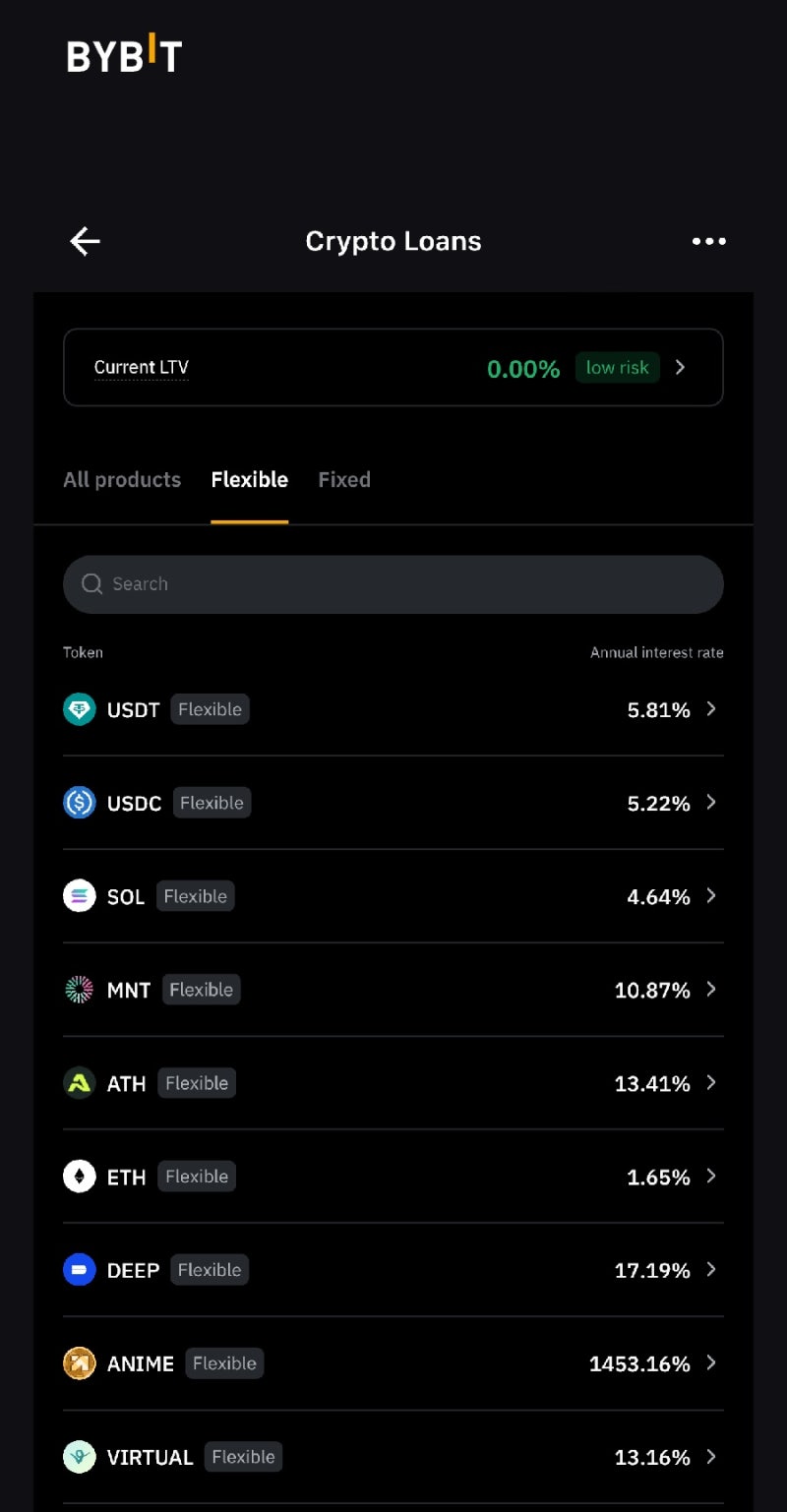
If the interest cost turns out higher than expected,
it can eat up a significant portion
of your hard-won arbitrage profit,
or even lead to a loss,
so you must check it before trading
and calculate your expected total interest cost.
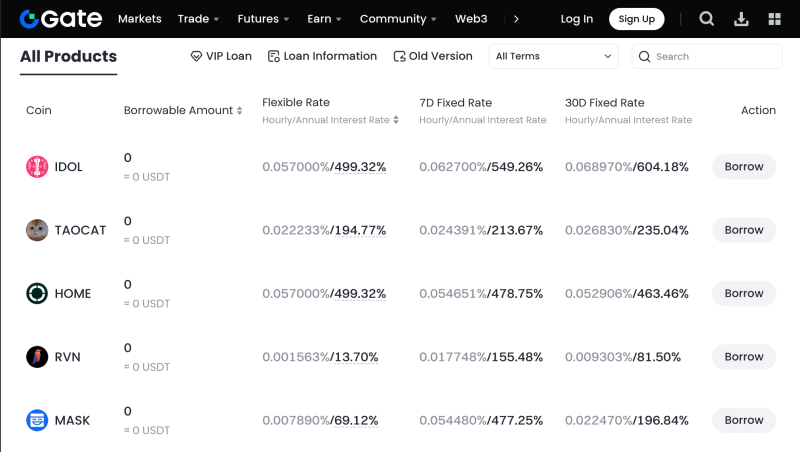
And thinking about it in reverse, here's a tip you can take away:
if the lending interest rate for a particular coin stays persistently high
on an exchange lending service or a DeFi lending protocol,
there's a high chance that somewhere on the blockchain
something is offering an interest rate even higher than this lending rate for that coin.
There's a high chance that interest-rate arbitrage — a kind of arbitrage — is possible.
- Limits on the available lending supply
You can't always borrow as many coins as you want,
for as long as you want.
Especially when it's a low-liquidity coin,
or when market volatility is extreme,
the available lending supply may be insufficient,
or the lending service may be temporarily suspended.
This is the very first thing that happens
when most attractive arbitrage opportunities arise.
Because hedging through lending
involves far lower costs and risks
than hedging through futures,
many arbitrageurs choose it first, on a first-come-first-served basis.
- Collateral liquidation events
Exchange lending services and DeFi lending protocols
require you to provide other cryptocurrency as collateral in order to borrow coins.
Usually you have to put up collateral worth
more than the amount you're borrowing (over-collateralization).
But if the price of the borrowed coin spikes,
or the price of the collateral plunges,
the collateral may be liquidated.
If the coin's price spike or
the collateral's plunge keeps holding,
the loss may not be large, or you may even profit.
But in my experience,
in many cases it gets liquidated and then reverses back to the original direction,
resulting in a loss.
Arbitrageurs need to keep their collateral ratio healthy
when executing lending
so as not to fall into this kind of danger.
For reference, the activity of keeping the collateral ratio healthy
is also called, in Korean crypto-community slang,
"ttukbaegi management" (taking care of your clay pot).
- Risks of the exchange or protocol itself
Rarely, there can be a problem with the DeFi protocol itself.
Bugs or vulnerability hacks in the smart contract itself,
rug pulls by the protocol operators, and the like
can occasionally occur.
And though much rarer,
there are cases where a centralized exchange goes bankrupt
or freezes deposits and withdrawals.
It doesn't happen often, but it should be considered a risk factor.

- Repayment-delay risk
This is a somewhat minor risk compared with the items above, but
if the process of transferring coins from Exchange A to Exchange B
is delayed longer than expected due to network problems and the like,
the lending period stretches out
and your total lending interest burden can grow.
This is a factor that lowers your final return.
As you can see, hedging using lending
can be an alternative to the futures market,
but you must fully understand the various costs and risk factors
related to its own characteristics and approach it carefully.
The mindset of an arbitrageur
In the course of arbitrage trading,
there are things you have to pay when you hedge.
It varies somewhat depending on the hedging method, but
when hedging with futures,
you have to pay fee losses, the time to build the futures hedge position,
spread losses, and the opportunity cost of having collateral tied up.
when hedging through lending,
you have to build your own system for first-come-first-served lending,
research which of the many and varied lending services or DeFi protocols
has the coin you need,
and pay borrowing interest.
You wouldn't have to pay the above
if you didn't build a hedge position.
So why should you build a hedge position despite all this?
What if you don't hedge?
If you don't pay the costs mentioned above,
then in their place an uncertain risk arises.
A fixed loss and an uncertain risk
make a really big difference.
A fixed loss lets us decide with certainty
whether or not to take some action,
whereas an uncertain risk makes us choose while still in the dark.
Paying the above costs is similar to paying an insurance premium.
If you pay a fixed premium,
you can defend against unforeseen losses even when an unexpected situation occurs.
Common temptations an arbitrageur faces
1. "Maybe I don't need to hedge this time?"
The transfer time is short,
the market is stable,
the hedging fees cost too much,
moving money to the futures wallet is a hassle,
the gap is this small, all this just to make this little bit?
For these reasons, arbitrageurs keep feeling the temptation of a no-hedge position.
But you must remember that all of these expose you to risk.
2. "If I just wait a little longer, the premium will widen more..."
Waiting from a 2% premium up to 3% is also a kind of directional bet.
Arbitrage generally means taking
"a sure 2%,"
not waiting for "an uncertain 3%."
Of course, if you have your own solid rationale and perspective, it can be a good strategy.
But you must remember that it's not pure arbitrage.
3. "When setting up the hedge, surely leverage up to n times is fine?"
Usually, the futures position for hedging
uses an appropriate ratio of leverage
to improve capital efficiency.
But if greed for capital efficiency grows
and you use high leverage on the futures position,
and an unexpected large surge liquidates your hedge position,
you end up exposed to enormous risk.
Setting appropriate and conservative leverage
is also part of an arbitrageur's risk-free pursuit strategy.
For reference, the event of a hedge position being liquidated
is called, in crypto-community slang, "the clay pot bursting."
4. "Since the price moves up and down, should I place a limit hedge order at a slightly more favorable price than the current market price?"
The moment you spot an arbitrage opportunity and try to build a hedge position,
the trader sees not only the current market price
but also the order book moving in real time.
At this point, a thought like this can occur:
"Since the price keeps moving up and down by a few ticks anyway, instead of filling the hedge at market price right now, if I place a limit order in advance at the slightly more favorable price I want, couldn't I save on execution cost or even gain a little extra profit?"
For example, when hedging by selling futures,
you'd place a sell limit order at a price one or two ticks above the current market price.
But this is a very dangerous idea
and can run directly counter to the core principle of arbitrage.
What happens if the market never reaches the price at which you placed your limit order
and instead moves the other way?
Your hedge order remains unfilled,
and meanwhile your spot position is left
defenseless against the market's price-movement risk.
The arbitrage opportunity you worked so hard to find goes up in smoke,
and it leads to a loss.
Hedging is a means to "immediately" eliminate price-movement risk
and "lock in" the profit you first spotted —
it must not become "mini-trading" or a "test of luck"
that tries to earn extra profit from the hedge position itself.
That's just another form of directional bet
on the short-term price movement of the hedging instrument.
When building a hedge position, a true arbitrageur,
rather than coveting a few ticks of extra profit,
makes it the top priority to eliminate risk for certain
with market orders broken up into many small pieces.
The slight disadvantage that arises during hedging (e.g., slippage on market orders)
should be regarded as a necessary expense — an "insurance premium" —
that you willingly pay to obtain a certain arbitrage profit.
An arbitrageur must not fall into the trap of being penny-wise and pound-foolish.
The mindset an arbitrageur should have
1. Aim for "zero risk," not "profit maximization"
This can be called the most important mindset.
Hedging definitely comes with costs (trading fees, futures funding rates, potential slippage, etc.).
Sometimes, because of these hedging costs,
the spread in front of you shrinks and it can feel disappointing.
But you must not begrudge this cost.
It's like the premium for the insurance called "risk-free profit" or "minimal-risk profit."
The idea of "saving on hedging costs to make a bigger killing"
is, in the end, the same as racing dangerously without insurance.
Arbitrage's core motto should be "make a little less, but surely and safely,"
and what makes this possible is precisely hedging.
You must keep in mind that giving up hedging in the face of the temptation of "bigger profit"
is an arbitrageur denying their own identity.
2. You must take a long-term view and believe in the magic of compounding
Arbitrage is not day trading.
It's a long-term investment strategy that looks far ahead.
0.1% daily profit → 3% monthly → 42% yearly
0.2% daily profit → 6% monthly → 101% yearly
0.3% daily profit → 9% monthly → 186% yearly
A daily return that looks small produces enormous results when compounded.
But this presupposes consistency and stability.
If you make 5% at once without hedging and then lose 10% next time,
compounding is meaningless.
On the other hand, if you steadily build up a sure 0.2% every day through hedging,
your capital doubles after a year.
3. Stability is the best return
Making 100% in a month and then losing −50% the next month vs. a steady 5% return every month —
after a year, the latter's result is overwhelmingly better.
Arbitrage's true appeal is "predictable profit."
Whether the market is in a bull or bear phase,
whether volatility is high or low,
being able to consistently produce profit —
this is precisely the value of pursuing risk-free profit.
Warren Buffett
"The stock market is a device for transferring money from the impatient to the patient."
once said.
This applies equally among arbitrageurs.
A trader who maximizes arbitrage returns while taking on risk
ends up having their money taken by the trader who lowers risk and earns slowly.
4. Treat your error log like your teacher
For every arbitrage attempt, whether a successful trade or a failed one,
you must keep a detailed record.
In particular, you should specifically record
human mistakes, the temptations of trading,
market conditions, the gap between your plan and the actual hedging costs and trading costs incurred,
problems, anomalies, and so on, and review them periodically.
Such records and analysis will keep you from repeating the same mistakes in the future
and will be the surest foundation for continually improving your own arbitrage strategy.
Wrapping up
Because the crypto market is still in its early days,
opportunities that allow for what's called a quantum jump will appear someday.
Arbitrage trading opportunities
that can produce tremendous returns even at low risk
will come along someday.
When Terra and Luna collapsed in early '22,
the price difference between domestic and overseas,
the price difference between the BTC market and the KRW market,
the minimum tick size of the BTC market, and so on —
the market changed drastically and enormous imbalances arose,
and there were chances to multiply your assets several to dozens of times over at low risk.
During the '23 Upbit SEI "daeheung-ttari" event as well,
there was an arbitrage opportunity to make hundreds of millions of KRW through "machine-gun deposits" on Gate.io.
(A "machine-gun deposit" means
splitting a deposit into multiple deposits of 1,000,000 KRW or less each
to skip the deposit review
when depositing coins to a domestic exchange.)

There was also the Upbit MINA "daeheung-ttari" event,
which fed only those who kept participating
when everyone else had given up on Won-Sangttari (KRW-listing arbitrage).
An arbitrageur, I believe,
if they never lose and safely keep building up their assets
for the quantum-jump opportunity that will come someday,
will eventually find the graduation or near-graduation opportunity everyone hopes for.
Of course, even with arbitrage,
there's no strategy that is absolutely risk-free.
Any arbitrage strategy has some risk inherent in it.
In particular, exchange bankruptcies and rug pulls,
DeFi exploits, bridge hacks,
market manipulation by price-setting forces targeting arbitrageurs,
exchange account freezes, and more —
risks that are hard to even imagine in traditional financial markets are scattered everywhere.
Even so, the field of crypto arbitrage is still
a field with a better risk-to-return ratio
than traditional financial arbitrage or directional crypto trading.
In this post, we looked at the basic operating mechanism and importance of hedging.
Hedging methods applied in various situations —
the Kimchi premium, spot–spot gap trading, spot–futures gap trading, futures–futures gap trading, Won-Sangttari, and so on —
and how to build hedging strategies using DataMaxi+, and more, we'll explore further in a separate post later.
Thank you for reading this long post.
- arbitrage
- crypto
- education
- hedging