Lecture 6. Analyzing and Using the 3 Types of Price Gaps (Spot–Spot, Spot–Futures, Futures–Futures)
Analyzing the three price gaps — spot–spot, spot–futures, and futures–futures — and how to use them in practice.

Introduction: The Essence of Arbitrage — Searching for the "Cracks in Price"
Most crypto investing centers on
"directional trading," which tries to predict
whether an asset's price will rise or fall.
But apart from price prediction, the market also has
strategies that turn temporary price discrepancies
arising between different exchanges or products —
that is, the market's "inefficiencies" — into a source of profit.
Those who capture these inefficiencies and pursue stable returns
are precisely the arbitrageurs.
Arbitrage is a strategy that generates profit
by exploiting the "price discrepancy" phenomenon, where the price of the same asset
differs from market to market.
It follows the most basic market principle of
"buying low and selling high."
In a theoretically efficient market,
competition among participants seeking arbitrage
would resolve price differences — that is, the "gap" — almost instantly.

But the crypto market, which runs 24 hours without rest
and mixes together countless exchanges and derivatives
along with regulations that vary by country,
is structurally prone to inefficiency,
and so it still offers many arbitrage opportunities.
In the previous series, we already looked at
examples of this kind of market inefficiency.
The "Kimchi premium" we covered in installment 4
was the most representative spot–spot gap,
arising in Korea, which is isolated from the global crypto market.
In this installment 6, building on the concepts we learned earlier,
we'll systematically dissect three important gaps — ① the spot–spot gap, ② the spot–futures gap, and ③ the futures–futures gap —
from the perspective of the individual investor.
1. The Most Intuitive Opportunity: The Spot–Spot Gap
1-1. Definition and Causes
The spot–spot gap is
the most intuitively understandable form of market inefficiency.
It refers to a situation where the same coin
trades at different prices on different exchanges,
creating a price difference.
And the spot–spot gap arbitrage strategy
exploits this price difference
by buying cheaply in one place and selling at a higher price in another.
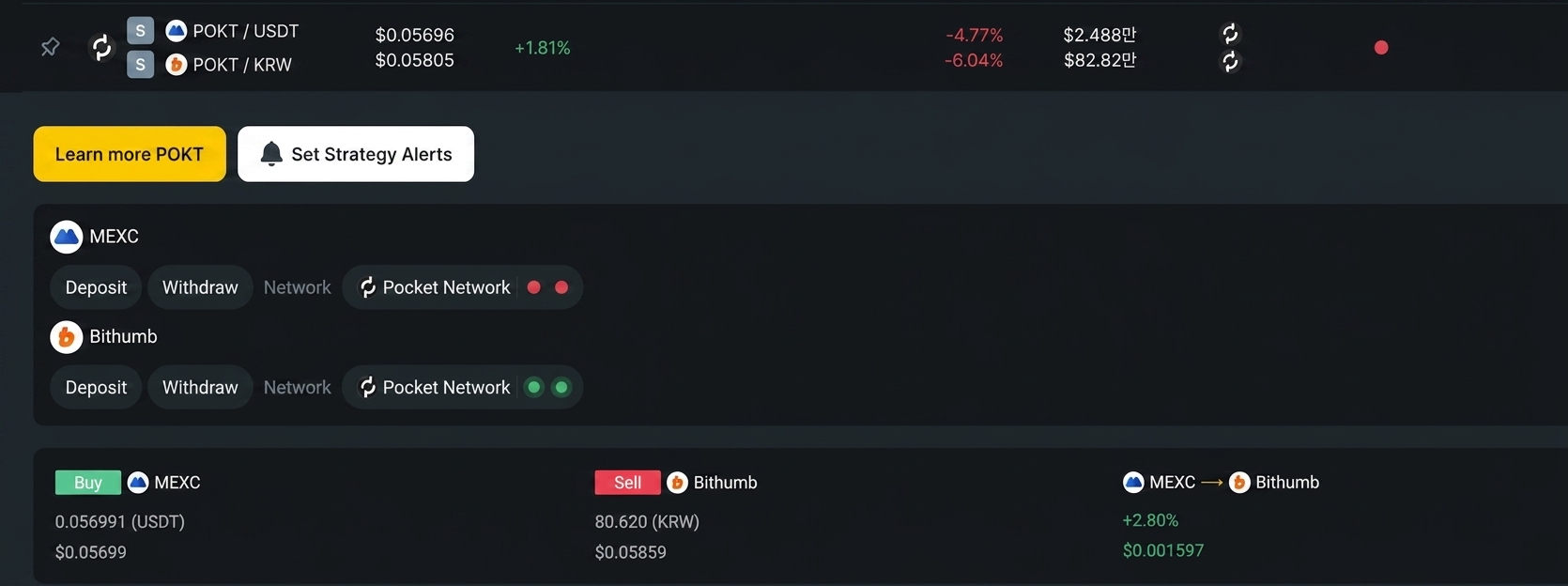
For example, when 1 Bitcoin trades at 100,000,000 KRW on exchange A
but at 100,500,000 KRW on exchange B, that is exactly a spot–spot gap.
Why do these price differences arise?
If all exchanges were a single, perfectly connected market,
this phenomenon would not occur.
But the crypto market is fragmented for the following reasons,
which create price differences and keep those differences alive.
1. Overwhelmingly many, and fragmented, exchanges
The most fundamental reason is that,
compared with traditional finance, the crypto market
is split across an overwhelmingly large number of trading venues.
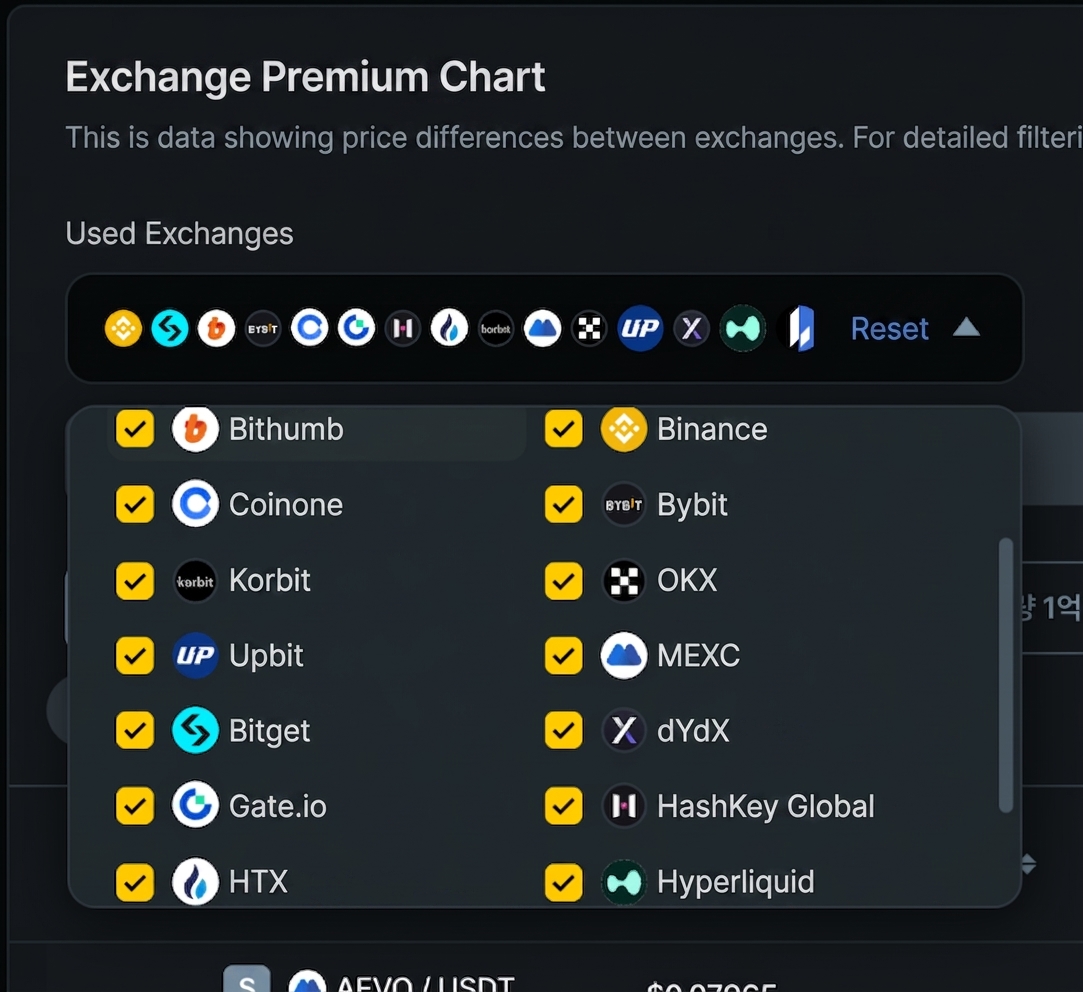
Around the world there are hundreds of centralized exchanges (CEXs)
and countless decentralized exchanges (DEXs).
Each exchange has its own order book,
liquidity, and unique user pool,
running on independent servers that don't share data with one another.
This works on the same principle as the same product
trading at different prices on Danggeun Market, Joonggonara, and Bunjang.
2. Institutional barriers and controls on capital movement
Each country has different crypto regulations and foreign-exchange policies.
In particular, countries with strict foreign-exchange laws like Korea
control the free movement between the domestic currency (KRW) and foreign currency (USD).
As a result, the most basic arbitrage route —
buying coins cheaply abroad, bringing them into the country, and selling them —
is effectively blocked.
Moreover, domestic KRW exchanges like Upbit and Bithumb
restrict sign-ups by non-resident foreigners.
These institutional barriers isolate the Korean market
from the global market, and they are the single most crucial factor
that keeps the price differences formed within it (the Kimchi premium)
from being easily resolved.
3. Asymmetric propagation of information and events
Not all information and events are reflected in the market simultaneously.
For example, if a particular coin is newly listed first on exchange A,
explosive buying pressure can occur on that exchange alone right after listing,
creating a large price difference from other exchanges.
Also, when major bullish or bearish news about a particular coin breaks,
the information may spread first within a particular language sphere or community,
and investors in that region react first, causing temporary price imbalances.
4. Blockchain coin-transfer speed and deposit/withdrawal reflection time
Moving a coin from one exchange to another
requires physical time.
Depending on the state of the blockchain network,
transfer and confirmation (confirms) can take from a few minutes to tens of minutes,
and during this time the prices on the two markets keep moving.
Because of these technical constraints, executing spot–spot gap arbitrage
takes time, which creates risk equal to that time lag
and leaves room for the price gap to exist.
1-2. Four Execution Strategies for Spot–Spot Gap Arbitrage
The principle of a trading strategy using the spot–spot gap is extremely simple.
First, you have to catch the spot–spot gap.
By comparing prices on multiple exchanges in real time,
you find a coin where a sufficient price difference has occurred.
(e.g., BTC at 100,000,000 KRW on exchange A vs. BTC at 100,500,000 KRW on exchange B)
Then, to monetize this gap, there can theoretically be
the following four arbitrage strategies.
Strategy 1: Simple Transfer Arbitrage (No Hedging)
This is the most intuitive and basic method.
Principle:
You buy the coin on the cheaper exchange A,
"transfer" that coin to your wallet on exchange B,
and once the transfer is complete, you sell it on exchange B to capture the profit.
Advantages:
The execution method is very simple,
and you can attempt it even without understanding derivatives like futures or lending.
Disadvantages and risks:
The most fatal weakness of this strategy is "transfer risk."
During the few minutes to tens of minutes
that the coin moves from exchange A to exchange B, exchange B's price can fall,
causing the arbitrage opportunity to vanish or even turn into a loss.
In effect, it's the same as betting on the direction
that "the price will hold,"
so rather than arbitrage in the pure sense,
it's closer to a high-risk trade.
Practicality:
This is a good strategy to execute only when special market conditions
make it predictable that the premium (price difference) will persist.
Otherwise, it is generally a dangerous strategy
that cannot be recommended to individual arbitrage traders.
Strategy 2: Simultaneous Trading via Two-Sided Asset Holdings (Theoretically Optimal)
This is the theoretically most perfect method
of eliminating risk without using hedging.
Principle:
You hold sufficient KRW (or USDT)
and coins (e.g., BTC) on both exchange A and exchange B.
When a price difference arises,
you sell BTC for KRW on the more expensive exchange B,
and at the same time buy BTC with KRW on the cheaper exchange A.
Advantages:
Because there is no coin-transfer process,
"transfer risk" is completely eliminated.
It is pure arbitrage that is entirely unaffected by price movements.
Disadvantages and risks:
"Capital inefficiency" is maximized.
To execute this strategy, you must always keep many kinds of coins and cash
parked and waiting across numerous exchanges.
This means an enormous amount of capital must sit idle, waiting for an opportunity,
without engaging in any profit-generating activity.
Practicality:
Unless your capital is virtually infinite,
this is a practically near-impossible strategy for individual investors.
That said, someone who wants to steadily increase their Bitcoin count
can also execute it by holding
KRW and Bitcoin on a domestic exchange and Tether and Bitcoin on an overseas exchange,
adjusting the amounts on both sides according to the Kimchi premium situation.
Strategy 3: Hedging via Lending
This is a clever way to hedge price-movement risk
without using the futures market.
Principle:
- On the more expensive exchange B, you borrow (lend) enough of the coin to realize your profit.
- You immediately sell the borrowed coin on exchange B to convert it to cash.
- At the same time, you buy the same amount of the coin on the cheaper exchange A.
- You transfer the coin bought on exchange A to exchange B.
- With the coins that arrive after the transfer, you repay the coins borrowed on exchange B and pay a small amount of lending interest.
Advantages:
The fees are often cheaper than hedging with futures,
and it can be applied even to coins that have no futures market.
It can effectively eliminate "transfer risk."
Disadvantages and risks:
The biggest problem is "exhaustion of borrowable supply."
When an attractive arbitrage opportunity arises,
countless traders try to borrow at the same time,
so securing the amount you need is like a "first-come, first-served war."
There is also the cost of lending interest,
and "collateral liquidation risk" exists if the price of the pledged collateral moves.
Practicality:
This is the most effective strategy for individual investors, but
precisely for that reason, everyone considers it first when an arbitrage opportunity arises,
so the borrowable supply is depleted quickly.
Unless it's an opportunity that only you have spotted,
only those who have built a fast system are likely to succeed.
Strategy 4: Hedging via Futures (The Most Common Method)
This is the standard strategy most commonly used by crypto arbitrageurs.
Principle:
- You buy spot on the cheaper exchange A.
- At the same time, you sell (short) the same amount of futures on a futures exchange (A, B, or a third exchange C) to hedge price-movement risk.
- You safely transfer the spot from exchange A to exchange B.
- When the spot arrives at exchange B, you sell the spot and simultaneously close the futures short position (buy to close).
Advantages:
It has high reliability and scalability.
The futures market has abundant liquidity, so,
unlike lending, you can almost always hedge as much as you want.
It is the surest way to eliminate price risk.
Disadvantages and risks:
Understanding derivatives such as futures contracts and funding rates is essential.
Beyond trading fees, while holding the position there can be the risk
of having to pay "funding rates."
Also, if many people execute this strategy
and the price difference between spot and futures widens,
the biggest risk is that you have to carry that widened amount as a confirmed loss.
Practicality and market impact:
This is the standard strategy that professional arbitrageurs and most individual investors
most realistically adopt.
Successful execution requires a deep understanding of futures contracts, the spot–futures gap, and funding rates.
When a strong spot–spot gap occurs on a particular coin,
countless arbitrageurs tend to execute this strategy simultaneously.
This applies "spot buying" and "futures selling (shorting)" pressure to the entire market at the same time.
This very collective behavior becomes one of the key causes
of the "spot–futures gap" we'll cover in the next section — in particular, the
"backwardation" phenomenon, where the futures price falls below the spot price.
2. The Spot–Futures Gap (Basis Trading)
2-1. What Is the "Basis"?
Spot–futures gap arbitrage is
a more advanced strategy that, without needing to physically move assets,
exploits the "crack" between the spot price and the futures price
within a single exchange.
In financial markets, this price difference is called the "basis."
Basis = futures price − spot price
This basis is an important indicator that reflects market participants'
"expectations" about the future.
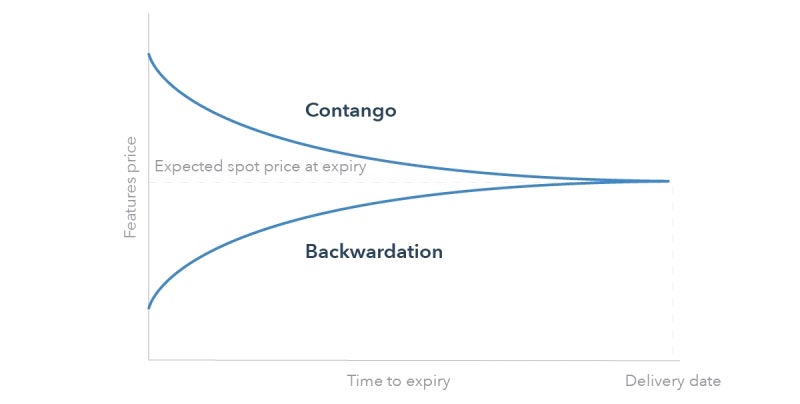
Contango:
A state where the basis is positive (+),
that is, where the futures price is higher than the spot price.
This means market participants strongly expect prices to rise going forward,
and it mainly appears in bull markets.
Backwardation:
A state where the basis is negative (−),
that is, where the futures price is lower than the spot price.
Theoretically, this can be interpreted as market participants viewing the future pessimistically,
but in the crypto market there is another important cause.
It is precisely the arbitrage activity we covered earlier in the "spot–spot gap" part.
When an attractive spot–spot gap (e.g., Won-Sangttari) arises,
countless arbitrageurs, to hedge their risk,
all execute the "buy spot + sell (short) futures" strategy at once.
In this process, enormous selling pressure is applied to the futures market,
and it is very common for a backwardation state — where the futures price
falls below the spot price — to be created artificially.
In other words, backwardation, rather than being mere evidence of pessimism,
is also an indicator showing the market-structural characteristic that
"hedging demand is overwhelming spot-buying demand."
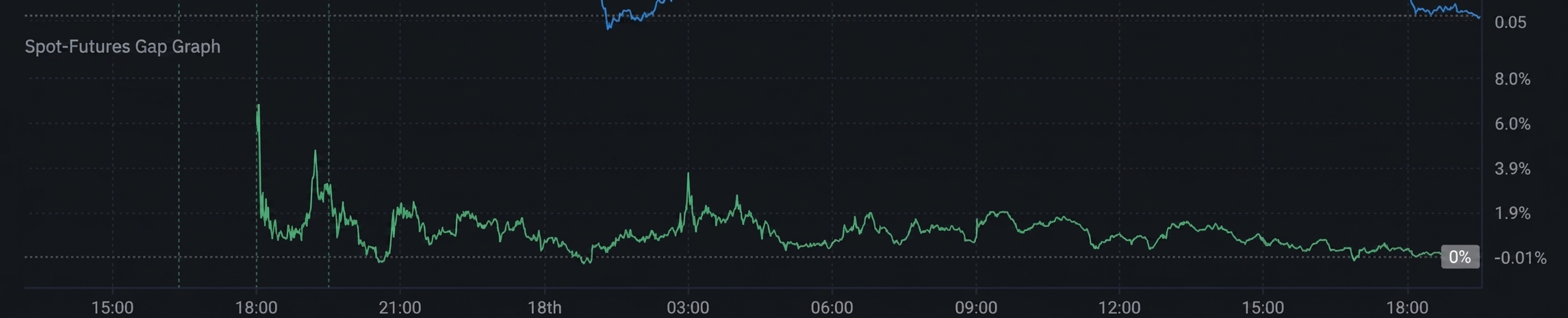
2-2. The Inevitable Relationship with the Funding Rate (Recap of Lecture 5)
Because the perpetual futures market has no expiry,
a mechanism is needed to keep this basis from expanding or shrinking indefinitely.
That is precisely the "funding rate" we covered in detail in installment 5.
The funding rate acts as a force that periodically pulls this basis back toward 0.
Contango situation (futures > spot):
The funding rate becomes positive (+),
so long-position holders (futures buyers) pay interest to short-position holders (futures sellers).
This reduces the appeal of the long position and increases the appeal of the short position,
acting as pressure that lowers the futures price and narrows the gap.
Backwardation situation (futures < spot):
The funding rate becomes negative (−),
so short-position holders pay interest to long-position holders.
This serves to raise the futures price and narrow the gap.
The above are expressions mainly used in traditional finance,
but contango and backwardation are not commonly used terms in the crypto community.
The backwardation situation that usually occurs most often
is simply called the spot–futures gap,
and contango is also called the reverse gap, or the spot–futures reverse gap.
2-3. Trading Strategy (Basis Trading)
Basis trading ultimately exploits the property of the basis
to eventually converge toward 0.
Cash and Carry Arbitrage: Executed in a contango situation.
Building the position:
You sell (short) the overvalued futures and at the same time buy the undervalued spot.
Realizing the profit:
When, over time, the basis narrows (the futures and spot prices become similar),
you close both positions simultaneously and capture a profit equal to that difference.
Receiving positive funding rates while holding the position is an additional bonus profit.
Reverse Cash and Carry Arbitrage: Executed in a backwardation situation.
Building the position:
You buy (long) the undervalued futures,
and at the same time sell (short) the overvalued spot.
(Selling spot is only possible by using a lending service or the like.)
Realizing the profit:
When the basis narrows (or turns positive),
you close the positions simultaneously and capture the profit.
If you receive negative funding rates while holding the position, additional profit arises.
2-4. Advantages and Considerations from the Individual Investor's Perspective
Advantages:
Basis trading like the above does not require transferring coins to another exchange,
so "transfer risk" is fundamentally blocked.
In many cases, it can be executed even within a single exchange.
It is therefore relatively simple.
Considerations:
Because you can't know when the price convergence will happen,
you may have to hold the position for a long time,
and if it doesn't converge but instead the gap widens further,
you may have to bear losses during that period.
Also, depending on the funding-rate situation,
unexpected costs may arise.
Therefore, this strategy requires the ability to identify the cause of the spot–futures gap,
to understand how the spot–futures gap disappears (how the basis converges to 0),
and to understand and predict how the funding rate will flow.
3. The Futures–Futures Gap
Futures–futures gap arbitrage is
the most sophisticated and technical strategy, exploiting the phenomenon where the same perpetual futures contract trades at slightly different prices on different futures exchanges.
For example, it targets the difference between Binance's BTCUSDT perpetual futures price
and Bybit's BTCUSDT perpetual futures price.
But depending on its nature, this gap divides into
the domain of institutions and the opportunity of individuals.
We need to understand it by distinguishing between the "automatable futures–futures gap"
and the "non-automatable futures–futures gap."
3-1. A Battle Between Robots: The HFT Futures–Futures Gap

This corresponds to the futures–futures gap in the traditional sense.
Definition and causes:
This is the fleeting price discrepancy that almost always exists
due to subtle differences in each exchange's liquidity, order-book depth, fee policy,
funding-rate settlement cycle, and so on.
Characteristics:
The gap's size is very small, under 0.1%,
and its duration is also extremely short, on the order of milliseconds (ms, 1/1000 of a second).
The more stable the market, the smaller and faster this gap disappears.
Trading strategy:
You buy (long) futures on the exchange where they are even slightly cheaper,
and at the same time sell (short) the same amount of futures on the more expensive exchange,
then close both positions simultaneously the instant the prices become equal,
stacking up razor-thin profits over countless repetitions.
The fundamental reason this high-volume, low-margin strategy is possible is that
these players are not merely fast — they are
market makers (MMs) or institutional investors who, through special contracts with exchanges,
pay almost no trading fees (0%) or
are charged a far lower rate than ordinary investors.
With ordinary fee rates, it is hard to make meaningful profit from this minuscule gap.
Conclusion:
This domain is a field where institutional investors
place their servers as close as possible to the exchange's servers
and compete via high-frequency trading (HFT) bots
that surpass human reaction speed.
It is effectively impossible for an individual to make a profit by participating manually,
and it cannot be accessed without an automated system.
3-2. A Battle Between Humans: The Special Non-Automatable Futures–Futures Gap
But the peculiarities of the crypto market
often create diverse, abnormal futures–futures gaps
that fall outside the operating range of HFT bots.
This offers a greater opportunity to individual investors who have
situational judgment and fast execution, rather than a mere speed contest.
Because these gaps originate from unpredictable events,
they have a "non-automatable" character.
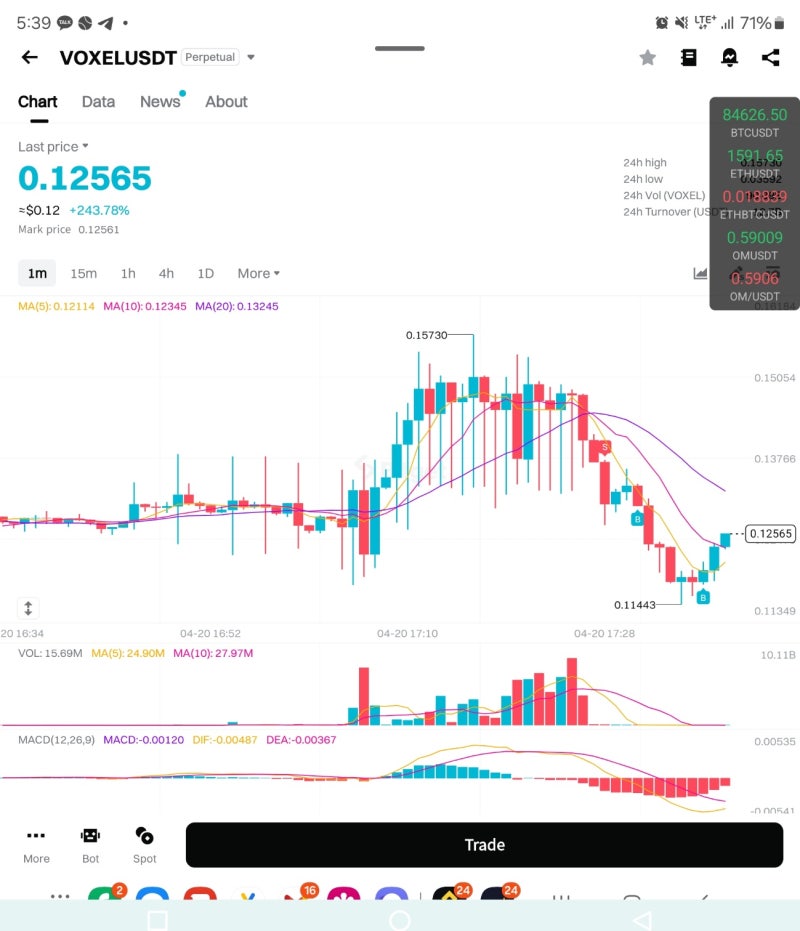
Case 1: Exchange technical errors and data corruption
As the most dramatic example,
there are cases where a particular exchange
incorrectly references external data
and displays a wrong price.
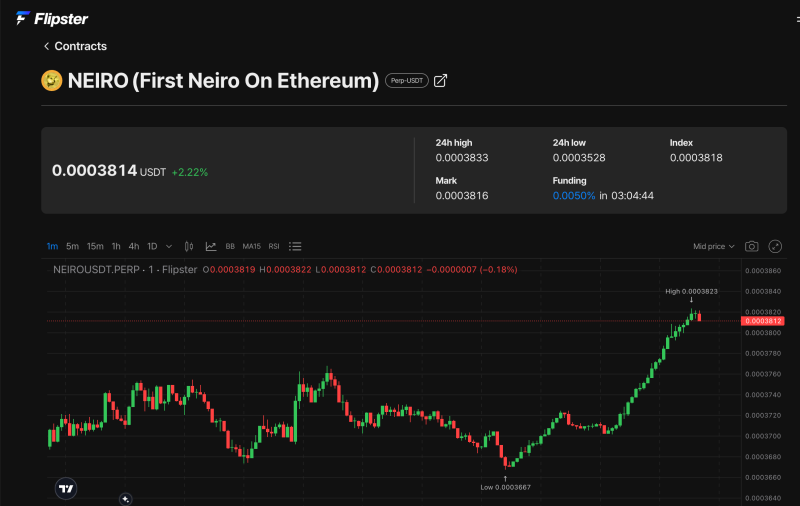
For example, there was an incident on the Flipster exchange
where the futures price of a coin called "Neiro"
tracked the price of a different coin of the same name,
producing a price difference of up to tenfold
compared with other exchanges.
An ordinary arbitrage bot recognizes such an extreme gap as a risk and
stops operating or filters it out as an abnormal trade,
but a trader who is aware of the situation can use this error
to seize the chance for an enormous profit.
Case 2: The early chaos of a newly listed coin
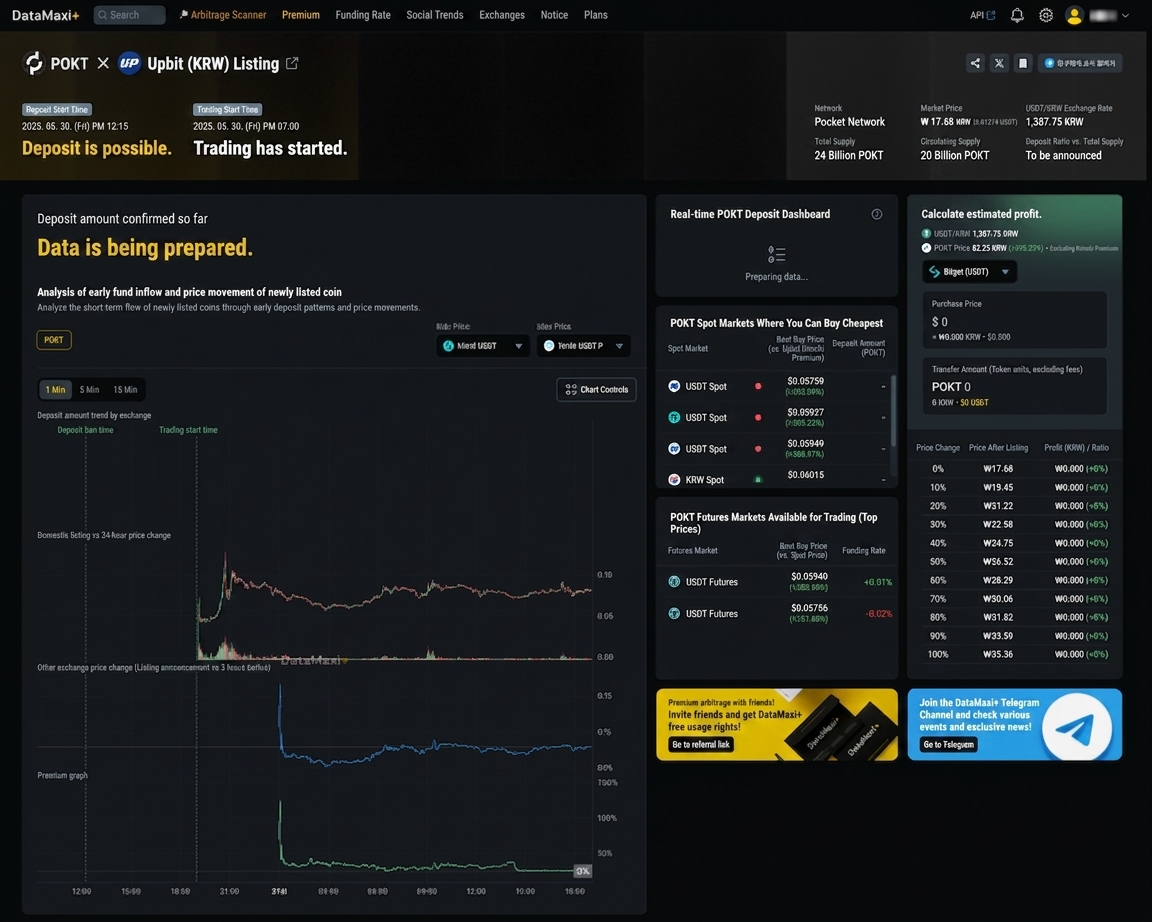
The moment a particular coin's perpetual futures are listed for the first time on a particular exchange,
the market is highly inefficient.
This is partly because most automated trading bots
and institutional-grade market makers' (MMs') systems
have not yet fully adapted to this new market,
and partly because each exchange's futures product references different external prices.
In this early period, liquidity is scarce,
price swings are extreme,
and because trading bots are not yet set up,
gaps of 1–5% or more compared with other exchanges can occur.
A trader who recognizes and prepares for this in advance
can enter manually before the bots make the market efficient and earn a large profit.
Case 3: Malfunction of an exchange's or MM's trading bot
There are cases where an exchange's matching engine or a market maker's bot
temporarily stops working or errors out.
In this case, only that exchange's price fails to keep up with the market's flow
and lingers alone at a different price, creating a slow gap.
This can persist anywhere from a few minutes to over an hour until the system recovers.
Because it's hard for an individual investor to monitor every exchange,
through a monitoring tool like DataMaxi+,
this offers an individual investor who discovers it ample opportunity to trade manually.
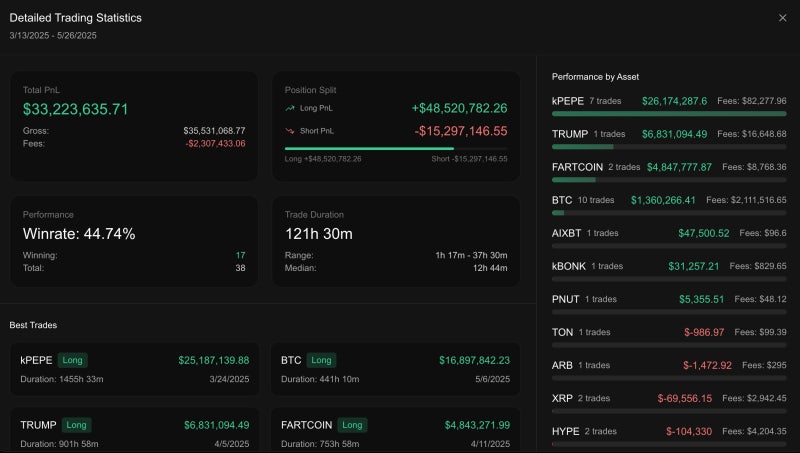
Case 4: Large-scale liquidations or entries on a Perp DEX
Another futures–futures gap that individual investors can target
arises when massive capital — called whales —
enters or unwinds a large position on a particular exchange, especially a decentralized perpetuals exchange (Perp DEX).
In fact, when a whale named "James Wynn"
entered a Bitcoin short position of an enormous size — $1B —
on Hyperliquid,
Hyperliquid's Bitcoin price was as much as 0.1% cheaper than Binance's.
Conversely, when he closed the short position,
traders who analyzed the liquidity situation and the order book
predicted that, when James Wynn unwound the position, he would sweep the liquidity quotes
and create another futures–futures gap.
In fact, when James Wynn unwound the short position,
Hyperliquid's Bitcoin price
became as much as 0.3% more expensive than Binance's.
On top of that, a funding-rate gap also persisted, as a bonus.
Traders who caught this and prepared in advance
were able to capture a substantial spread of 0.3% even after fees.
Given Bitcoin's low volatility, even using just 20x leverage made it a large spread of 6%.
In this way, the "non-automatable futures–futures gap" is not a speed contest
where bots compete on a millisecond scale —
it is a domain where individual investors who first catch an abnormal market situation, wait,
and then execute their strategy can earn a profit.
Individual investors will need to find these moments of unusual imbalance
through information-gathering tools like DataMaxi+.
(Reference case: https://t.me/plusevdeal/3845)
Wrapping Up: The Trade-off Between Risk and Technology
This time, we took an in-depth look at the three representative price gaps
that exist in the crypto market —
that is, the principle of the gap and the arbitrage strategies that exploit it.
As we move from the spot–spot gap to the spot–futures gap
and on to the futures–futures gap,
we could confirm a clear trade-off relationship: the "physical risk"
and "time risk" that arise from directly moving coins decrease,
while the importance of the "technical requirements and speed"
needed to catch and execute opportunities increases exponentially.
In the past, because of these technical barriers,
futures-based arbitrage was regarded as the exclusive preserve of institutional investors.
But now individual investors, too, through powerful information tools like DataMaxi+,
can access opportunities that were once unimaginable —
such as the spot–spot gap, the spot–futures gap, and the futures–futures gap.
What matters is wisely choosing which kind of "crack" to attack,
in line with your own capital size, your understanding of the technology,
and your risk appetite.
I hope this article serves as a reliable map for you as you navigate the vast world of arbitrage.
In the next installment, we'll cover the arbitrage opportunities that arise in situations where unusual, special events have occurred.
Thank you for reading this long piece.

- arbitrage
- crypto
- education
- price-gap