Lecture 7. Everything About Event-Driven Arbitrage (KRW Listings, Airdrops, Launchpools, etc.)
A complete rundown of arbitrage opportunities from special events: KRW listings, airdrops, Launchpools, and more.
New Arbitrage Opportunities Created by Events
What would happen if Apple announced an event like this:
"One month from now, anyone who brings in an old iPhone gets a free upgrade to the latest iPhone!"
The moment that announcement dropped, the price of used iPhones across the country would instantly spike by
the full value of "the latest iPhone you'll receive a month from now."
From that point on, buying a used iPhone is no longer
simply buying an old phone —
it becomes buying a "future redemption voucher" at a high price.

The world of event-based arbitrage works in exactly the same way.
If the arbitrage we covered through installments 1–6
was a strategy for finding gaps in prices that currently exist in the market,
the event-based arbitrage we'll cover in this seventh installment is
a strategy for building a position now, ahead of time,
around a nearly certain expected value that will materialize in the future.
But the key isn't the "future profit" itself.
The real game begins at the very moment the event announcement appears —
an intense battle of wits against the market's countless participants.
The market is far more efficient than we tend to think,
and it instantly prices future profit into the present as a "cost."
This time, when there's an event like a "KRW listing" or an "airdrop,"
we'll dig in intensively through real cases to see how, from the moment of the announcement, it reshapes the market's price structure (the spot–futures gap, the funding rate),
and how we should
seize opportunities and manage risk
amid that dynamic change.
1. The Basic Mechanism of Event Arbitrage
1-1. The Market's Immediate Reaction and Price Pre-pricing
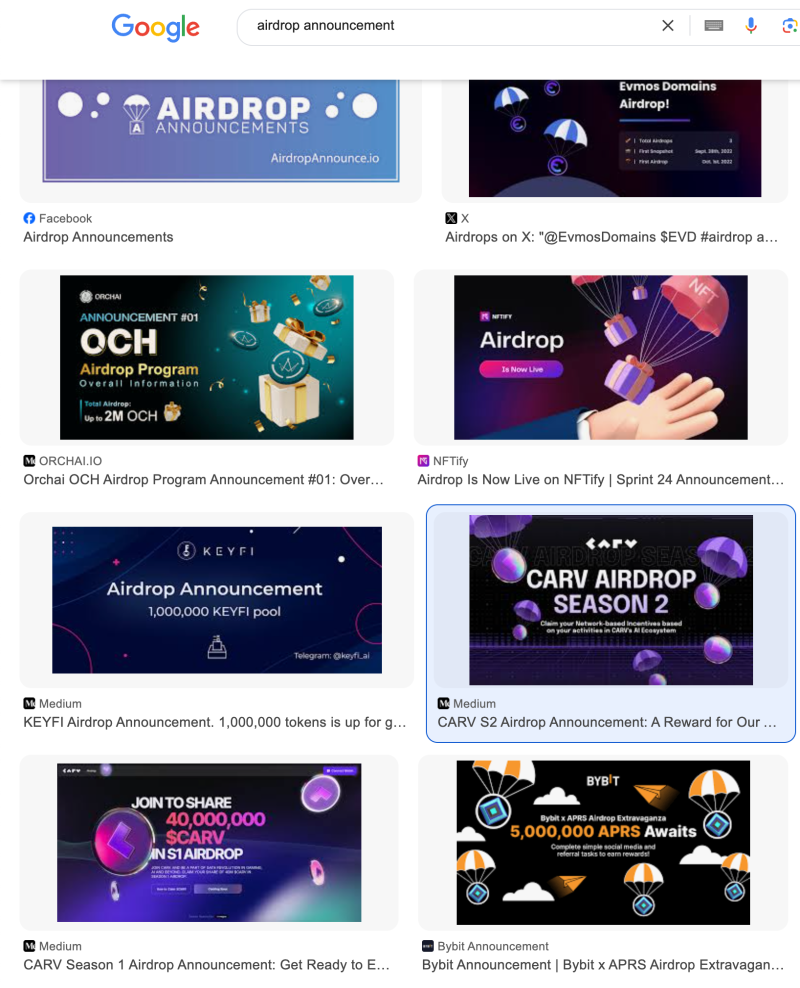
Let's assume an airdrop announcement is made: "Hold coin A and you'll get coin B for free."
The countless arbitrageurs who catch this information take the same action almost simultaneously.
Specifically, to obtain the expected profit that is coin B,
they buy coin A, and to eliminate the price-movement risk of coin A,
they sell (short) futures to hedge.
This collective, simultaneous action
applies enormous selling pressure to the futures market.
As a result, a "backwardation" state — where the futures price falls significantly below the spot price —
is created artificially,
and instantly.
1-2. How Expected Profit Gets Priced In as a "Cost"
Now, a new participant who tries to enter this hedging position a step too late finds themselves at a disadvantage.
Guaranteed loss at entry (spot–futures gap):
They now have to "buy spot expensive and sell futures cheap."
This "spot–futures price gap" is a guaranteed loss incurred the moment you enter the position.
Ongoing holding cost (negative funding rate):
At the same time, because futures short positions have surged,
the funding rate inevitably turns negative (-).
This becomes a holding cost you have to pay continuously throughout the life of the position (e.g., every 8 hours).
In other words, the future expected profit that is coin B (the airdrop)
is immediately pre-priced into the current market price
in the form of an entry cost called the "spot–futures gap"
and a holding cost called the "negative funding rate."
1-3. Market Equilibrium and What the Real Arbitrage Opportunity Means
In conclusion, the market moves very efficiently
and finds a new equilibrium point like the one below in an instant.
Expected profit from the event ≈ (spot–futures gap loss at entry) + (total expected funding-rate cost)
Therefore, the real arbitrage opportunity is not the event itself.
The real opportunity lies in judging:
"Is this cost set by the market excessive or cheap relative to the actual future profit I've analyzed?"
In other words, only when you predict the value of the event and its associated costs more accurately than the market's collective intelligence
does excess profit finally arise.
2. Market Reaction by Event Type and Case Analysis
2-1. New KRW-Market Listings (so-called "Won-Sangttari")
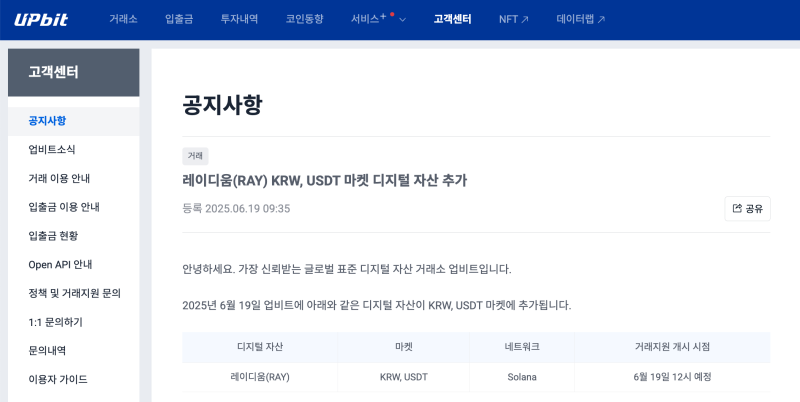
A "KRW listing" (so-called "Won-Sangttari," KRW-listing arbitrage) is the opportunity that the most traders pay attention to among event-based arbitrage.
When a particular coin is listed on a KRW exchange like Upbit or Bithumb,
enormous interest and buying pressure from domestic investors pour in,
and there's a high probability of a "listing beam" — a price spike right after listing.
In this process, the "Kimchi premium" that forms as the gap with overseas prices widens
is the main source of profit for this strategy.
But this expected profit isn't free.
The moment the listing announcement appears, the market reacts immediately
and pre-prices in the costs of a "widening spot–futures gap" and a "negative funding rate."
A successful trade hinges on the analytical ability to predict whether a
Kimchi premium large enough to cover these costs and then some will materialize.
"Heung-ttari" vs. "Mang-ttari": The Key Analytical Indicators for Success
To judge whether a new KRW-market listing event will be
a so-called "Heung-ttari" (a winner) or a "Mang-ttari" (a flop),
successful traders comprehensively analyze indicators like the following.
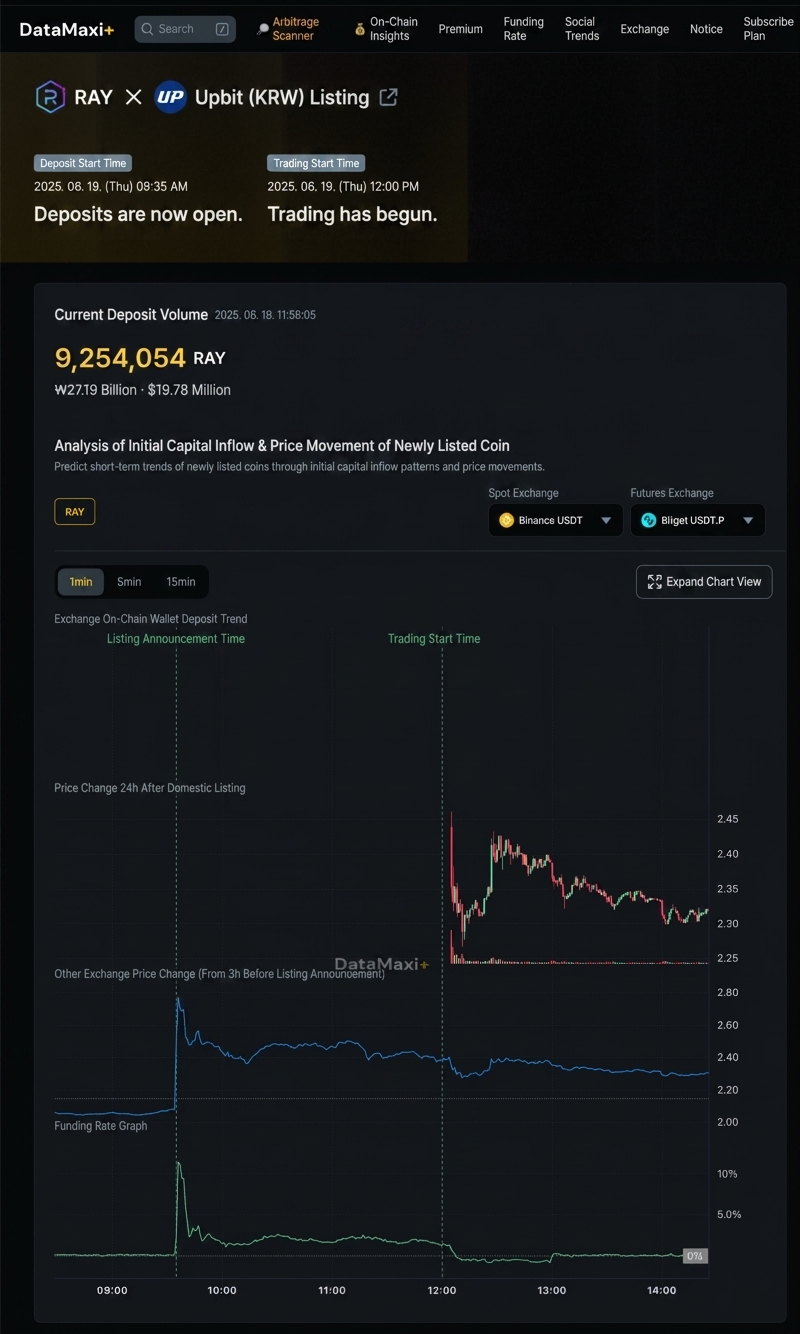
DataMaxi+'s "Won-Sangttari" feature
provides this information in real time to aid traders' precise judgment.
(1) Market Cap and Total Circulating Supply
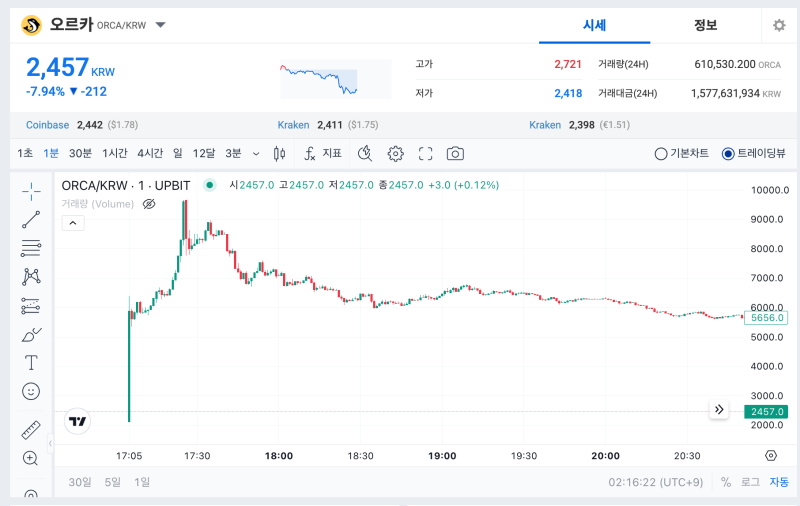
A coin's market cap is an important gauge for estimating the potential size of the listing beam.
The lower a coin's market cap — a so-called lightweight coin — the higher the price gain even a small amount of buying pressure can produce.
When trading opens at a high price relative to the listing price,
domestic retail investors' FOMO buying piles on,
raising the likelihood of it turning into a Heung-ttari.
Conversely, a heavyweight coin with a very large market cap
requires far more capital to move the price,
so the intensity of the listing beam may be relatively weak.
Therefore, through market cap, a trader can
predict in advance the volatility level of this event and the size of the expected profit.
(2) Deposited Volume and Internal Circulating Supply
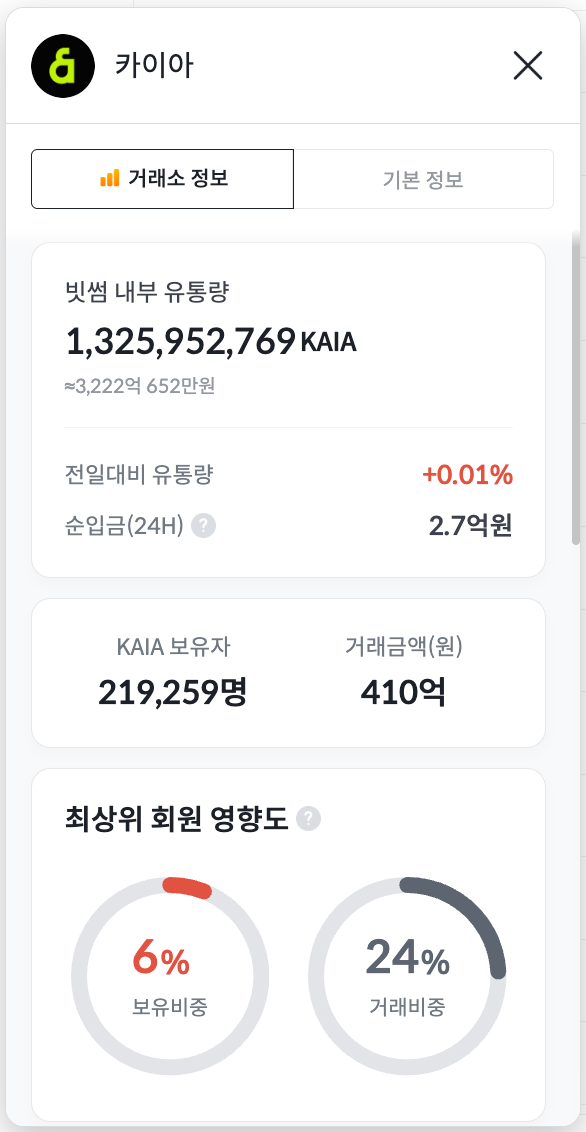
The quantity of coins already deposited into the listing exchange's wallet is the most important indicator.
If an excessive volume relative to circulating supply has already been deposited,
this represents potential selling pressure that will pour out the moment trading begins,
so the "listing beam" may be weak or nonexistent.
(3) The Size of the Announcement Beam and the Spot–Futures Gap
It matters how much the overseas exchange price rose right after the listing announcement (the announcement beam),
and how much the spot–futures price gap widened as a result.
If the price has already risen too much overseas,
or the spot–futures gap has widened beyond the expected return,
you can judge that there's little room for additional Kimchi premium to arise.
(4) Hedging Cost (Negative Funding Rate)
How extreme the coin's negative funding rate is serves as a "congestion indicator"
showing how many competitors have piled into this trade.
An excessive funding rate is, in itself, a direct cost that eats into your returns.
(5) Network Type, Transfer Speed, Number of Block Confirmations, and Deposit-Crediting Speed
These factors are the key variables that determine the speed at which arbitrage volume is supplied to domestic exchanges.
The slower and harder the supply,
the longer the domestic market stays isolated
and the more likely it is to sustain a higher premium.
For example, if the coin has a slow transfer speed like Ethereum or Bitcoin,
or if the domestic exchange uses a different deposit/withdrawal network from overseas so that a deposit is only possible after going through a separate bridge,
a bottleneck arises in arbitrageurs' supply of volume, which can become a condition for a Heung-ttari.
Also, the number of block confirmations the exchange requires and the deposit-crediting speed matter.
If the network is slow,
the exchange requires too many confirmations,
and on top of that the deposit-crediting speed is slow,
the supply delay can only get worse.
The Ravencoin (RVN) recently listed on Upbit's KRW market
had only a 1-hour gap between the announcement and the start of trading,
yet multiplying Ravencoin's block-generation time by the number of confirmations Upbit requires
came out to well over an hour.
You could speculate that this was the Upbit listing team engineering a supply delay.
(This is the author's personal opinion, not the official view of DataMaxi+.)
Conversely, a listing that uses the same network as overseas exchanges,
with fast transfers and few deposit confirmations,
has a relatively higher chance that the supply flows smoothly and the Kimchi premium is weak or short-lived.
In addition to the information DataMaxi+ currently provides as above,
the information below is also an important factor in determining the success of a Won-Sangttari strategy, so it needs to be grasped.
(6) The Status of Other Exchanges, DEXs, and Bridges
How easily and in what quantity arbitrage traders can source the coin
before trading opens on the KRW market
is an important factor that greatly determines the Won-Sangttari outcome.
The harder it is to supply the coin domestically because other exchanges or DEXs hold none,
and the harder it is to move assets via a bridge,
the greater the possibility that a higher Kimchi premium forms.
That's why grasping the volume in other exchanges' hot wallets also becomes important information.
(7) The Overall Market Mood
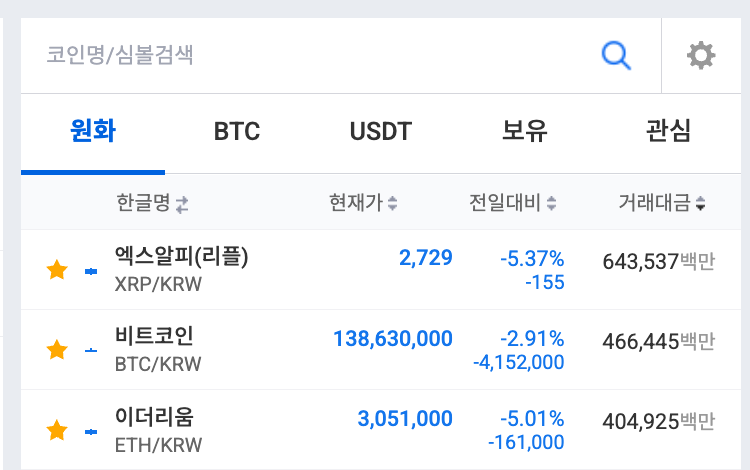
The Bitcoin price trend on the listing day and the overall Kimchi premium (positive premium) level also matter.
In particular, when the Korean market is overheated, the listing beam tends to appear more powerfully.
Also, the more passive other arbitrage traders are about participating in this Won-Sangttari, the more strongly the Kimchi premium appears.
In the end, a successful "Won-Sangttari" is a highly advanced analytical game that you execute only once you've gained a probabilistic edge — synthesizing these variables to conclude that
the "actual Kimchi premium that will occur"
will be greater than the "total cost set by the market (spot–futures gap + funding rate)."
2-2. Airdrop Hedging Cases: The Ethereum Merge and FLOKI
The Ethereum Merge (ETHW airdrop):
In September 2022, during the "Merge" upgrade in which Ethereum transitioned from PoW to PoS,
existing Ethereum holders were granted a hard-forked PoW Ethereum (ETHW) at a 1:1 ratio.
To receive this ETHW airdrop, countless investors bought spot ETH and sold futures ETH.
As a result, the Ethereum futures market entered a historic level of backwardation,
and the funding rate also showed a record-breakingly extreme negative reading.
At the time, the price difference between Ethereum spot and futures held at around 0.5%,
and on major futures exchanges like FTX and BITMEX the funding rate dropped to as low as -0.6%.
Converted to an annualized rate, this funding rate amounts to an extreme figure of about 650%.
This is a representative case showing that ETHW's expected value was perfectly pre-priced into the futures market as a "holding cost."
Traders had to choose whether to bear this high cost and receive ETHW,
or to give up the opportunity altogether.
FLOKI (TOKEN airdrop):
The same phenomenon occurs even with relatively small coins.
When the new token $CAT (Simon's Cat) was airdropped to $FLOKI holders in the past,
$FLOKI's funding rate stayed continuously negative during the snapshot period
and the spot price remained higher than the futures price.
This shows that the same mechanism operates in all event-based arbitrage.

2-3. Launchpool/Launchpad Case: Binance HODLer Airdrops
Binance's "HODLer Airdrop"
offers the opportunity to mine, for free, tokens of new projects that aren't yet listed,
as long as you deposit (hold) BNB in a particular product.
The arbitrageur's action:
Traders buy spot BNB to participate in the Launchpool while, at the same time,
selling (shorting) BNB perpetual futures to eliminate BNB's price-movement risk.
The result:
This steady spot buying demand and futures selling demand
affect BNB's spot–futures gap and funding rate.
BNB normally maintains a positive funding rate, but
during large events like a HODLer Airdrop,
hedging demand piles in, the positive funding rate shrinks, and it tends to flip into a negative funding rate.
The funding rate at this point effectively acts as a kind of
"entry fee" or "opportunity cost" for participating in the Launchpool.

2-4. Other Event Situations and Arbitrage Opportunities
Beyond KRW listings and airdrops,
market inefficiency arises from a wide variety of unpredictable events.
The core principle running through all of these opportunities is the same.
It's about first grasping "Does this particular event grant the asset holder a predictable future value?,"
and entering when that value, compared against the market's "hedging cost," is expected to yield an excess profit.
Therefore, true event-based arbitrage
can be called an intellectual game of finding the gap between
"the cost the market has priced in"
and "the profit I judge I can actually obtain,"
and attacking that difference.
(1) Wallet Maintenance and Network Upgrades:
When a particular exchange suspends deposits and withdrawals of a particular coin, that coin becomes isolated inside that exchange.
During this time, a price difference between that exchange and others can naturally arise,
and a particular group of actors may even deliberately manipulate the coin's price.
In such cases, the moment deposits and withdrawals resume,
a spot–spot arbitrage opportunity may arise,
and in anticipation of this spot–spot gap event you can also build a
spot–futures hedging position ahead of time, before the event occurs.
The act of building a spot–futures hedging position in advance
in anticipation that a price difference will arise
is sometimes called "sending an assassin" in crypto-community slang.

(2) Market Manipulation by Actors:
There are cases where a particular group of actors artificially pumps the price of a low-liquidity coin
on only a particular exchange.
This creates an extreme spot–spot gap, or spot–futures gap, with other exchanges.
But because such cases are so highly volatile,
they are also very high-risk opportunities.
That said, the more the market's countless traders
take directional trading positions,
the more arbitrage opportunities tend to arise.
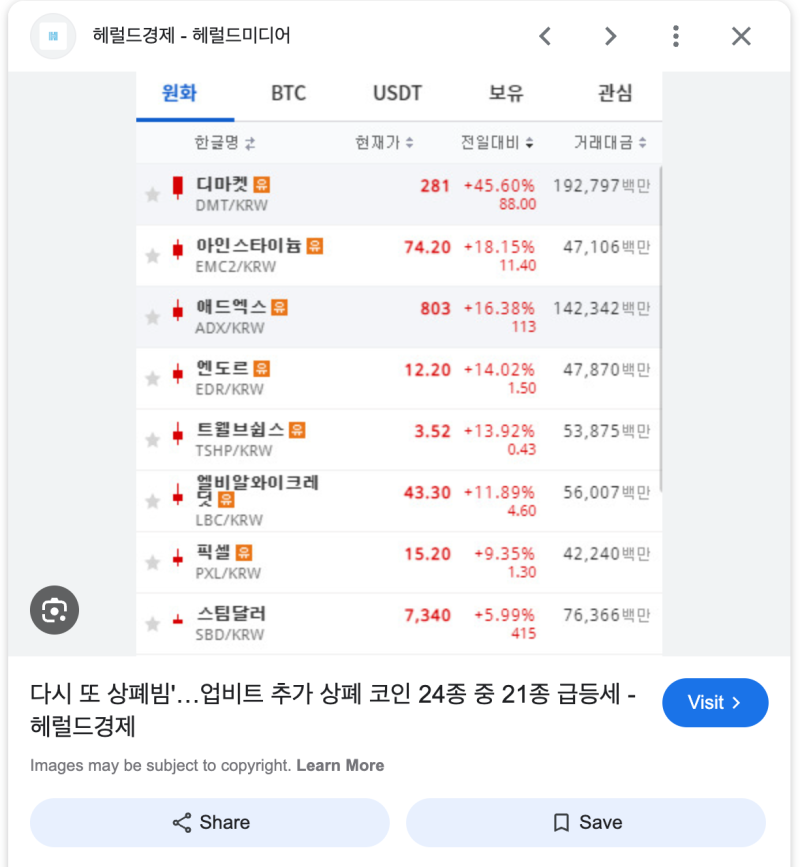
(3) Caution/Investment Warning and Delisting:
When a particular coin is designated as a caution item or its delisting is decided on a domestic exchange,
a panic-selling phenomenon can occur on that exchange,
and because deposits are suspended, market-manipulating actors may conversely exploit this
to manipulate the price.
Arbitrage opportunities tend to arise even in situations like these.
(4) De-pegging Events:
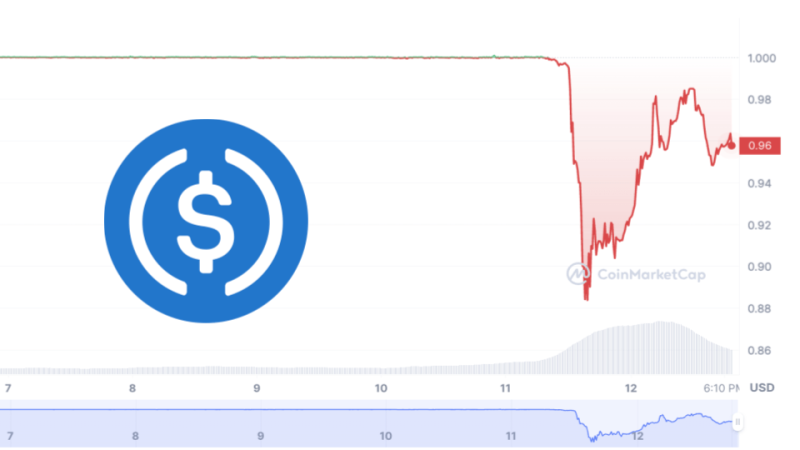
When a stablecoin loses its $1 value (the USDC de-pegging event),
or a liquid-staking token's peg to its underlying asset breaks (the stETH event),
a sophisticated arbitrage opportunity exploiting the price divergence between the two assets can arise.
Also, if during a de-pegging event you find an oracle, DeFi protocol, or bridge that fails to reflect the price difference, you can exploit it to obtain a risk-free arbitrage opportunity.
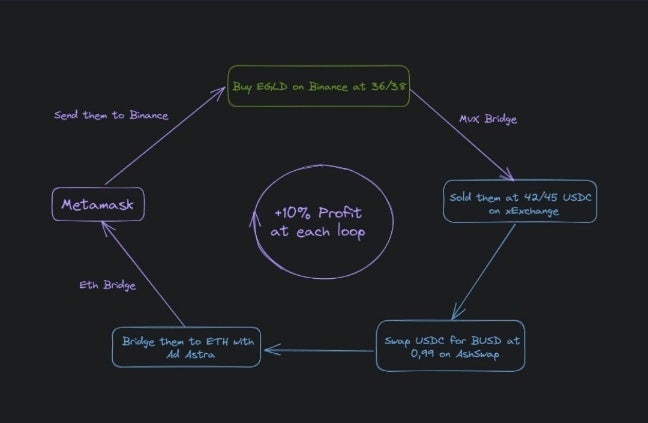
In this way, an arbitrageur always pays attention to the market's "abnormal situations,"
analyzing the causes and effects of the price imbalance those situations create to find opportunities others can't see.
3. The Execution Steps of Event-Based Arbitrage
Step 1: Analyzing Information and Judging Entry After the Event Occurs
This is the most important step. When the announcement appears, you must rapidly analyze the following, beyond simply judging it as "good news."
(1) Estimate expected profit: How much is the anticipated Kimchi premium, or the value of the airdrop coin?
(2) Identify the holding period: How many days or hours remain until the event ends (listing, snapshot)?
(3) Check the market cost: How large are the spot–futures gap and funding rate that formed as the market reacted right after the announcement? Or is there somewhere you can lend it out?
You should consider entering only when, synthesizing the three above, you're convinced that expected profit > total cost set by the market.
Step 2: Entering the Position and Managing It
If you've decided to enter, build the spot buy and futures sell positions simultaneously while avoiding the funding-rate payment time,
to minimize entry cost.
Then, while holding the position,
keep monitoring the funding-rate trend to manage the total cost,
and you should think through an exit strategy in case the market unfolds differently than expected (e.g., a postponed listing).
Step 3: Closing the Position and Locking In Profit
The moment the event (KRW listing, snapshot) ends,
the countless futures short positions that were entered for hedging
close all at once, the futures price surges,
and the spot–futures gap rapidly narrows.
Generally, the faster you close the position, the less hedging cost you pay.
Wrapping Up: A Game of Reading the Market
As we saw this time,
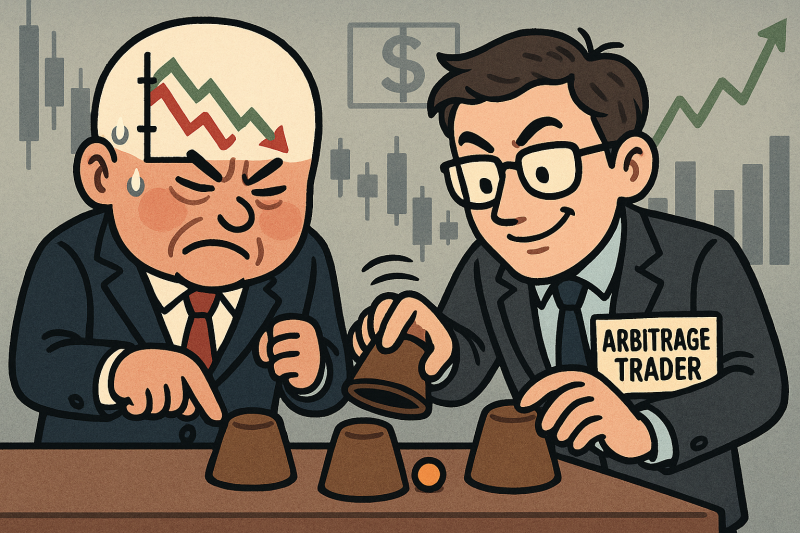
event-based arbitrage is not about sitting back and waiting for free future profit.
It is an intellectual game of understanding the market's efficiency — in which future expected profit is immediately reflected as a present cost —
and betting by judging whether the price (cost) the market has assigned is fair.
Success hinges on fast information, a deep understanding of the market-reaction mechanism, accurate cost-calculation ability,
and your own analysis and judgment that surpass the market's collective intelligence.
This is no longer simple arbitrage;
it's closer to a comprehensive game in which you predict even the psychology and behavior of market participants.
One thing to make clear:
the event-based arbitrage covered in this installment
is somewhat far from the pure-sense arbitrage defined in the earlier installments.
If pure arbitrage is taking an already existing price difference without risk,
event-based trading is closer to a kind of sophisticated betting that
predicts future outcomes,
predicts the behavior of other market participants,
and builds a position around it.
But there's a decisive difference from ordinary trading, which bets purely on direction itself.
Whereas the participants you have to compete against are limited to a small number of arbitrage traders,
countless directional traders add further inefficiency to the market.
Also, because you can clearly calculate the expected profit and cost structure,
it's an attractive strategy with a far higher expected return relative to risk than still-uncertain directional trading.
In the next installment, the eighth, we'll take an in-depth look at various real-world arbitrage trading cases.
Thank you for reading.

- arbitrage
- crypto
- education
- event-driven