Lecture 8. In-Depth Analysis of Real Spot–Spot Gap Arbitrage Cases
A data-driven deep dive into real spot–spot gap arbitrage cases.

From Theory into Practice
Hello, everyone.
This is the eighth installment of DataMaxi+'s arbitrage education series.
So far, over seven installments, we've built a solid theoretical foundation for arbitrage.
Starting from the basic principle of arbitrage (Lecture 1),
to the unique opportunities of the crypto market (Lecture 2),
hedging as the key to locking in profit (Lecture 3),
the Kimchi premium that symbolizes the Korean market (Lecture 4),
the funding rate at the heart of perpetual futures (Lecture 5),
and the various price gaps (Lecture 6) and
event-driven trading (Lecture 7).
Now you have all the theoretical tools needed to dissect market inefficiencies.
The theory is clean and clear.
Buy where it's cheap, sell where it's expensive.
But the real market we have to participate in isn't as simple as the theory.
Unexpected risks, complex variables,
and the psychology of countless participants are all mixed together.
What if an exchange system error created free money?
What if there were a way to actually make money while everyone else panics and dumps their assets?
Starting from this Lecture 8, we'll dig into the opportunities hidden in exactly those chaotic moments.
From this Lecture 8 through Lecture 10, we move beyond theory into practice.
We'll review, one by one, concrete arbitrage cases that actually occurred in past markets,
and analyze in depth how the theories we learned meshed and worked in real situations,
and how traders spotted those opportunities and turned them into profit.
Through this process, we'll turn the abstract concepts we've learned so far
into knowledge for concrete execution strategies.
In this Lecture 8, as the first step,
we'll focus on digging into real cases of the most intuitive yet powerful arbitrage opportunity,
the "Spot-Spot Gap."
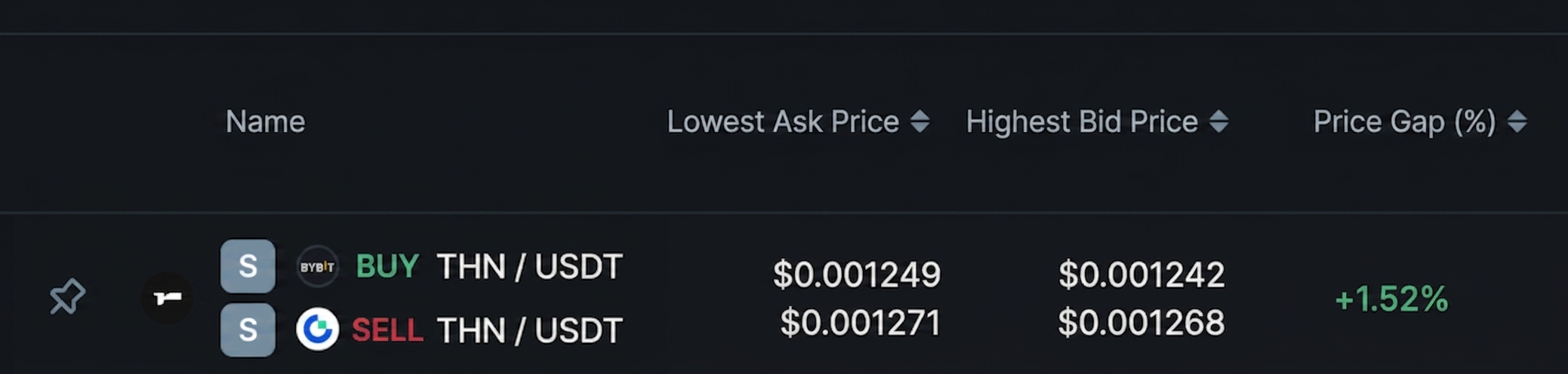
The spot-spot gap refers to the phenomenon where the same cryptocurrency trades at different prices across exchanges.
From the "Kimchi premium," the price difference between domestic and overseas exchanges,
to the extreme price distortions created by a particular exchange's bankruptcy or technical failure,
through a variety of real cases you'll see vividly how principles you only learned in theory
play out in real market situations,
and what risks and opportunities are hidden in that process.
Each case is organized into (1) situation overview, (2) opportunity analysis and arbitrage execution scenario, and (3) results and implications, for a systematic analysis.
Spot-Spot Gap Cases
The spot-spot gap is the most intuitive arbitrage opportunity,
where the same coin trades at different prices across exchanges.
This gap mostly arises from "friction" such as inter-country regulatory barriers
or a particular exchange's technical problems,
and it sometimes creates opportunities that even individual investors can exploit.
Case 1. Arbitrage Opportunities During the 2022 LUNA ($LUNA) Coin Crash
The LUNA collapse was both the event that caused the most massive damage to domestic crypto investors,
and, conversely, the arbitrage opportunity that brought enormous wealth to the largest number of
arbitrageurs.
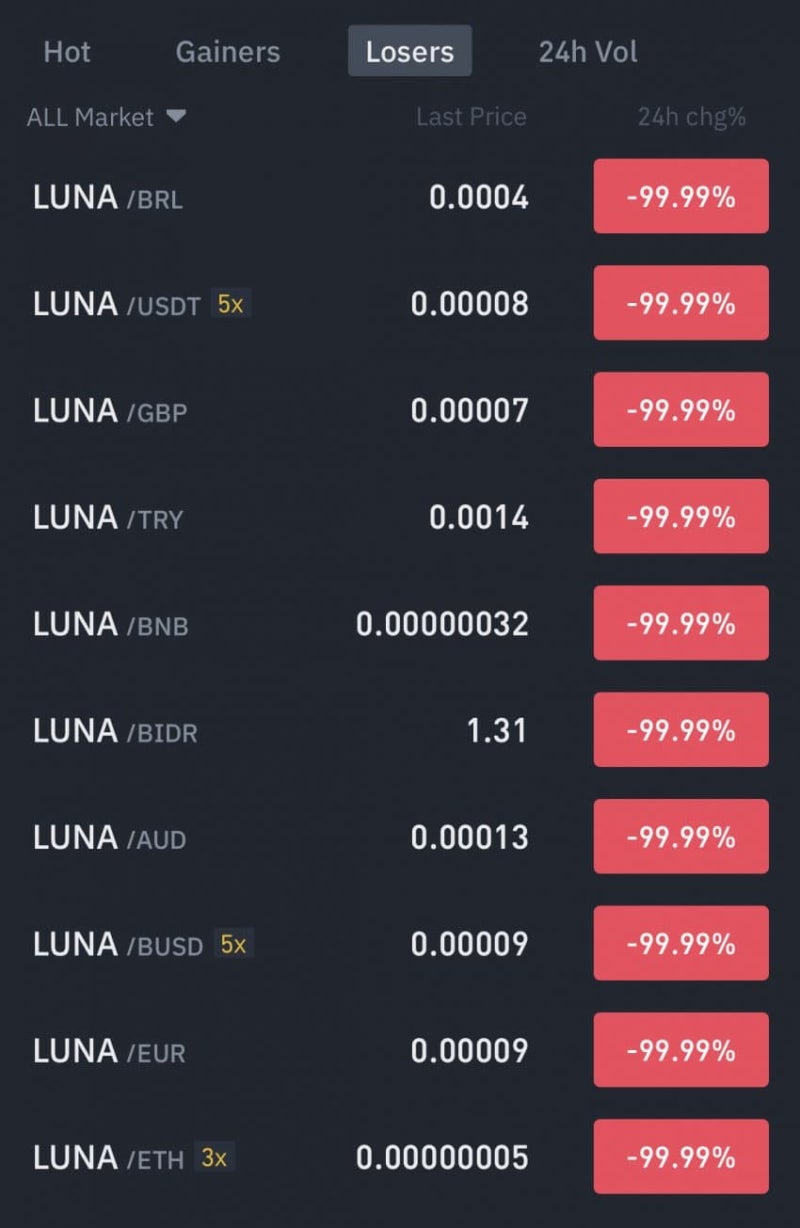
(1) Situation Overview
In May 2022, the Terra-LUNA ecosystem met a historic collapse in just a few days.
In this process, several arbitrage opportunities arose, and the events unfolded as follows.
May 10 (Tue): The crisis begins:
$UST, the stablecoin of the LUNA ecosystem, lost its $1 peg for the first time, falling to $0.95.
May 11 (Wed): The collapse accelerates:
In the afternoon, the $UST price plunged to $0.7.
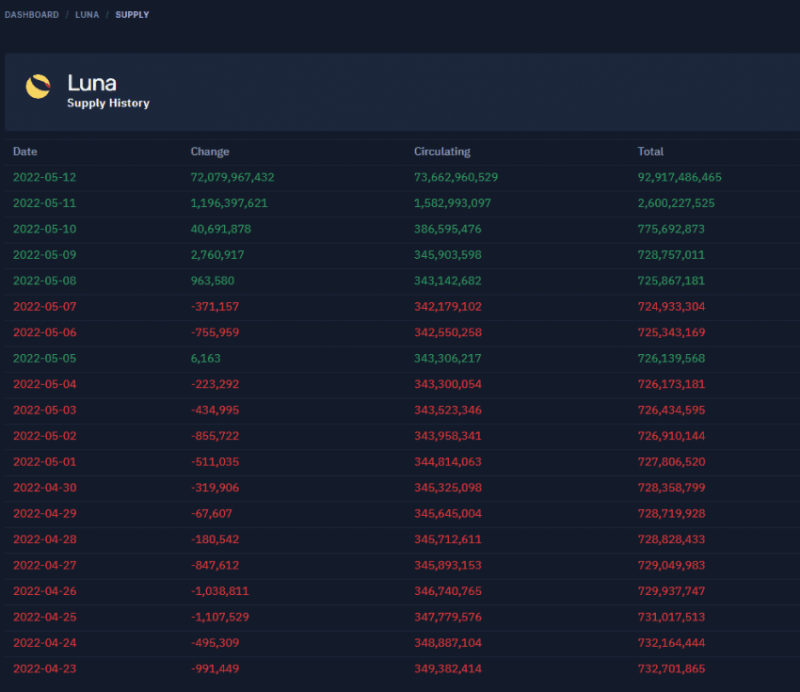
From that night, $LUNA began to be minted infinitely to defend the $UST price,
and the $LUNA price plummeted vertically.
In this process, the first arbitrage opportunity appeared, with the Kimchi premium (the domestic-overseas price difference) exceeding 20%.
May 12 (Thu): Irrational market opportunities expand
Around evening, a "contango" phenomenon occurred in which futures prices were a full 30% higher than spot, opening yet another arbitrage market.
May 13 (Fri): The biggest opportunity
Decisively, on the morning of the 13th, the $LUNA price in Upbit's BTC market reached the minimum unit of "1 satoshi." This price was tens to hundreds of times more expensive than overseas prices at the time, creating the largest arbitrage opportunity in history.
(2) Opportunity Analysis and Arbitrage Execution Scenarios
Within the collapse of the LUNA crisis,
different forms of arbitrage opportunities arose in a chain across several stages.
Skilled traders spotted the following opportunities amid the chaos.
Scenario 1: DeFi leverage exploiting the UST depeg
Even though UST's dollar peg was broken,
some DeFi protocols still had a loophole that recognized UST's collateral value as $1.
In fact, one protocol recognized UST as $1 and lent against it at a 72% collateral ratio.
So once UST's price fell below $0.72,
a trader could drain that protocol's assets until they ran dry,
using UST as collateral through the following procedure.
Buy UST at $0.7 in the market.
Pledge it as collateral and borrow 0.72 USDT.
Use the borrowed 0.72 USDT to buy UST again and add it as collateral.
Repeat this process to accumulate near-risk-free profit.
Scenario 2: Kimchi premium and futures hedging
From the 11th, a "Kimchi premium" emerged in which domestic LUNA prices traded more than 20% higher than overseas.
In theory, this was a risk-free arbitrage opportunity as follows.
- Buy LUNA spot on an overseas exchange.
- At the same time, take a short (sell) position in the same quantity of LUNA futures to eliminate price-movement risk (hedging).
- Transfer the spot you bought to a domestic exchange and sell it at the 20%-higher price.
- Close the futures short position to lock in profit equal to the premium.
Scenario 3: Exploiting the spot-futures price gap (contango)
On the evening of the 12th, the market's irrationality peaked,
and an exceptional "contango" situation arose in which LUNA futures became a full 30% more expensive than spot.
This was the simplest form of arbitrage opportunity.
Buy the relatively cheap spot.
At the same time, sell (short) the expensive futures in the same quantity.
When the two prices eventually become equal again (converge), close all positions, and the 30% price difference becomes your profit outright.
Scenario 4: On-chain arbitrage using the "1-satoshi gap"
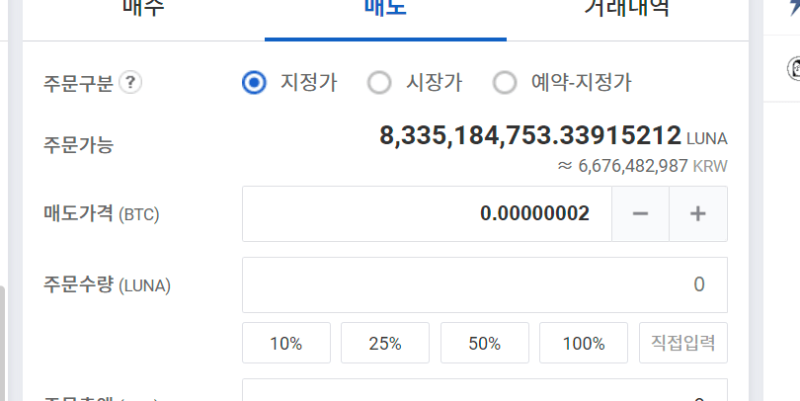
The most dramatic opportunity appeared when the LUNA price in Upbit's BTC market fell to 1 satoshi, the minimum order book level.
It was the lowest tradable price within Upbit's system at the time,
but this price ($0.0002) was tens to hundreds of times more expensive
than the price on overseas exchanges like Binance at the time ($0.00000112).

But at this point the direct deposit/withdrawal routes for LUNA between exchanges were blocked,
so exploiting this gap required a complex on-chain route.
Move funds: Buy Cosmos ($ATOM) on an external exchange and withdraw it to a personal wallet.
Swap assets: Exchange $ATOM for $UST on decentralized exchanges (DEXs) such as Osmosis, Juno Swap, and Crescent.
Move across networks: Use the IBC bridge to transfer the $UST on the Cosmos network to the Terra network.
Final buy: Buy LUNA with $UST on the Terra network, then deposit it to Upbit.
In fact, at the time Terra's own DEX sometimes treated $UST as $1 rather than at its crashed market price.
At the point when arbitrageurs were executing this strategy,
the value of $UST had fallen to as low as $0.085,
so they could secure more than 10 times as much LUNA as the actual value.
The handful of traders who could execute this complex process realized profits in the hundreds of millions of KRW from investments of a few million KRW, and by sharing proof, they demonstrated that information asymmetry and execution capability translate directly into profit.
(3) Results and Implications
To be the first to find places that recognized UST's value as $1
and realize the largest-scale arbitrage required knowledge of the blockchain ecosystem.
Also, when the Kimchi premium reached 20%
and people sent assets from overseas to domestic for spot-spot gap arbitrage, LUNA's volatility was so severe
that many arbitrageurs' futures short hedge positions were liquidated,
and they actually suffered losses.
We could learn that, when short-hedging, the leverage multiple
must account for the coin's volatility (the so-called "managing your neck").
Also, the 1-satoshi gap trade that delivered the largest profit
had the complexity of having to route through several blockchain networks (Cosmos, Terra)
and decentralized exchanges (DEXs).
This showed how deep on-chain knowledge and execution capability
become a barrier to entry that overwhelms competitors.
In the end, the LUNA collapse was recorded in history as the most dramatic case
in which, amid the extreme situation of a market's total collapse,
differences in information asymmetry and execution capability created a transfer of wealth.
References
One of the posts from the Altcoin Gallery that was hot for arbitrage during the LUNA collapse:
https://gall.dcinside.com/mgallery/board/view/?id=coin&no=2939071&page=3037
Another opportunity that arose at the time:
https://t.me/Bananamilkrich/6438
The record of the Upbit hot wallet that received an enormous amount of LUNA on the morning of the 13th:
https://finder.terra.money/classic/address/terra1lg640exsqxa6ftsslx05g4ckgsxqacs2xcfy8a
The on-chain record of one Upbit user who did Upbit arbitrage using the Wormhole bridge and the like at the time:
https://finder.terra.money/classic/address/terra12mpkxmgearqlmuq588949sl9gzg0p7gv7upmlg
A blog post that studied the cause and process of the LUNA collapse in detail and bet on it:
https://blog.naver.com/rudghks669/222724870784

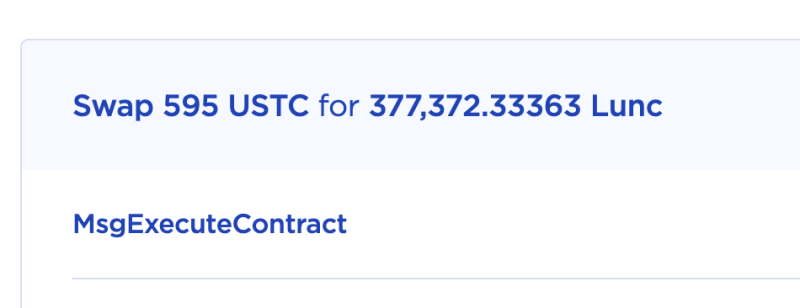
(Transaction records from the time)
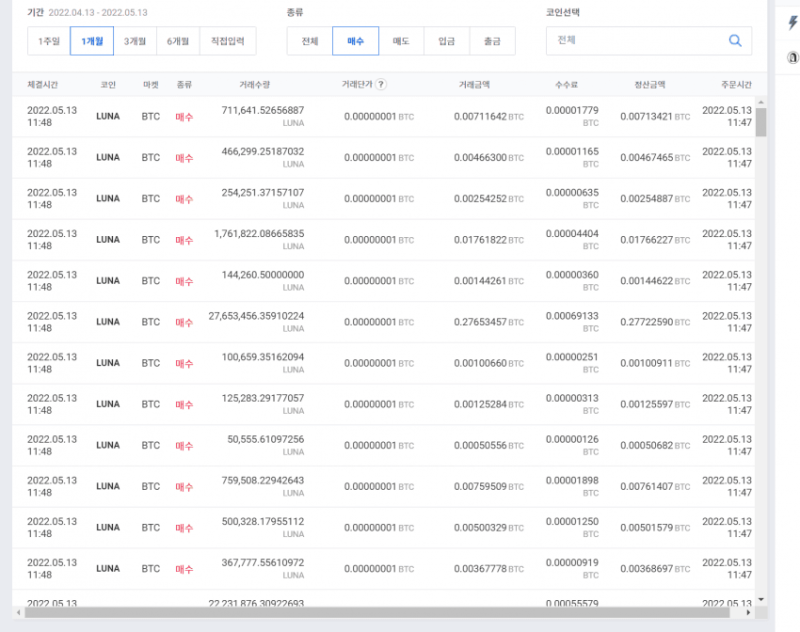
As an aside, one user known by the nickname "Magistar" on DCinside's Altcoin Gallery, in this situation, bought LUNA at 1 satoshi on Upbit and sold when it rebounded to 2–3 satoshi, earning an enormous profit of 100–200%.
(A screenshot of the purchase posted at the time)
Case 2. Arbitrage Opportunities During the 2022 FTX Tron ($TRX) Incident
The FTX bankruptcy left nightmarish memories for countless investors,
but even in the middle of this massive collapse, someone spotted a crack in the market and created an opportunity.
It was the exceptional arbitrage situation that unfolded around Tron (TRX).
This case is fascinating in that it went beyond the usual definition of arbitrage
and demanded a new perspective on risk.
(1) Situation Overview
In November 2022, FTX, then one of the world's top three exchanges,
collapsed amid a liquidity crisis and halted withdrawals of all customer assets.
Investors whose assets were locked inside the exchange fell into a panic.
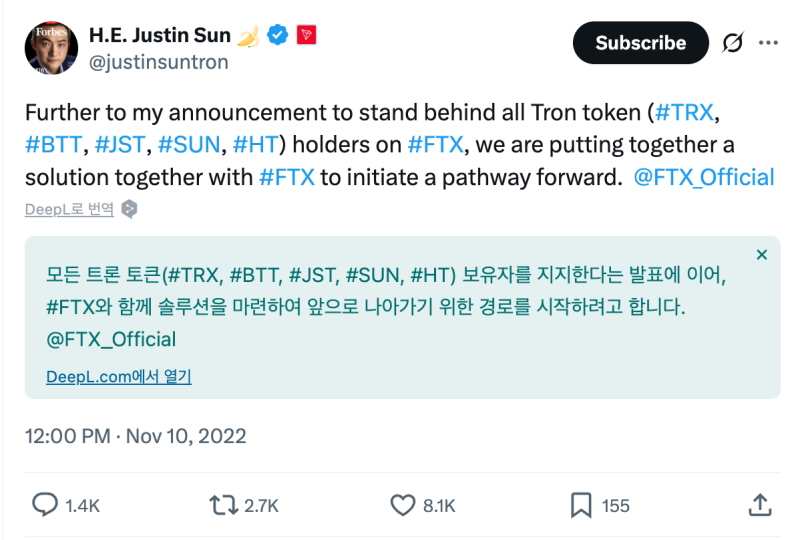
But on November 10,
Justin Sun and the Tron Foundation
announced a special relief plan for holders of Tron ecosystem tokens (TRX, BTT, JST, etc.) inside FTX.
By offering a 1:1 exchange externally, they effectively opened a withdrawal route.
When this news spread,
demand to secure Tron, which had become the only "exit" inside FTX,
exploded.
As people rushed to sell every other coin to buy Tron,
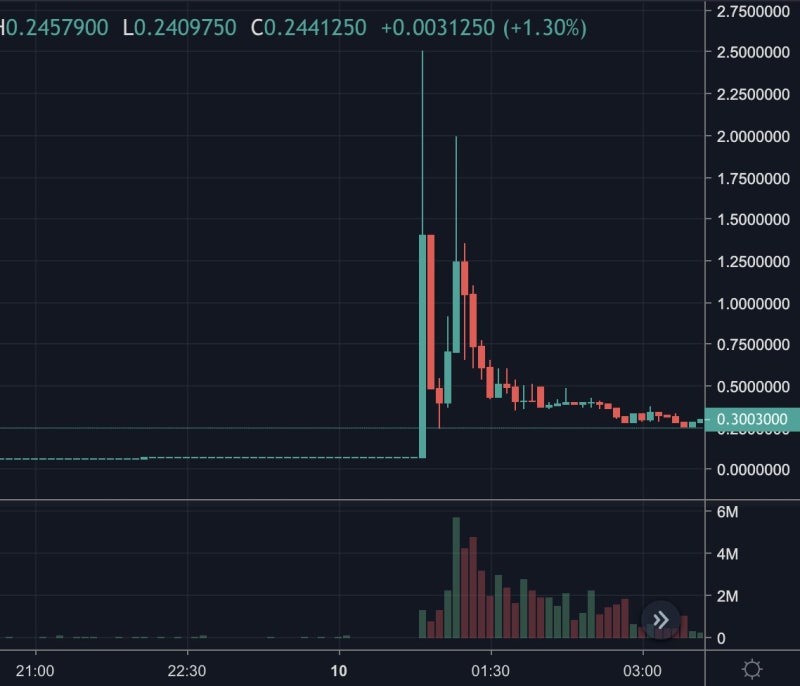
the Tron price inside FTX surged 5 to more than 10 times
compared with normal exchanges like Binance on the outside.
Tron, which traded at $0.05 per unit on the outside,
traded at an abnormal price of over $0.5 inside FTX,
creating an extreme spot-spot gap.
(2) Opportunity Analysis and Arbitrage Execution Scenario
At first glance, this looked like a tremendous arbitrage opportunity.
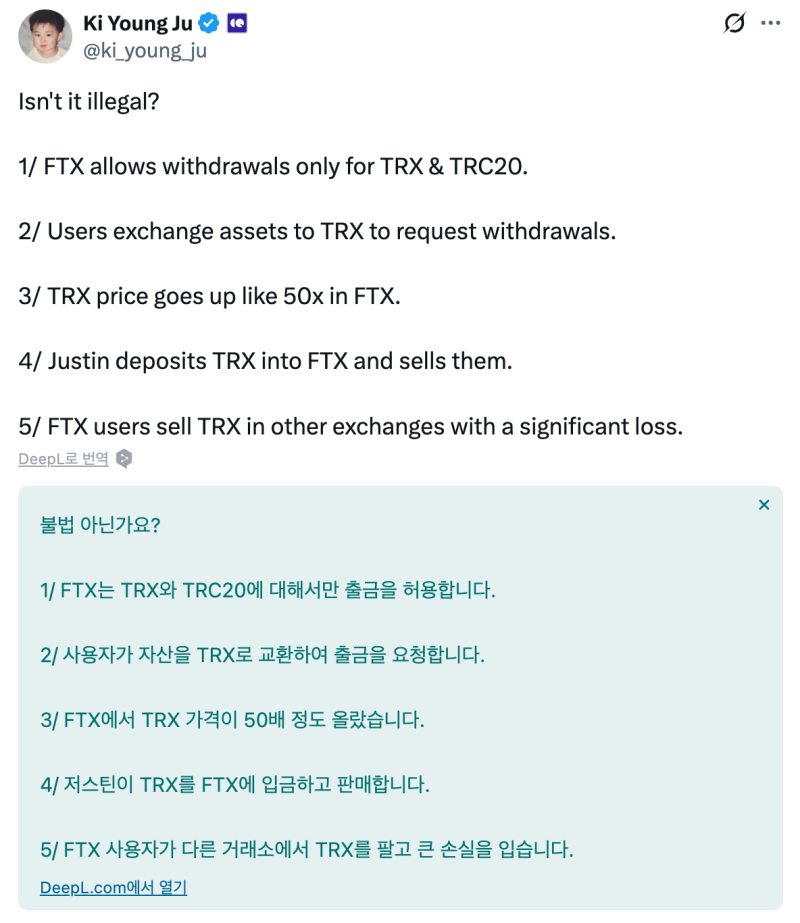
Buy Tron cheaply on the outside, deposit it to FTX,
and sell at 10 times the price to earn enormous profit.
But there was a fatal trap here.
The proceeds (USD, USDT, etc.) from selling Tron
were locked inside FTX and could not be withdrawn.
In other words, the final step where the "profit" is realized was blocked,
so for most traders it was a meaningless pie in the sky.
But a handful of traders
approached this opportunity from a different perspective.
They redefined this trade not as "short-term arbitrage,"
but as "a long-term investment in FTX's bankruptcy assets."
The execution scenario is as follows.
Buy Tron (TRX) at market price on a normal exchange like Binance.
Deposit the Tron you bought into your own FTX account.
Immediately sell the Tron at the surged price in the FTX market and convert it into a USD deposit balance.
This deposit is frozen until FTX's bankruptcy proceedings conclude, but it becomes a "claim against the FTX company." That is, you bet on the right to be repaid proportionally when FTX eventually liquidates its assets and distributes them to creditors.
In fact, a famous domestic crypto influencer, "Ark," bet on this opportunity.
He bought about $200 worth of Tron, deposited it to FTX,
and immediately sold it to secure a deposit balance of $1,939.
This bold bet ultimately turned out to be a great success.
Contrary to the initial pessimistic outlook,
FTX's bankruptcy proceedings progressed relatively smoothly,
and as the value of the crypto assets FTX held
rose significantly along with the market rally,
creditors were able to recover more than 100% of their principal.
And about two years later, as FTX's liquidation proceedings progressed,
the frozen deposit came back as $2,336, with interest added on top.
The initial investment of $200 was realized as a return of more than 11 times.
Source: https://t.me/Board_the_Ark/17873
(3) Results and Implications
This case leaves us with the following important implications.
First, arbitrage opportunities sometimes appear in non-traditional forms.
The FTX Tron incident was not a simple price-difference trade but
a kind of special-situation investment betting on the asset recovery rate in bankruptcy proceedings.
Second, a successful trade requires not only technical execution capability,
but also the analytical power to see through the essence of the situation and the judgment to take on risk.
When everyone focused on the immediate risk of "no withdrawals,"
a few saw the hidden opportunity of "future claim value."
In the end, the FTX Tron incident is a case showing that, even amid an extreme market collapse,
new value can be created through cool-headed analysis and an exceptional perspective.
It remains a historic record proving that arbitrage is more than just the skill of finding price gaps —
it is an intellectual act of accurately assessing the value of risk.
Case 3. The October 2018 Bitfinex Premium Incident
Even without inter-country barriers like the Kimchi premium,
extreme spot-spot gaps can occur even between large global exchanges.
This mostly happens when a particular exchange becomes an "island" cut off from the outside,
and the 2018 Bitfinex incident is a representative case showing how an exchange's own risk
creates price distortions.
(1) Situation Overview
In October 2018,
Bitfinex, then one of the world's top exchanges,
faced a serious crisis.
As its relationship with the bank supporting its trading ran into trouble,
deposits and withdrawals of US dollars (USD), a core function of the platform, were effectively paralyzed.
When the routes for fiat-currency inflows and outflows were blocked,
the exchange began to be isolated from external markets.
To make matters worse, this incident poured fuel on the distrust (FUD)
toward Tether (USDT), the stablecoin deeply tied to Bitfinex.
Investors were gripped by fear that they might not be able to withdraw
their USD locked in Bitfinex,
and by anxiety that USDT's value could crash.
As a result, a move to escape assets out of the exchange emerged.
Investors dumped their uneasy USD deposits or USDT
and rushed into Bitcoin (BTC),
the asset considered safest on the platform at the time.
This internal flight-to-safety demand
caused the BTC price to surge only within Bitfinex.
As a result, the BTC price difference between Bitfinex and other exchanges like Binance
widened from 6% to as much as 10%.
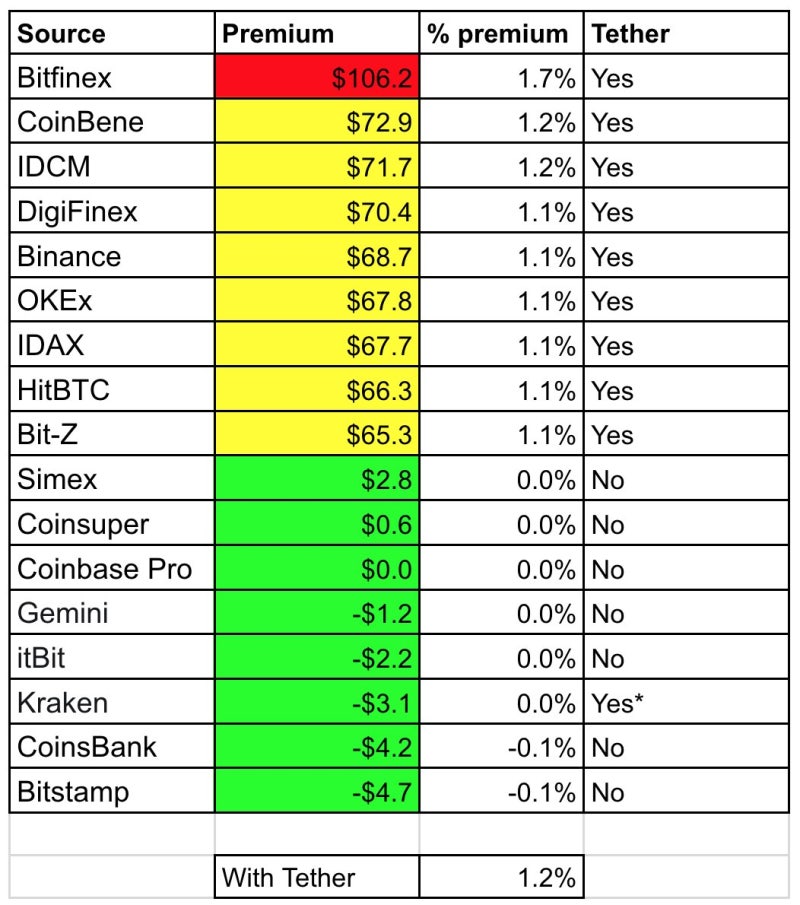
The image above shows, as of October 12,
the premium difference between Bitfinex vs. exchanges using Tether vs. exchanges using USD.
Red is Bitfinex, which had a 1.7% premium.
Exchanges using Tether also had about a 1.1% premium compared with exchanges using dollars.
(2) Opportunity Analysis and Arbitrage Execution Scenario
On the surface, this situation looked like a very clear and easy arbitrage opportunity.
Buy BTC at $6,600 on a normal exchange like Binance or Coinbase.
Transfer the BTC you bought to a Bitfinex wallet.
Sell the BTC that arrives at Bitfinex at the premium price ($7,200).
Realize about $600 (about 9%) profit per trade.
But this simple scenario had a fatal risk hidden in it.
It was counterparty risk.
The core of arbitrage is to "safely recover your funds" after realizing profit,
but at the time, Bitfinex was exactly where this final step was uncertain.
Fear was rampant in the market that the $7,200 obtained from selling BTC
could become un-withdrawable money on the screen.
In the end, this trade was not simply about exploiting BTC's price difference, but
a bet wagering the very survival of the exchange,
betting on "whether Bitfinex won't go bankrupt and will eventually return my money."
(3) Results and Implications
Bitfinex ultimately found a new banking partner
and resumed USD deposits and withdrawals, overcoming the crisis,
and the premium of that time was also resolved within a few days.
During this period, the traders who boldly took on the risk
and went into arbitrage
were able to reap substantial profits after enduring the long withdrawal delays.
This case gives arbitrageurs the following lessons.
First, a large and clear gap can be a "danger signal" rather than an "opportunity."
A gap exceeding 5% persisting for days between large exchanges means
the market is pricing in the bankruptcy
or withdrawal-failure risk of that exchange by the size of the gap.
In other words, a 10% premium is not "10% free profit,"
but the market pricing in "a 10% risk cost."
Second, the foundation of all arbitrage is the credibility of the exchange.
No matter how sophisticated the strategy,
if the trading platform itself collapses, everything becomes meaningless.
Therefore, when you find an exceptional gap that occurs only on a particular exchange,
the first question you must ask is "Why did this gap occur?",
and if the cause is a problem with the exchange itself, an extremely conservative approach is needed.
The Bitfinex premium incident is a spot-spot gap arbitrage case
that taught us how important it is to read the "invisible risk"
that lies beyond the immediate profit.
Case 4. Arbitrage Opportunities During the 2023 Upbit Aptos Mis-deposit and "Enclosed Pumping" Incident

(1) Situation Overview
On September 24, 2023,
Upbit made a serious error in the process of handling Aptos ($APT) deposits.
Someone randomly sent a fake token (ClaimLP_v0.5) created on the Aptos network
to certain Upbit user accounts (about 100,000),
and Upbit's wallet system mistakenly recognized this as the genuine native $APT coin and processed it as a deposit.
Technically, this problem occurred because, when verifying deposit transactions, Upbit's system
only checked the function that defines the type of transaction (0x1::aptos_account::transfer_coins),
and failed to properly verify the type_arguments (0x1::aptos_coin::AptosCoin),
the key data that specifies the actual type of the coin.
As a result, fake APT token deposit records appeared randomly
in about 100,000 Upbit user accounts,
and Upbit recognized them as genuine APT balances.
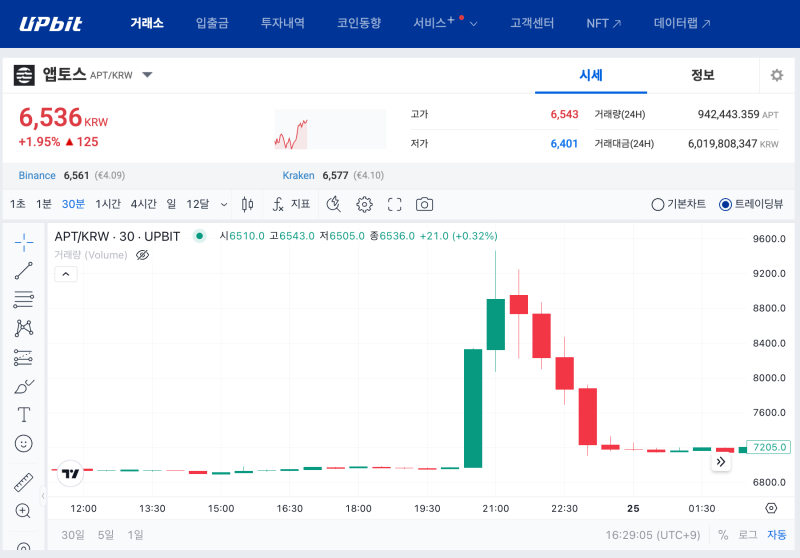
In the end, around 3:47 p.m. that day, Upbit urgently halted APT deposit and withdrawal services
and began investigating the cause and inspecting its wallet system.

This deposit/withdrawal halt
was lifted about half a day later, around 11 p.m.,
and in the meantime, an exceptional surge appeared in the APT price within Upbit.
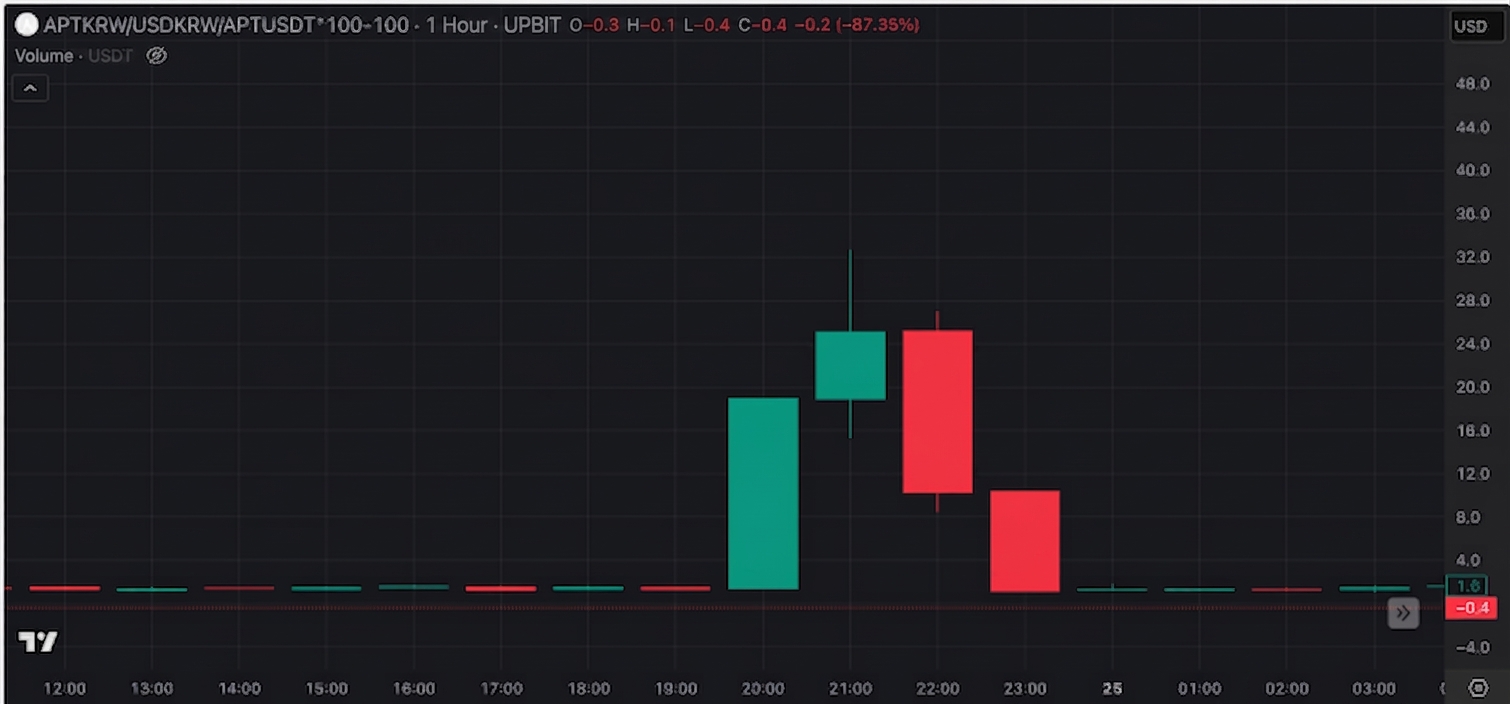
Upbit's APT price, cut off from external global prices,
jumped about 34% starting around 9:30 p.m.
and soared to 9,465 KRW,
while overseas exchange prices were unchanged,
so a Kimchi-premium spot-spot gap of about 34% likewise occurred.
When a domestic exchange's coin deposits and withdrawals are halted like this,
the localized pumping that occurs only inside the exchange
is commonly called "enclosed pumping" (gaduri pumping).
(2) Opportunity Analysis and Arbitrage Execution Scenarios
In this single incident, two kinds of traders generated profit in different ways.
Scenario 1: Directly exploiting the mis-deposit vulnerability
The first to spot the opportunity was the attacker who discovered the system's loophole.
Create a fake token on the Aptos network at very low cost.
Send this fake token to Upbit's Aptos deposit address.
When Upbit's system mistakes it for genuine $APT and credits it to the account, immediately sell at market price to realize risk-free profit.
In fact, some funds were released into the market through this method.
Fortunately, amid the misfortune,
the decimal places of the fake token the attacker created were 6 digits,
while genuine $APT was 8 digits.
If the two tokens had even had the same decimal places,
the wrongly deposited amount would have been inflated 100 times,
nearly escalating into a massive financial incident on the scale of hundreds of billions of KRW.
That is, in reality 4,500 fake tokens were recognized as 45 genuine $APT.
Afterward, a commotion arose as Upbit contacted these ordinary accounts that had randomly received the tokens and requested the return of the unjust gains. However, nothing is known about whether the hacker behind this incident was identified and that amount was recovered.
Scenario 2: "Enclosed pumping" predictive trading
The more sophisticated opportunity went to
the arbitrageurs who accurately predicted the reaction of market-manipulation forces
to the mis-deposit incident and the deposit/withdrawal halt.
These traders went beyond the immediate chaos
and targeted the abnormal price divergence that the anticipated market control would create.
1. Situation analysis and prediction:
As soon as the mis-deposit accident broke, seasoned traders immediately predicted that Upbit would halt $APT deposits and withdrawals to inspect its system.
2. Spotting the opportunity:
When the deposit/withdrawal channel is blocked,
Upbit's $APT market becomes an "island" isolated from the outside.
They checked the circulating volume within Upbit and judged that,
with this level of illiquidity,
there was a very high likelihood that manipulation forces would step in and artificially drive up the price —
an "enclosed pumping."
3. Arbitrage execution:
Based on this prediction, the traders
quickly built the following positions around the deposit/withdrawal halt announcement.
- Domestic (Upbit): Buy spot Aptos ($APT) (Long)
- Overseas (Binance, etc.): Sell the same quantity of Aptos ($APT) futures (Short)
In the domestic crypto community, the act of building spot long / futures short positions in advance
in anticipation of a future price gap (Kimchi premium) like this is sometimes described as "sending an assassin."
The core of this strategy
is to completely eliminate (hedge) the price-movement risk of $APT itself,
and safely capture profit equal only to the divergence (the spot-futures gap)
between Upbit's spot price
and the global futures price.
Even if the enclosed pumping doesn't occur,
the loss incurred when unwinding the position
amounts only to small trading fees and slippage,
making it a trade with a very high "risk/reward ratio."
In fact, their prediction proved exactly right.
Starting around 9:30 p.m., about 6 hours after the deposit/withdrawal halt,
Upbit's $APT price began to surge,
and traders who closed their positions when the price difference with global prices was at its widest
were able to obtain risk-free profit of up to more than 30%.
Likewise, it is not known whether the group that carried out this Aptos mis-deposit
and the group that carried out the enclosed pumping within Upbit
were the same people.
(3) Results and Implications
Upbit moved to resolve the situation by resuming
APT deposit and withdrawal services later that night.
Through an announcement, it stated that it had fixed the system error,
and it also warned users that short-term price movements relative to other exchanges
could occur during the temporary halt.
In fact, right after the resumption, Upbit's APT price
gave back its surge and converged with global prices, regaining stability.
This incident left us with several important lessons.
1. An exchange's technical flaw is an immediate market opportunity.
It was proven that a centralized exchange's system flaw
leads to an immediate arbitrage opportunity
for traders with an informational edge and technical understanding.
This clearly shows how important exchange security and internal controls are to market stability.
2. "Enclosed pumping" is not a party for everyone.
A deposit/withdrawal halt announcement does not necessarily guarantee a price rise.
An actual price surge is triggered only when a few well-capitalized actors step in,
and in most cases it leads to a crash right after the surge.
Therefore, individual investors who rashly chase-buy this phenomenon
face a very high risk of massive losses.
3. Illegal arbitrage can be clawed back.
Profiting by exploiting a system's loophole
can be regarded not as legitimate arbitrage but
as an illegal act such as hacking or fraud.
It confirmed that unjustly obtained gains
can ultimately become subject to legal clawback and sanctions.
In conclusion, the 2023 Upbit $APT mis-deposit incident is recorded as a case
that vividly showed how the structural flaws and inefficiencies of the digital-asset market
create — and then resolve — predictable arbitrage opportunities.
Actual case records
Definalist's analysis tweet: https://twitter.com/definalist/status/1705916604473901076
Mis-deposit transaction record: https://explorer.aptoslabs.com/account/0xc4f4e73e689b13799d6a1a52a9db1e0099de2e16967ca9bff97e9946dbedc4e9/transactions
Related press coverage (Decenter): https://decenter.kr/NewsView/29UTKNZDM4/GZ03
Wrapping Up:
The Heart of Spot-Spot Gap Trading: An Eye for Reading "Friction" and "Risk"
In this Lecture 8, we looked at how the "spot-spot gap," the most basic form of arbitrage,
appears in real markets,
through four dramatic cases.
From a market collapse (the LUNA incident),
an exchange bankruptcy (FTX),
a particular exchange's credibility crisis (Bitfinex),
to a system error (Upbit Aptos),
all the cases arose from different causes, but
they showed a common principle in the end: that price gaps arise and persist
"when friction occurs in moving assets between exchanges."
Through the cases we covered today,
we can draw several important lessons.
First, a visible price difference does not directly translate into realizable profit.
If the withdrawal route is completely blocked, as in the FTX case,
or if moving assets requires complex procedures and time, as in the LUNA incident,
the theoretical price gap is meaningless.
The essence of the opportunity lies not in the size of the gap,
but in whether a "route" to resolve that gap is actually open.
Second, counterparty risk is the biggest variable in spot-spot gap arbitrage.
In particular, when targeting a premium that arose due to a particular exchange's problems,
as in the Bitfinex and FTX cases,
you must judge above all
"can I safely recover my funds from this exchange?"
Because no matter how large the profit, it's useless if you can't withdraw it.
Third, every spot-spot gap comes with a corresponding reason and risk.
A high Kimchi premium carries the risk of regulatory barriers,
and enclosed pumping carries the risks of price manipulation and exchange uncertainty.
A successful trader doesn't just look at the price difference,
but analyzes the fundamental cause that created that difference
and acts only within the range of risk they can bear.
So far we've dealt with price differences that arise in physically different "places."
So what if, within one space, the prices of "the present (spot)" and "the future (futures)" differ?
In the next Lecture 9, we'll go one step further
and analyze in depth real cases of
the "spot-futures gap," which exploits the price difference between spot and futures,
and "futures-futures gap" arbitrage, which targets the price difference between one futures and another.
Thank you for reading this long article.
- arbitrage
- crypto
- education
- case-study
- price-gap