Lecture 11. The Invisible Risks of Arbitrage (Exchanges, Hedging, Liquidation, External Variables, etc.)
The hidden risks of arbitrage — exchanges, hedging, liquidation, external variables — and how to handle them.
Introduction
Hello everyone. This is the eleventh installment of DataMaxi+'s arbitrage education series.
Through lecture 10, we finished our theoretical study and took an in-depth look at various arbitrage cases that actually played out in the market. From the extreme opportunities that arose amid the chaos of the Luna collapse to the investor frenzy during the NuCypher and Movement listings, we saw the sweet profits that successful arbitrage can deliver.
But success stories are only the tip of the iceberg. Below the surface lie countless experiences of failure and loss that never rose into view. No matter how perfect an opportunity may look, lurking behind it are "invisible risks" we never anticipated. The decisive difference between a successful trader and a failed one comes down to how well you understand and manage these hidden risks.
In this lecture 11, we'll systematically examine the dark side of arbitrage that we haven't covered until now — that is, the various risks that can lead to failure. From problems with asset transfer routes to the forced liquidation of hedging positions, exchange trust issues, and even your own human error, we'll dig into every potential danger hidden at every stage of arbitrage, one by one. Through this process, we'll learn the importance of risk management — something you absolutely must have for sustainable profits, beyond simply spotting opportunities.
1. Transfer-Route Risks (Is the path clear?)
The most basic premise of arbitrage is that you must be able to move an asset from where it's cheap to where it's expensive. But in the crypto market, even when a visible price difference exists, the path for moving the asset itself is frequently blocked or runs into unexpected obstacles.
1-1. When there is no transfer route between exchanges
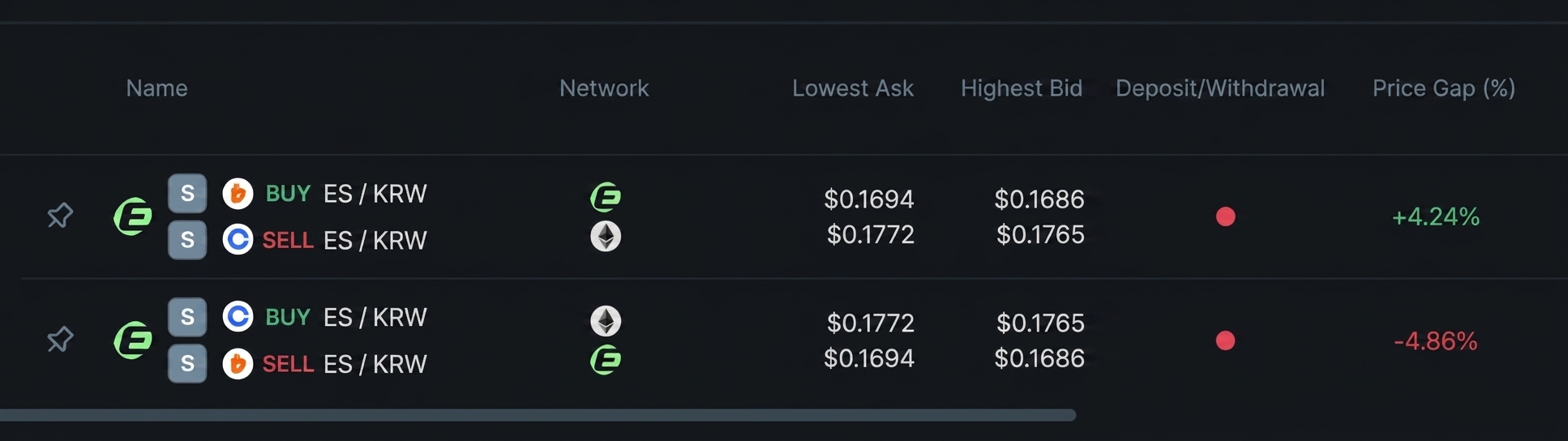
The most fundamental risk is a situation where there is simply no route to send the same asset between two exchanges. For example, exchange A may support deposits and withdrawals of a particular coin only on its own mainnet, while exchange B supports the same coin only on Ethereum (ERC-20) or Binance Smart Chain (BEP-20). If there is no trustworthy bridge connecting the two blockchains, the price difference between the two exchanges is meaningless, and arbitrage is fundamentally impossible from the start.
In particular, this situation can become an important condition for realizing arbitrage during KRW listings on domestic exchanges, which prefer to support deposits and withdrawals on their own mainnets.
1-2. When an exchange does not support deposits
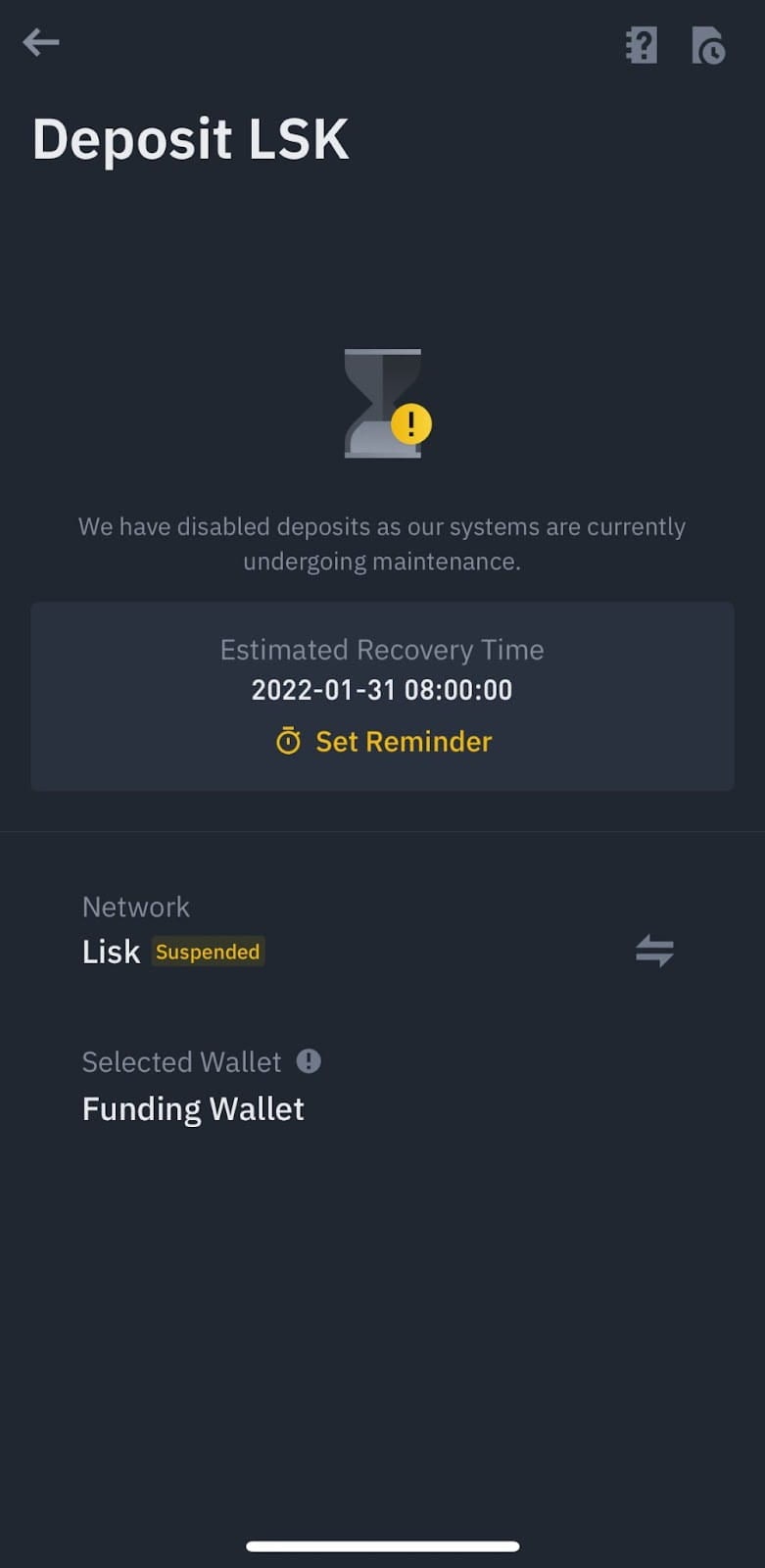
Even when a transfer route exists, the destination exchange often blocks deposits. This mainly happens when a particular coin is designated as an investment caution item, or due to technical problems, wallet system maintenance, and the like. Especially in cases of simultaneous global TGE listings and the like, immediately after listing the exchanges sometimes deliberately block deposits or withdrawals for a certain period in coordination with the foundation. In such a case, no matter how cheaply you source the coin externally, you can't sell it on the destination exchange, so realizing the spread becomes impossible. Even in such a case, you can safely regard the coin on the destination exchange as a separate, distinct coin for which the Law of One Price doesn't operate while deposits are blocked.
1-3. When an exchange does not support withdrawals
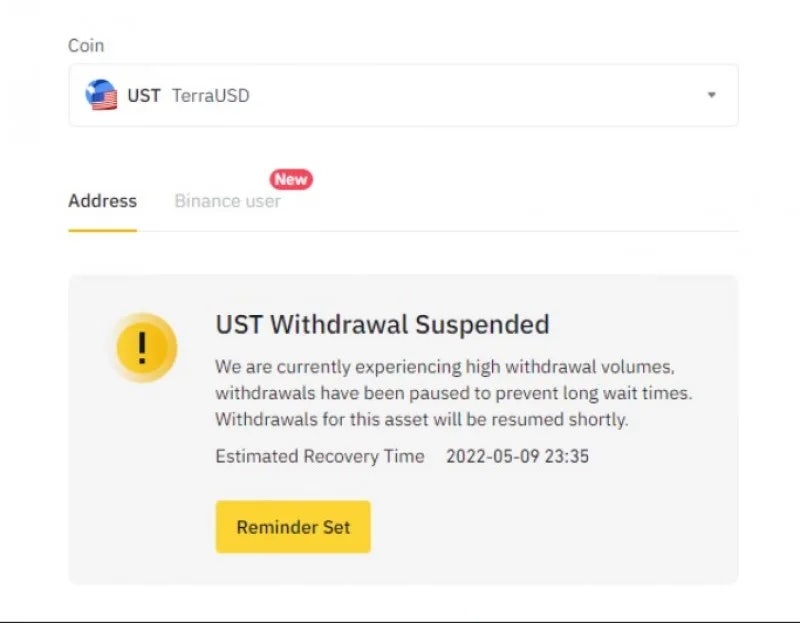
Conversely, a situation where the exchange you want to send the coin from blocks withdrawals is even more fatal for the arbitrageur. This happens for various reasons, the most common being that the exchange's hot wallet runs dry. A hot wallet is a wallet kept online to enable fast deposits and withdrawals; for security, exchanges keep most of their assets in offline cold wallets. When a particular arbitrage opportunity arises and withdrawal requests surge, the supply prepared in the hot wallet can be drained in an instant. In this case an exchange employee must manually move assets from the cold wallet to the hot wallet, and this process can take a considerable amount of time. Beyond this, withdrawals are sometimes suspended without notice due to technical problems, wallet maintenance, caution-item designation, and so on.
2. Transfer and Execution-Speed Risks (Can you make it in time?)
This is the risk that, although a route to move the asset exists, the process takes so long that the arbitrage opportunity disappears. Price gaps in the crypto market mostly vanish within anywhere from a few seconds to at most a few hours, so speed is a key factor that determines the success or failure of arbitrage.
2-1. When an exchange takes a long time to credit deposits
Even after you've successfully sent a coin to the destination exchange, there can be a delay before that exchange confirms the deposit and reflects it in your account balance. In Upbit's case, even after a transfer is completed on the blockchain network, it's generally common for actual deposit processing to take at least 10 minutes or more due to internal verification procedures and the like. Sometimes deposit crediting is delayed by several hours for no particular reason, and when you deposit a large amount of hundreds of millions of KRW or more, the exchange often holds the deposit and demands proof of the source of funds in accordance with anti-money-laundering (AML) regulations. If the price gap disappears during this delay, all your effort goes to waste. In particular, during a KRW listing, if you aim to capture the Kimchi premium spread by selling the coin into the spike right after trading opens and have already paid the entry cost of a spot–futures gap, getting caught up in proof-of-source-of-funds can make you miss your selling timing, and the entire entry cost can become a complete loss.
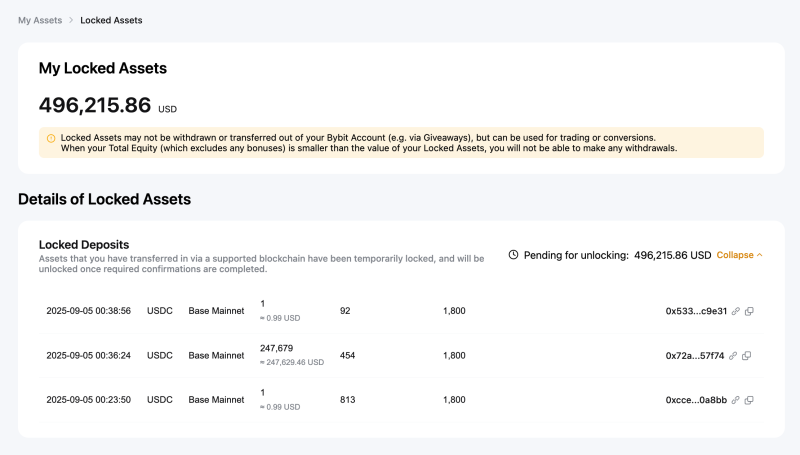
2-2. When an exchange takes a long time to process withdrawals
Withdrawal delays are equally fatal. When you've spotted an attractive arbitrage opportunity on another exchange, or need to move assets to be in position for an airdrop snapshot at a specific time, a slow withdrawal process on the exchange will make you miss the chance. While you wait with the withdrawal stuck in a "Pending" state, market conditions may already have completely changed.
2-3. When the blockchain itself is slow to process
Sometimes the problem isn't the exchange but the blockchain network itself. When transactions surge due to a particular event, the blockchain network's processing speed slows down markedly and fees (gas) spike. In such situations, it can take a long time to return to normal — far too long to seize most arbitrage opportunities.
One such case is Upbit's $MINA incident in 2023. At the time the MINA chain was quite slow, so only a very small amount made it into Upbit as deposits. As a result, a handful of arbitrage traders who managed to deposit on a first-come, first-served basis were able to earn 2–3x spreads. One arbitrage trader from a crypto-investor group known as a "farmer room" reportedly made about 2,000,000,000 KRW in profit.
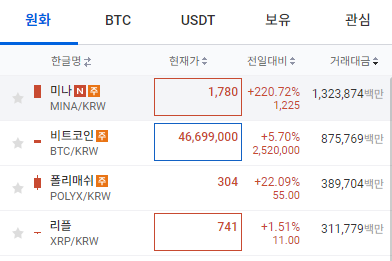
URL of the block containing Upbit deposit transactions right after Upbit's MINA listing announcement
https://minaexplorer.com/block/3NKsdeEpHny2igAQsvoBMPSxPytEVpPq7y8cmwcy6hhcKGWF9YhW
Not long ago, Upbit's KRW listing of Ravencoin was a similar case. In both cases, it's suspected that Upbit's listing team listed the coins at times and under conditions where the deposit volume would be constrained, in order to boost trading volume through a price surge.
2-4. When bridging takes a long time
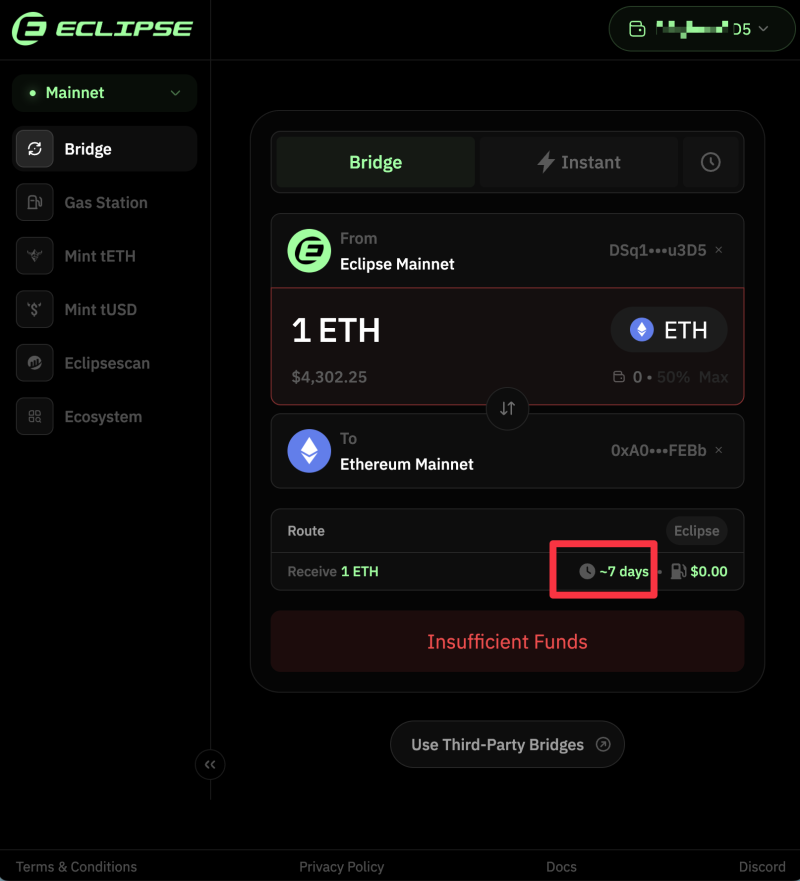
Bridging assets between different blockchain networks is inherently complex and time-consuming. It can take as little as a few minutes, but depending on network conditions or the bridge's own policies it can take up to several hours, and the likelihood of technical errors occurring in this process is also higher than for transfers between centralized exchanges.
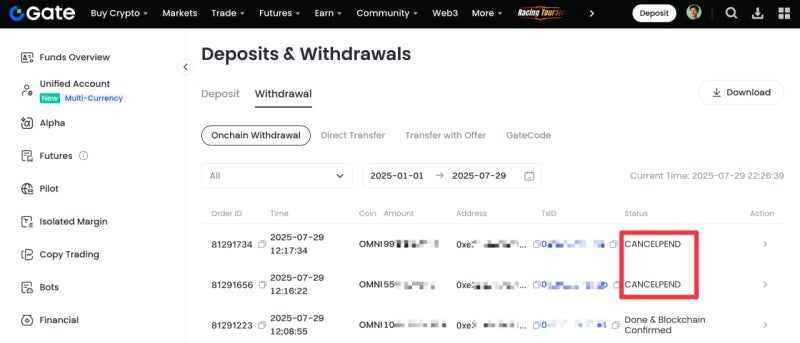
2-5. When a withdrawal request is canceled late after hot-wallet depletion
This is rare but one of the most malicious of the speed risks. When an exchange's hot-wallet balance runs low it should immediately suspend withdrawals, but sometimes the system fails to reflect this in time. The trader submits a request thinking withdrawals are possible, but the exchange holds the request in a "Processing" state for a long time and then belatedly cancels it citing "insufficient balance." This is worse than withdrawals being blocked immediately, because it locks up the trader's funds and even strips away the opportunity to try other alternatives. This is also something the author actually experienced during Upbit's recent OMNI KRW-market listing.
3. Execution, Liquidity, and Position-Building Risks (Can you fill it?)
Even if you've succeeded all the way to the transfer, there are still various risks in the very process of executing trades at the price and quantity you want. These are the factors that prevent a visible price difference from turning into actual profit.
3-1. Insufficient quotes / liquidity
The price shown on screen may not be the price you can actually trade at. Especially for low-liquidity altcoins, the most recently executed price was often formed by a small trade, and there frequently aren't enough buy orders (quotes) to absorb your entire position. If you attempt a market sell in this situation, you punch through all the thin quotes on the way down and get filled at a far lower price than expected — a slippage loss — so the theoretical spread vanishes or even turns into a loss. This happens not only in centralized exchange order books but also in the liquidity pools of decentralized exchanges (DEXs).
The actual state of the order books at HTX (formerly Huobi) and GOPAX, which have extremely thin quotes: https://www.htx.com/trade/gearbox_usdt/ https://www.gopax.co.kr/exchange?market=uma-krw
3-2. Fake quotes
Even when the order book appears packed with buy and sell orders, these may be "fake quotes" with no real intention to execute. Some market makers (MMs) place phantom orders to meet an exchange's listing-maintenance conditions (minimum liquidity supply) or to manipulate the market. When a real user tries to trade against these quotes, a bot withdraws the order in an instant to avoid execution, or adjusts the quotes to the user's disadvantage.
3-3. Order / matching failures
Technical defects in the exchange system itself also become a risk. The API that delivers price information can malfunction and show an incorrect price, the matching engine that processes orders can lag so that orders aren't filled, or the server can crash so that the order button in the exchange UI doesn't work. Especially when such a failure occurs during extreme price volatility, you can miss your entry or liquidation timing and suffer a large loss.
In December 2024, when former president Yoon Suk-yeol declared martial law, crypto suffered an enormous crash only on Korean exchanges, and as a massive number of users flooded in, the Upbit app wouldn't open or the buttons didn't work. At the time, situations occurred where only API orders worked or only limit orders that had already been placed got filled.
Previous image Next image
Upbit service outage during the martial-law incident
This isn't a crypto case, but Cho In-beom — an internet broadcaster (BJ) and the founder of Bugscoin and the futures exchange ADEN — suffered a large loss when, during a broadcast, the order button on his KB Securities app stopped working, and this scene was broadcast live for all to see.
Previous image Next image
3-4. Two-sided position-building timing risk
When you must build a spot-buy and a futures-sell position simultaneously for hedging, even the tiny time difference in executing the two orders can move the price and shrink or eliminate the spread. In particular, when you fill limit orders on both exchanges to reduce slippage losses, this time difference can grow considerably. During this time you're exposed, however briefly, to price-movement risk. To reduce this risk, it's important to enter both positions with market orders as simultaneously as possible, even at the cost of getting filled at a slightly unfavorable price (slippage). You should think of the execution costs that arise here — market-order fees and slippage losses — as a kind of insurance premium for avoiding risk.
3-5. Position-limit risk
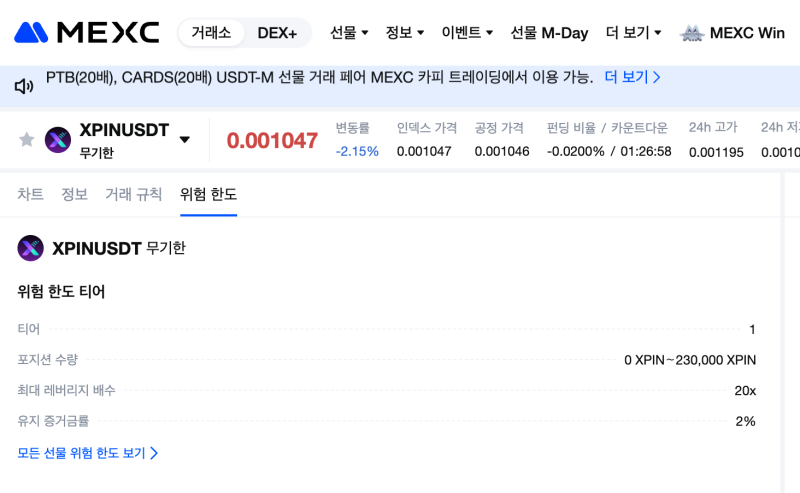
After taking a position on one exchange, when you try to build the opposite position on another exchange for spot–futures hedging, or to construct a futures–futures gap or funding-rate gap position, you can run into the absurd situation where the other exchange's maximum position limit or risk-limit policy prevents you from taking as large a short position as you need. In this case, the trader ends up unintentionally exposed to price movement for the unhedged quantity. To prevent this, you need to carefully check each exchange's trading rules and understand what rules each exchange generally applies. Also, where the risk limit set for an account can be changed, you should adjust these settings to fit your needs.
4. Liquidation Risk (Will it blow up?)
Even a delta-neutral position that has eliminated price-movement risk through hedging can, in certain situations, be exposed to the danger of forced liquidation.
4-1. Forced liquidation of the hedging position
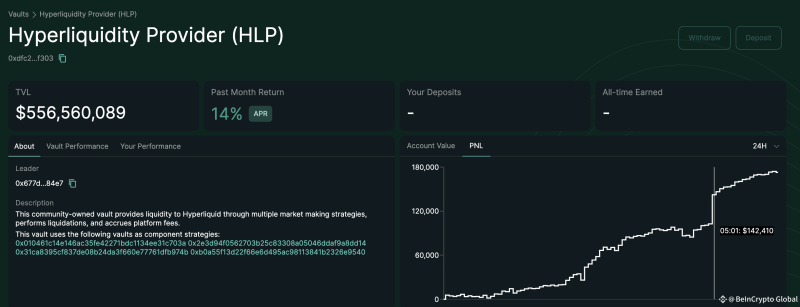
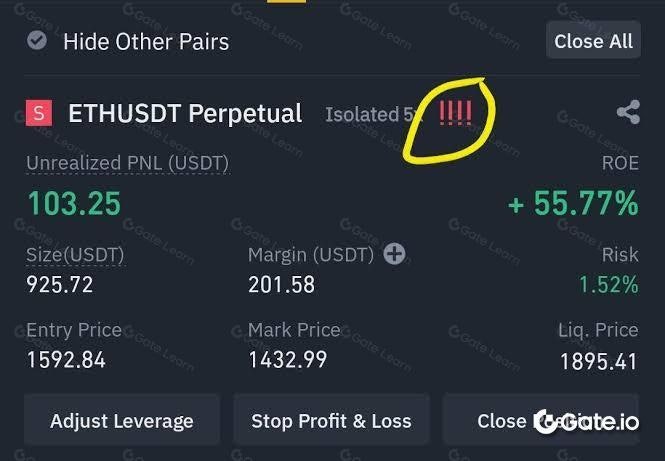
The most common case is when the price spikes momentarily and one side of the position gets liquidated. If you've taken a spot–futures gap, the spot price stays put but an abnormal price spike (a wick) occurs only in the futures market, the margin on your short position can become insufficient and trigger forced liquidation; the same thing can happen when you've taken a futures–futures gap or a funding-rate gap. The moment the hedge comes undone, the surviving opposite-side position is left fully exposed to price-movement risk. This can occur when you've used excessive leverage, when the value of the asset put up as collateral plunges, or when a particular party artificially manipulates the futures index price.
As an example, in the past Mango Markets price-manipulation incident, the attacker artificially manipulated the spot price to drive up the futures market's index price, and as a result many short positions were unjustly liquidated. The attacker made over $100 million in profit and, even after returning some of it, still came away with tens of millions of dollars. Such attacks happen fairly often; recently there was also a case suspected of manipulating the $GMX spot price and earning leveraged profits on Hyperliquid.
The most dramatic recent case is the large-scale Hyperliquid liquidation incident that occurred at the end of August 2025. This event took place in the pre-market perpetual futures markets for unreleased tokens like XPL and WLFI. A whale (large investor) faction exploited the thin liquidity to deliberately manipulate the price.
How it unfolded: A particular whale faction used a small amount of capital to trigger a short squeeze that spiked the XPL futures price by more than 200% (roughly $0.60 → $1.80) in just a few minutes.
The vulnerability: Hyperliquid's pre-market used an internal 8-hour exponential moving average (EMA), with no external price feed (oracle), to calculate the liquidation reference price (Mark Price). This method had a "lag" problem in that it couldn't immediately reflect sharp price changes. The attackers targeted this systemic loophole, spiking the actual execution price while making the liquidation reference price lag behind, triggering a chain of forced liquidations.
The result: This manipulation liquidated roughly $160 million (about 220,000,000,000 KRW) in positions — about 85% of open interest (OI) — in just 10 minutes. Most of the victims were investors hedging with short positions to avoid price movement, and substantial damage running into the billions of KRW occurred in the Korean investor community in particular. Meanwhile, the whales who orchestrated the price manipulation pocketed enormous profits of about $47.5 million (about 65,000,000,000 KRW). Because of this incident, several of Korea's well-known KOLs and investors suffered large losses on the order of 1,000,000,000 KRW per person, and the author too suffered a large loss of tens of millions of KRW.
A chart of that horrific incident at the time
This incident is a powerful warning that no matter how delta-neutral a hedging position you've built, your position can be liquidated at any time by vulnerabilities in the exchange's liquidation mechanism itself or by price manipulation that exploits thin liquidity.
As a countermeasure against this risk, you should set conservative leverage multiples that account for the coin's volatility, and always watch for whether the gap between the futures market's Mark Price and Last Price widens abnormally. Expected return and risk are inversely related. An arbitrage trader should set sound risk levels according to the Kelly criterion.
4-2. Auto-Deleveraging (ADL) risk
This is a very rare but fatal risk. If extreme market movements completely exhaust an exchange's insurance fund, the exchange may activate an auto-deleveraging (ADL) system that forcibly liquidates profitable positions to cover the losses. In other words, the worst-case situation can occur where the profitable side of your hedging position is forcibly closed against your will, leaving only the losing position. The reason this risk is dangerous is that it's generally an event outside your range of prediction. When a user has built positions in both directions, they monitor the liquidation risk of the losing position but pay little attention to the profitable one. But when the ADL system activates, the profitable position is liquidated, and the user notices only belatedly, leaving the position exposed to volatility and vulnerable to losses from price movement.
5. Position-Maintenance Cost and Economics-Erosion Risk (Is there anything left over?)
Even after discovering an arbitrage opportunity and successfully building a position, an unexpected increase in maintenance costs can worsen profitability or flip it into a loss.
5-1. Funding-rate and borrowing-rate spikes
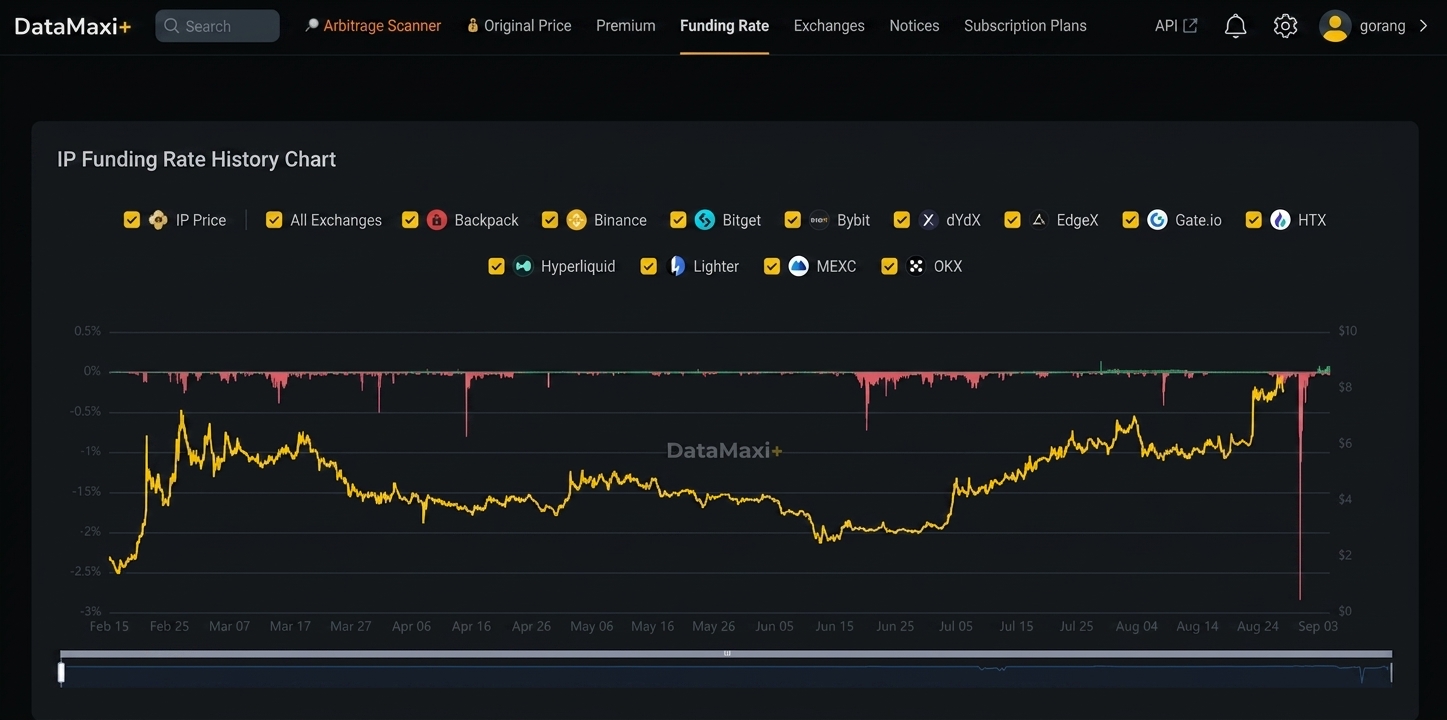
In event-based arbitrage, short positions pile up for hedging, producing a negative funding rate. But if market overheating drives this negative funding rate up far higher than expected, or if the coin's borrowing rate spikes, the cost of maintaining the position can snowball and devour all your expected returns.
5-2. The gap fails to converge or widens
When futures are more expensive than spot — a contango situation — you enter a position expecting the spot–futures gap (basis) to converge; likewise, you build a position because a futures–futures gap exists. But there are cases where, due to market manipulation by a particular party or structural problems, the gap doesn't narrow or even widens further. If this situation drags on, the trader keeps paying costs such as funding rates and losses accumulate.
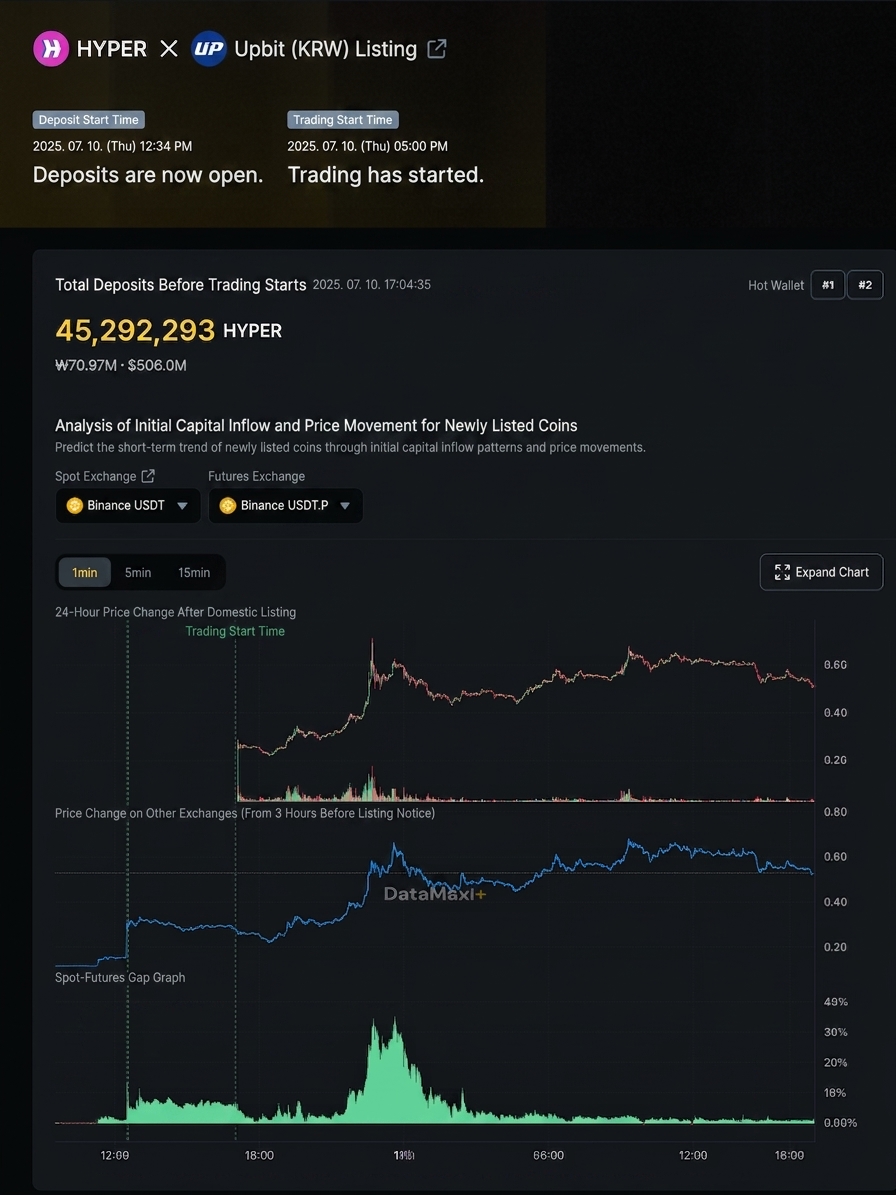
When a KRW-market new-listing arbitrage event arises (the so-called "Won-Sangttari," KRW-listing arbitrage), backwardation (a situation where spot is more expensive than futures) generally occurs rather than contango, and the trader pays this spot–futures gap as a cost of building the position in order to bet on this Won-Sangttari event. In this case, conversely, if the gap converges it becomes a loss.
5-3. High fees and slippage
When the trading cost of a particular market is very high — like the fee on Upbit's BTC market (0.25%) — or when the slippage loss from thin quotes is larger than expected, a theoretical spread can in reality be recorded as a loss.
5-4. Cost increases from a postponed listing
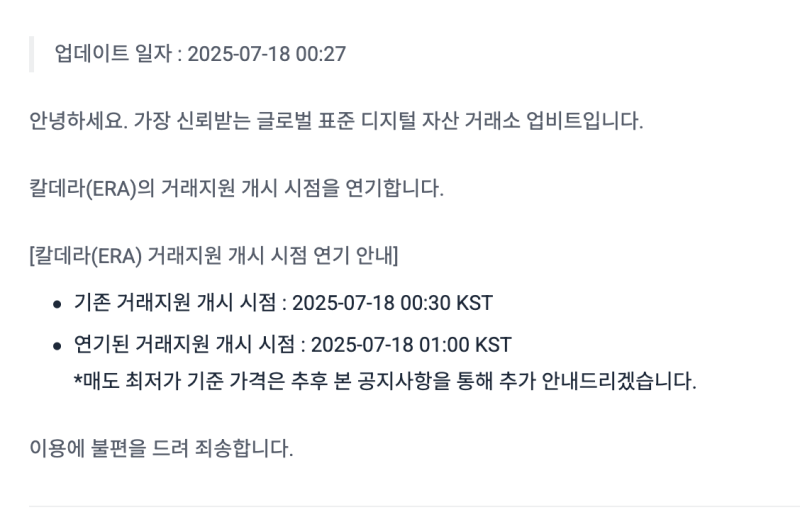
During a KRW listing, you build a spot-buy and futures-short hedge position aiming for the Kimchi premium profit right after trading opens, but sometimes the exchange postpones the listing to the next day citing insufficient liquidity and the like. In this case, the trader must pay an extra day's funding rate on the short hedge position, which significantly worsens overall profitability.
5-5. Spot-buy cost in Won-Sangttari events where hedging is impossible
Sometimes, in a KRW-listing event, it's hard to source supply on overseas exchanges to send the coin to a domestic exchange. This is usually the case when there's no overseas exchange that supports withdrawals. In such a case, you have to use the swap pools of a decentralized exchange (DEX), and when buying from a pool that lacks liquidity, you can end up buying spot at a price far higher than even the price on overseas centralized exchanges. This is like starting out already carrying a loss.
That said, as an aside, when only a small number of people can buy supply on a DEX, the probability that you can sell it at a high price on a domestic exchange actually rises. The Manta Network KRW listing is one example of such a situation.
6. Exchange Trust Risk (Will this exchange stab you in the back?)
Since every act of arbitrage takes place on top of a third-party platform called an exchange, the trustworthiness of the exchange itself is the most fundamental risk factor. No matter how perfect the strategy, if the trading platform itself collapses or operates maliciously, everything becomes meaningless.
6-1. Changes to funding-rate rules
Some small and mid-sized exchanges change their rules without notice to prevent their own losses or maximize their profits. This happens especially often at exchanges with a strong B-book tendency (where the exchange handles customers' orders internally rather than routing them to the external market). Exchanges like Bitget and MEXC frequently engage in this behavior. MEXC in particular does this so often that the slang term "Mek-tongsoo" (MEXC backstab) was coined and has come into wide use.
To see how this applies in practice: you enter a position on a particular exchange aiming for a funding-rate gap, but right before the funding-rate settlement time the exchange artificially changes the funding rate in its own favor. In this case the profit you expected vanishes and only the trading-fee loss remains. Beyond this, exchanges also suddenly change the funding-rate settlement cycle, the maximum funding rate, the calculation formula, and so on, creating an environment unfavorable to the trader.
6-2. Account-freeze risk
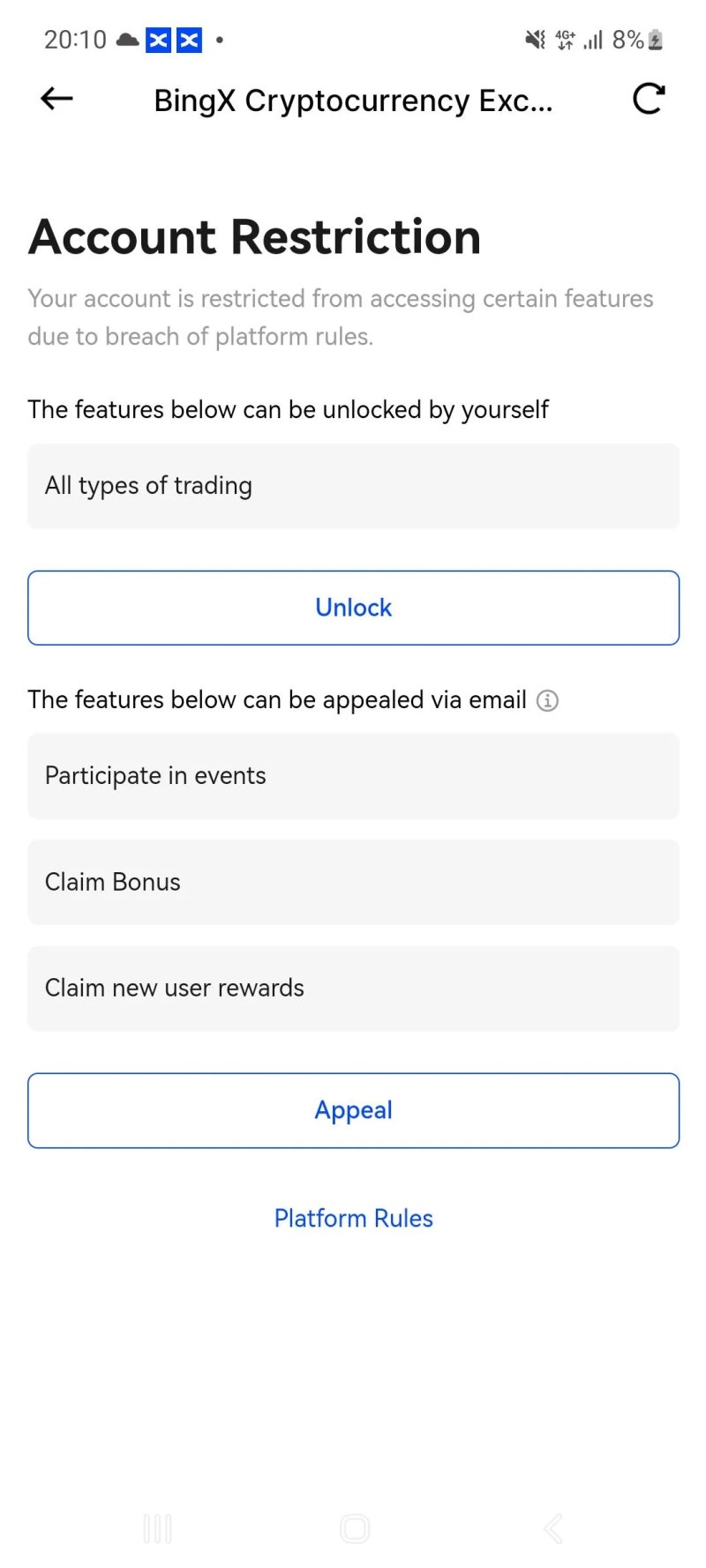
An exchange can freeze a particular account without notice, citing anti-money-laundering (AML), internal regulations, system errors, and the like. When an account is frozen, both funds and positions are locked and you can take no action whatsoever. Arbitrage in particular moves funds across multiple exchanges and shows a pattern of trading many times in a short period, so it can be relatively more likely than ordinary users to be classified as suspicious activity.
As a countermeasure, you should spread your assets across multiple exchanges and avoid operating multiple accounts on the same exchange from a single IP address or device. You must thoroughly separate and manage things so that one account connects only to one device and one IP. Also, the basic principle is not to deposit large amounts of assets on low-trust exchanges. To give concrete guidance: I recommend not using exchanges ranked below 15th on CoinMarketCap, and even among exchanges ranked above 15th, I recommend keeping only a small amount of $10,000 or less on MEXC.
Previous image Next image
6-3. Exchange bankruptcy and fund freezes
As we saw in the FTX collapse, even a world-class major exchange can go bankrupt overnight and freeze all funds. This is the biggest external risk an arbitrageur can't control. Proof-of-Reserves provided by an exchange can't be a perfect safeguard, so it's important to build the habit of immediately withdrawing your assets the moment negative rumors about an exchange arise.
6-4. Refusal to pay event rewards
It happens more often than you'd think that an exchange unilaterally cancels or fails to pay an airdrop or event reward it had promised. The trader builds a hedging position expecting the event reward and has already paid costs such as the spot–futures gap and funding rates, but if the exchange doesn't actually pay the reward, only the costs are locked in as a loss.
As a real case, one exchange announced that it would support a particular airdrop, and many traders paid the costs and built hedging positions. But after the snapshot point had passed, the exchange revised its announcement to say they were excluded from the supported targets, and as a result the traders ended up bearing only the position-building costs as a loss, without receiving the airdrop.
6-5. Account-holder KYC-cooperation refusal risk
Some overseas exchanges set a position limit for each account. Such limits sometimes become the very reason arbitrage opportunities arise, because a single whale can't eat up an entire arbitrage opportunity alone due to the per-account limit. Because this happens often, skilled arbitrageurs commonly hold multiple accounts on each exchange by borrowing the names of family members, acquaintances, and friends. Here the arbitrageur must be careful: if, on the off chance, an account is frozen and the person who provided the identity verification refuses to cooperate with the identity-verification process needed to unfreeze it, the funds risk being frozen in that account. There's also the risk that the account holder contacts customer service directly, performs identity verification themselves, changes the account information, and so on, and steals the funds from you. In fact, the author too secured overseas exchange accounts using the identities of members of the opposite sex who had feelings for him, and then went through dangerous situations when the relationships ran into problems or the account holders' families objected.
For reference, one person using an overseas exchange under multiple people's names is clearly a violation of that exchange's terms of use, and may also be illegal under the laws governing that exchange. That said, Korea's Real-Name Financial Transactions Act applies only to financial institutions within Korea.
7. On-Chain and DApp Accuracy Risk (Are these numbers right?)
Arbitrage using decentralized exchanges (DEXs) or bridges carries risks unique to the on-chain environment, different from those of centralized exchanges.
7-1. On-chain transaction failures and chain halts
Blockchain networks don't always run smoothly. When network usage surges due to a particular event, transaction processing can fail, gas fees can spike abnormally, or in the worst case the blockchain network itself can stop. In such situations, rapid asset movement or trading is impossible, and you can be left with only one side of your hedging position, exposed to price-movement risk.
As countermeasures, you need a rapid-response plan such as always keeping a list of alternative chains or bridges ready, and immediately closing out the opposite-side hedging position if a transaction fails.
7-2. UI errors
The information displayed by an exchange's or DApp's user interface (UI) may differ from the actual on-chain data. For example, due to system lag, a balance figure may update late, or it may show that there is borrowable supply when in reality there isn't. Trusting this incorrect information and executing a trade can lead to unexpected results, so before an important trade it's safer to perform a secondary verification via a blockchain explorer or the like, or to first do a small test trade.
8. External-Variable Risks Such as Regulation and Exchange Rates
Beyond problems internal to the crypto market, changes in the external environment also affect arbitrage.
8-1. Foreign-exchange and regulatory violations
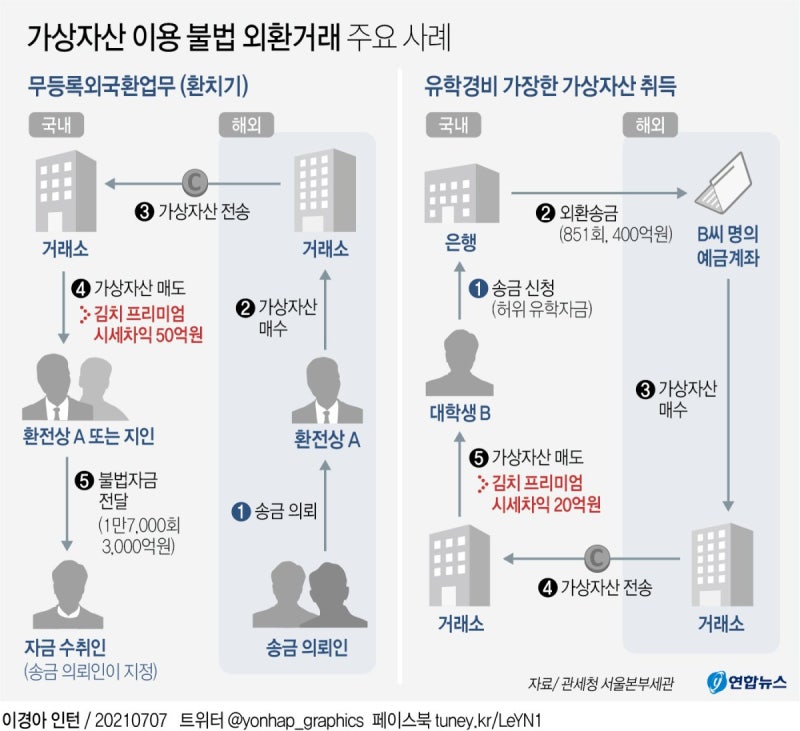
If, for Kimchi premium arbitrage, you convert KRW to dollars and remit the foreign currency abroad, there's a high probability this will be interpreted as a violation of the Foreign Exchange Transactions Act. And beyond Korea's Foreign Exchange Transactions Act, crypto-related regulations in each country keep changing, so it's important to always trade within legal bounds and maintain the relevant records and documentation.
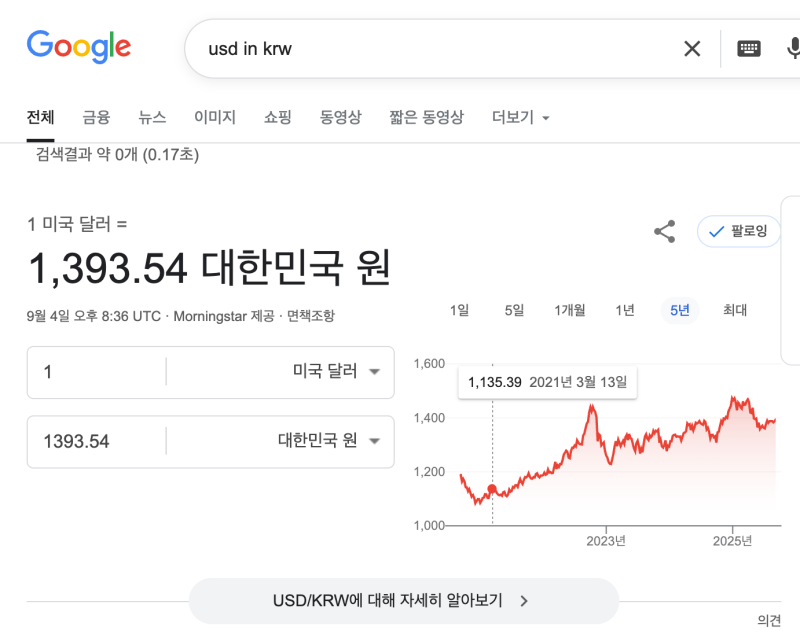
8-2. Exchange-rate-movement risk
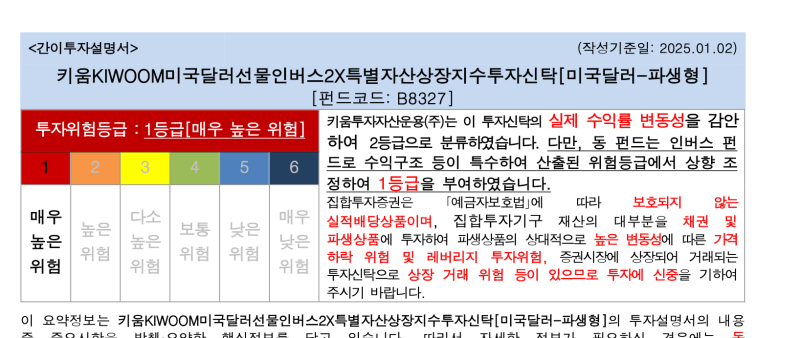
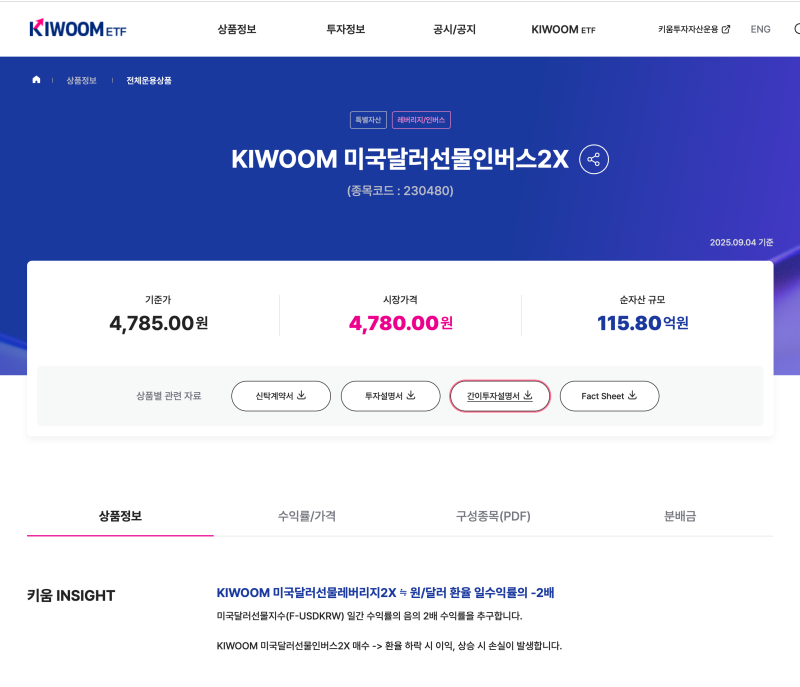
Since the final profit from Kimchi premium trading is locked in KRW, movements in the KRW–USD exchange rate directly affect your return. Even if you hedge the price movement of the coin itself, the risk of exchange-rate movement still remains.
As a countermeasure, you can mitigate the impact of exchange-rate movements by holding part of your assets in KRW and part in dollar-pegged stablecoins. If you need more active hedging, you can also consider using derivatives such as a brokerage's US dollar futures ETF.
9. Human Error
The most common yet hardest-to-avoid risk is your own mistakes.
9-1. Confusing order quantity and value
When hedging, you must precisely match the size of both positions, but you can make the mistake of confusing quantity with value and entering an order of the wrong size. For example, on one side you buy 10 coins, while on the other side you sell $10 worth of the coin. This is a mistake every novice arbitrage trader experiences at least once. In this case you're exposed to price movement by the size difference between the two positions. You must always carefully check the unit when ordering. When placing an order, look at whether the order unit is coin quantity, dollar value, or number of contracts (count).
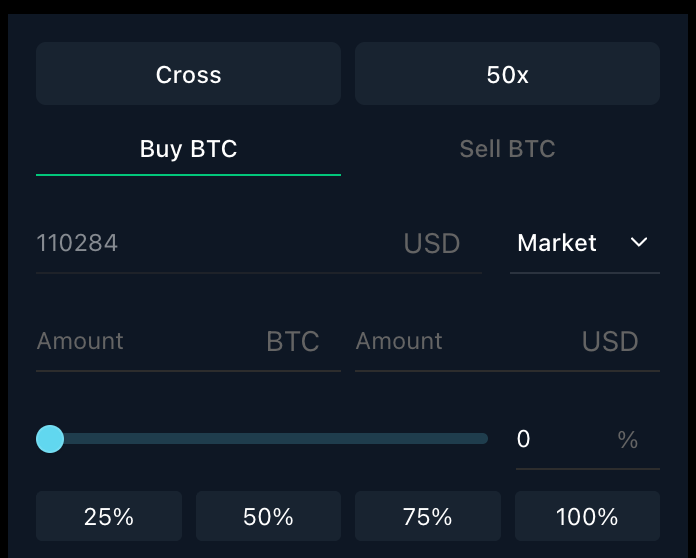
9-2. Operation errors when closing a position
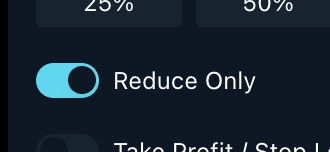
When trying to close 100% of a position using the slider bar provided in the exchange UI, you can make the mistake of unintentionally opening a new position in the opposite direction while margin remains.
As a countermeasure, enabling the "Reduce-Only" option that most futures exchanges provide makes it so that only orders that reduce your existing position are possible, preventing this kind of mistake.
9-3. Transfer mistakes
When moving assets, mistakes such as entering the wrong address, omitting a memo or tag required by a particular exchange, or selecting an unsupported network can lead to the complete loss of the asset.
As countermeasures, you need to make a checklist before transferring to double-check the network, address, memo, and so on, and to build the habit of always doing a small test transfer first before sending a large amount.
9-4. Confusing tickers and token types
If you mistakenly trade a completely different coin that happens to have a similar name, the two positions won't hedge each other and you can cause a large loss. For memecoins in particular, there are cases where multiple coins with the same name are derived from a single meme. NEIRO and MOODENG are such examples. There have even been cases where an exchange itself confused coins that share the same name but have different contract addresses, listed one, and referenced the wrong index. The Flipster exchange's Neiro incident is such a case. You must always accurately verify the ticker and contract address of the asset you intend to trade.
There's also an actual case of the author's. When I was trying to hedge a coin called PENGU, I searched "PENGU" and almost hedged using the futures contract PENGUSDT that came up at the very top. Because of the letter "U" in the USDT pair, I got confused and nearly bought PENGU while hedging with a completely different coin called PENG.
10. The Temptation of No-Hedging and Limit Orders
Finally, these are psychological risks that originate in the trader's own mind.
10-1. The temptation to not hedge
For various reasons — "the transfer time is short," "the market is stable," "the hedging cost is a waste" — it's easy to fall into the temptation of skipping the hedge, telling yourself "just this once will be fine." But the moment you skip the hedge, that trade is no longer arbitrage but simple directional investing — that is, it crosses over into the realm of prediction.
10-2. The temptation of limit orders
There are also cases where you place a hedge order as a limit order to save the bit of slippage that arises from a market order. But in a highly volatile market, a limit order may not get filled and the price may move in the opposite direction. In this case, you're left with only one side of the position, fully exposed to price-movement risk. The core of arbitrage is not maximizing profit but eliminating risk, so the principle is to think of the small execution cost as an insurance premium for avoiding risk and to use a sure-thing market order.
Wrapping Up
So far, we've explored the various risks hidden behind the glamorous facade of arbitrage. From the physical problems of asset transfer, to the uncertainty of execution and liquidity, the liquidation risk of hedging positions, the trust issues of exchanges themselves, and the hardest-to-avoid human error, we've confirmed that arbitrage is a complex and intricate activity that can never be reduced to the single word "risk-free."
Recognizing these risks isn't meant to discourage traders. On the contrary, by identifying unpredictable variables in advance and setting up countermeasures for them, we can pursue stable profits with a higher probability. A deep understanding of risk leads directly to sophisticated risk-management ability.
Now that we've finished the solid groundwork of theoretical study and risk review, from next time it's time to begin building in earnest.
In Part 4, building on all the knowledge we've learned so far, we'll look in concrete terms at how to actually execute arbitrage using the powerful tool that is DataMaxi+.
In the next lecture, lecture 12, "Kimchi Premium Arbitrage Using DataMaxi+," we'll take the first step together in how to use data to analyze the Kimchi premium — the most representative arbitrage opportunity in the Korean market — and connect it to actual trading.
Thank you for reading this long post.
- arbitrage
- crypto
- education
- risk-management